Substrate is one of the first decisions in setting up a tank and one of the hardest to change later, since swapping it means tearing the whole aquascape apart. Yet many beginners pick it almost at random, based on color alone. The substrate you choose affects which plants will root, how certain fish behave, and even your water chemistry. This guide walks through the main options and how to match one to your goals.
There is no single best substrate, only the best substrate for your particular fish, plants, and aesthetic. Getting it right at setup saves a great deal of work down the line.
What substrate actually does
Beyond looking natural, substrate plays several practical roles. It anchors rooted plants and, in nutrient-rich types, feeds them. It provides surface area for beneficial bacteria, supplementing the filtration that drives the nitrogen cycle. It influences fish behavior, since many bottom-dwellers sift or dig. And some substrates actively alter water hardness and pH, which can help or hinder depending on your fish.
The main substrate types
Gravel
The classic, inexpensive, all-purpose choice. Gravel comes in many sizes and colors, is easy to clean with a siphon, and suits fish-focused tanks well. On its own it holds no nutrients, so rooted plants need root tabs, but it is forgiving and beginner-friendly.
Sand
A natural look that many fish prefer, especially bottom-dwellers like corydoras and loaches that like to sift it. Sand compacts more than gravel, so it needs occasional gentle stirring to prevent pockets of trapped gas, and fine sand can be pulled into filters if flow is strong. It holds no nutrients by itself.
Aquasoil
A nutrient-rich, plant-specific substrate that is the foundation of most high-tech planted tanks. It feeds roots directly and often lowers pH and softens water, which many plants and soft-water fish appreciate. It is more expensive, breaks down over a year or two, and can leach ammonia when new, so tanks built on aquasoil benefit from a careful cycle before stocking.
Specialty and inert options
Crushed coral and aragonite raise hardness and pH, useful for African cichlids and marine tanks but wrong for soft-water species. Bare-bottom setups, with no substrate at all, are common in breeding, hospital, and quarantine tanks for easy cleaning.
Matching substrate to your tank
- Fish-focused community tank: gravel or sand, chosen for looks and your fish’s habits.
- Bottom-dwellers like corydoras: smooth sand or fine, rounded gravel that will not scratch their barbels.
- Heavily planted, high-tech tank: aquasoil for the nutrient base.
- African cichlids or marine: crushed coral or aragonite to maintain hardness.
- Breeding or hospital tank: bare bottom for easy maintenance.
How much do you need?
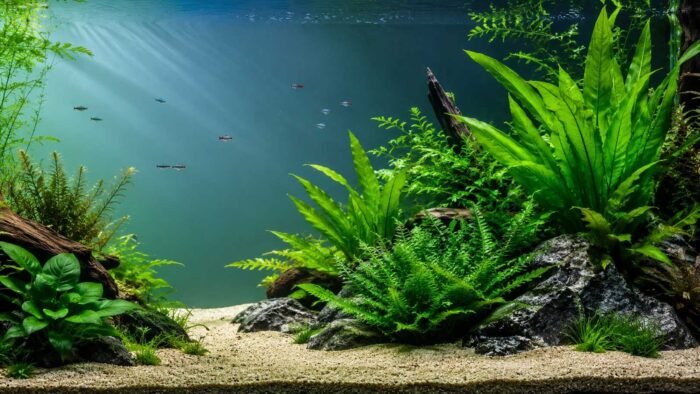
A general guideline is about one to two pounds of substrate per gallon, aiming for roughly two inches of depth, more for heavily rooted plants and a sloped aquascape. Planted tanks often slope the substrate higher at the back to create the depth described in the guide to aquascaping layout principles. Rinse gravel and sand thoroughly before adding water; aquasoil should not be rinsed, as it breaks down.
Layering and capping
A popular technique is to place a nutrient-rich layer underneath and cap it with gravel or sand. This feeds plant roots while keeping a tidy, easy-to-clean surface and preventing the lower layer from clouding the water. Capping aquasoil or a soil base with fine gravel is common in planted tanks that want plant benefits without an aquasoil surface.
Root tabs and fertilizing
If you choose an inert substrate like gravel or sand but want healthy rooted plants, root tabs bridge the gap. These are nutrient capsules pushed into the substrate near heavy root feeders such as Amazon swords and crypts, releasing nutrients where the roots can use them. Combined with a liquid fertilizer for water-column feeders, root tabs let an inexpensive inert substrate support a surprisingly lush planted tank, without committing to aquasoil from the start.
This flexibility is one reason many keepers start with sand or gravel: it keeps the door open to a planted tank later without an expensive teardown.
Common mistakes
- Choosing substrate by color alone without considering fish or plant needs.
- Using sharp gravel with soft-bellied bottom-dwellers, risking injury.
- Putting too little substrate down for rooted plants to anchor.
- Adding crushed coral to a soft-water community and unintentionally raising hardness.
- Not rinsing gravel or sand, leading to days of cloudy water.
Plan the substrate around the tank’s future
Because substrate is so disruptive to change, it pays to decide what you ultimately want before the first setup. If you think you may go planted later, starting with an inert sand or gravel and adding root tabs keeps options open, while committing to aquasoil signals a serious planted-tank intention from day one. Whatever you choose, take the time to rinse inert substrates thoroughly before filling the tank, since the cloudy water from unrinsed gravel is a frustrating and entirely avoidable way to start. A little patience at setup pays off in clear water and a stable foundation that you will not want to disturb for years.
Questions about sand, gravel, and aquasoil
Can I mix sand and gravel?
You can, though they tend to separate over time as the finer sand settles below the gravel. Many keepers prefer distinct zones or a capped layered setup instead.
Does substrate need to be replaced?
Inert gravel and sand last indefinitely with cleaning. Aquasoil depletes and breaks down over one to two years and is eventually replaced or supplemented.
Can I change substrate in an established tank?
Yes, but it is disruptive and can disturb your biological filter. Work in sections, keep your filter media intact to preserve bacteria, and expect some cloudiness.
How deep should my substrate be?
About two inches is a good general depth, enough to anchor most plants and host beneficial bacteria. Heavily rooted plants and sloped aquascapes benefit from more at the back, while a bare or very shallow layer suits non-planted or breeding setups.
Will dark or light substrate affect my fish?
Yes, in appearance and behavior. Many fish show richer color and feel more secure over a darker substrate, while a light substrate can wash out their color and make some fish skittish. It is an aesthetic choice with a real effect on how your fish look and behave.
Substrate should serve the fish and plants
Match your substrate to your fish and plant goals rather than to color: gravel or sand for fish-focused tanks, aquasoil for serious planted setups, and specialty substrates for hardness-loving species. Choose deliberately at setup, since substrate is the layer you least want to redo later. Get this foundation right and everything built on top of it, from rooted plants to a contented school of bottom-dwellers, has the best possible start.