Many healthy adult aquarium fish can manage a short absence with less food than owners expect, but the safe plan depends on species, age, temperature, body condition, and medical needs. Overfeeding by a helper or an untested feeder can create a water-quality problem, so preparation matters more than adding extra food.
Healthy adult fish are built to cope with gaps between meals. Understanding that frees you from the panic that leads to the mistakes that actually cause harm.
Healthy fish can fast
Healthy adult fish often tolerate a brief gap between meals, while fry, young fish, high-metabolism species, grazers, and animals recovering from illness may not. A weekend plan that suits an established community tank may be unsuitable for a nursery, reef with specialised feeders, or medicated fish.
Do not “feed extra” before leaving. A larger meal creates more waste without storing useful food for later.
Short trips: do less than you think
For an absence of a couple of days, many established tanks with healthy adult fish need no special feeding arrangement. Feed the normal portion before leaving, confirm the equipment is stable, and resume the normal schedule on return.
Make a different plan for fry, specialised feeders, very warm systems, or fish with poor body condition.
Longer trips: the options
For a week or more, you have a few sound choices.
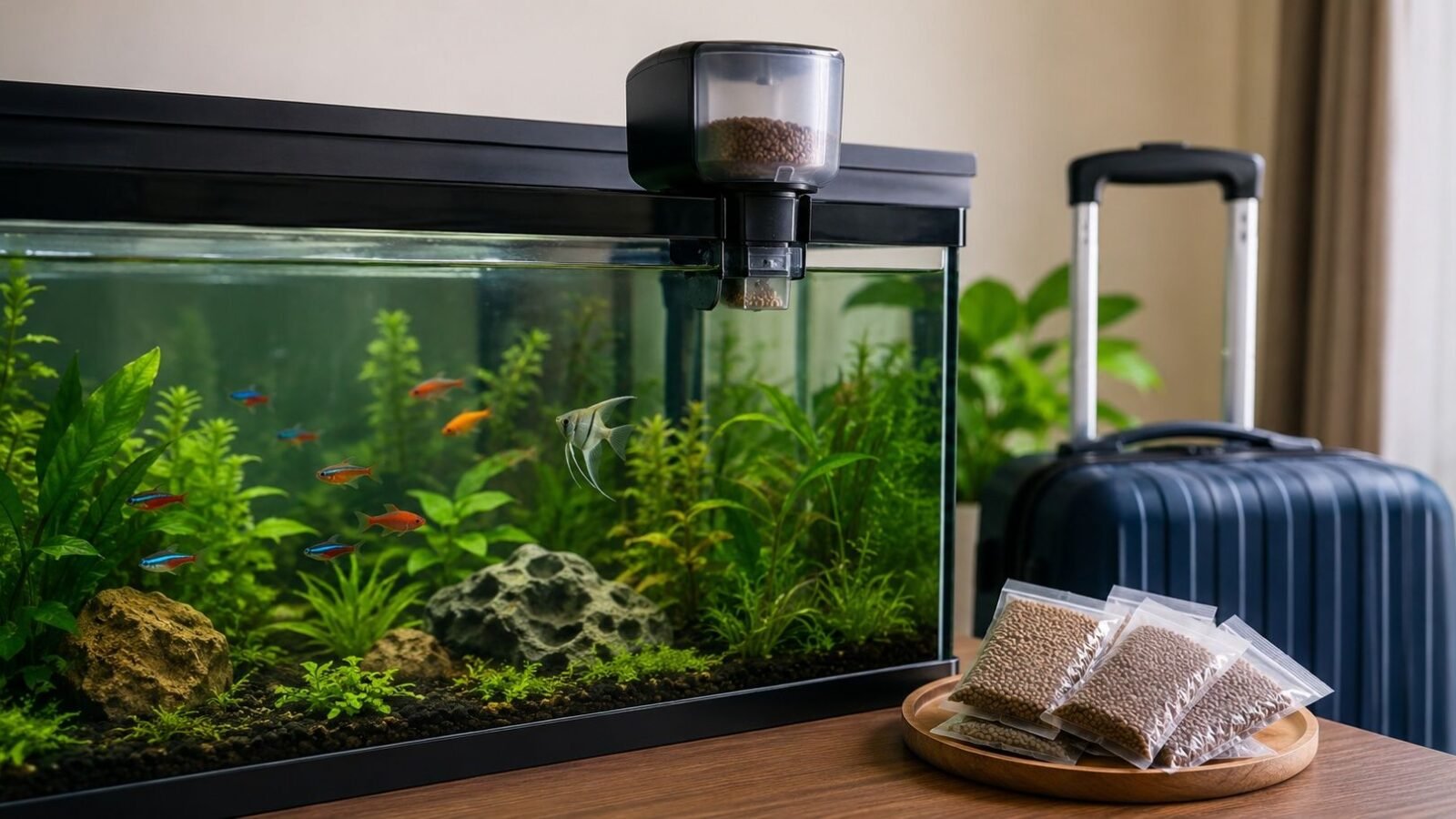
- Automatic feeder. A battery powered auto feeder dispenses a set portion on a timer. Test it for several days before you leave so you know it delivers the right amount and does not jam.
- A trusted helper with portions measured out. The safest human option. Portion each feeding into a labeled container or a daily pill organizer in advance, so the helper adds one container and cannot overfeed.
- Avoid feeder blocks. Slow dissolving vacation blocks are convenient but can cloud the water and spike parameters in many tanks. Most experienced keepers skip them in favor of an auto feeder or measured portions.
Portion food in advance for a helper
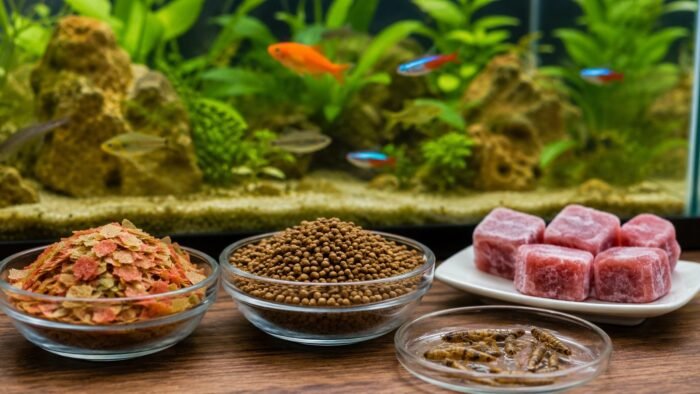
If someone will feed your fish, remove the guesswork. The instruction to a helper should never be a pinch, which they will inevitably overdo out of kindness. Measure each meal into its own small container or a daily organizer before you go, and tell them to use exactly one per day. This single step prevents the most common vacation disaster. the guide to fish food types can help you choose the right food to portion.
Prepare the tank before you leave
A little preparation matters more than feeding. In the days before you travel, do a water change using our water change method so the tank starts clean. Test your water and confirm the readings are stable with our parameters guide. Check that the heater and filter are running reliably, and clean the filter mechanically if it is due, so flow stays strong. Above all, do not add new fish or make big changes right before a trip, since you will not be there to watch for problems.
What not to do
A few habits cause the trouble. Do not overfeed heavily before leaving in an attempt to stock the fish up, which only fouls the water. Do not leave a pile of food floating. Do not rely on an untested gadget. And do not ask a helper to feed generously. Less food and a stable tank beat a fed but polluted one every time.
Remove guesswork from vacation feeding
Vacation feeding is safest when nobody has to estimate a portion. Pre-measure meals, label the dates, and test any automatic feeder before leaving. For short absences, many healthy adult fish need less intervention than owners expect, but young, specialised, or medically fragile fish require an individual plan.
Vacation-feeding questions
How long can I leave my fish without feeding?
Many healthy adult fish can manage a brief absence, but there is no safe universal number of days. Species, age, temperature, body condition, and diet all matter. Use a tested feeder or pre-measured helper portions when the absence exceeds what is appropriate for the fish you keep.
Are automatic fish feeders reliable?
Good ones are, but test the feeder for several days before your trip to confirm it dispenses the right portion and does not jam or dump.
Should I use a vacation feeder block?
Most experienced keepers avoid them, since slow dissolving blocks can cloud water and raise parameters. An auto feeder or measured portions is safer.
Prepare the tank and pre-portion any meals
Trust your fish to handle a short fast. For a few days, feed before and after and leave the tank alone. For longer trips, use a tested automatic feeder or portion meals out in advance for a helper, and skip feeder blocks. Prepare the tank with a water change beforehand, and remember that overfeeding, not hunger, is the real risk.