More aquarium problems start at the feeding lid than anywhere else. Overfeeding is the single most common beginner mistake, and it quietly drives ammonia spikes, algae blooms, and foul water. Fish need far less food than most people give them. Learn how often and how much to feed, and you prevent a long list of problems before they begin.
The honest truth is that a slightly underfed fish is far healthier than an overfed one. Wild fish go days between meals, so a missed feeding is no emergency.
How often to feed
For most adult community fish, once or twice a day is plenty. Two small feedings can suit active species and growing fish, while a single daily meal works fine for many tanks. What matters more than frequency is the amount. Several tiny feedings beat one large dump of food.
The two minute rule
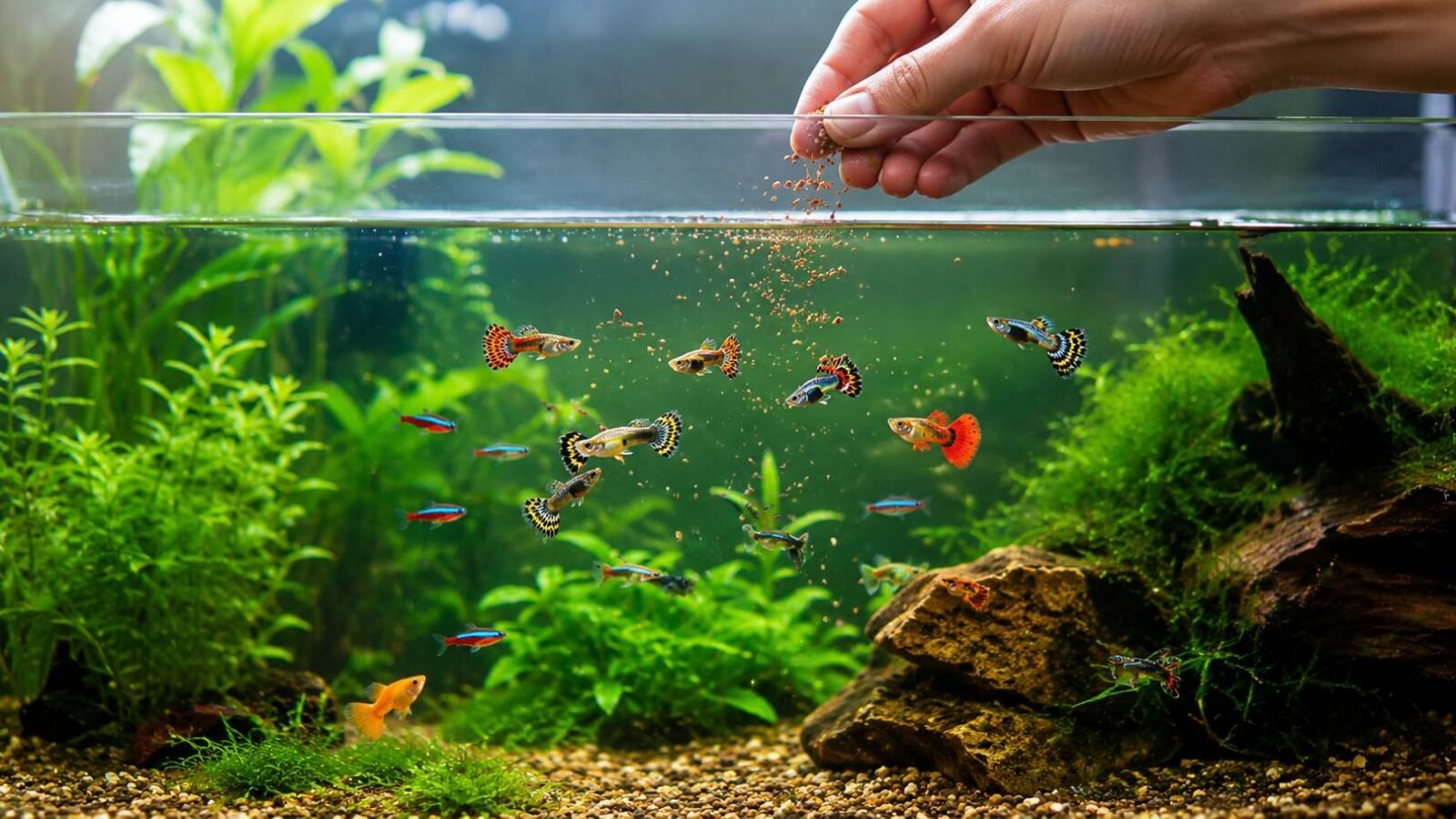
Here is the simplest guide to portion size: feed only what your fish finish in about two minutes. If food sinks uneaten to the bottom or drifts past the fish, you gave too much. Start with a small pinch, watch, and add a little more only if it vanishes quickly. It is easy to add more and impossible to take back what they did not eat.
Why overfeeding is dangerous
Uneaten food does not disappear. It rots, and that decay releases ammonia, the same toxin your cycle works to control. Excess food and the extra waste from overfed fish also raise nitrate and feed algae. Most cloudy water, ammonia spikes, and algae outbreaks trace straight back to the feeding habit. the guide on lowering ammonia, nitrite, and nitrate shows the cleanup, but feeding less is the prevention.
Adjust for species and age
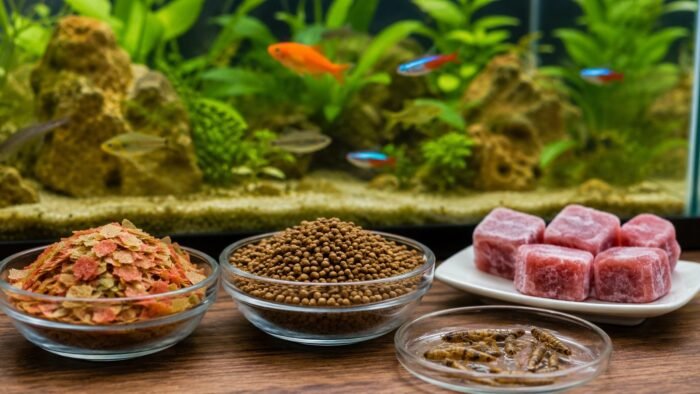
Feeding is not one size fits all. Growing fry need frequent small meals, several times a day, to develop properly. Many large predators eat less often, sometimes every other day or a few times a week. Herbivores graze and benefit from access to vegetable matter, while busy schooling fish burn energy and eat readily. Match the schedule to what you keep, and check our complete feeding guide and the guide to fish food types for the right diet.
A weekly fasting day
A fasting day can suit some healthy adult fish, particularly when they are easily overfed, but it is not a requirement for every aquarium. Fry, juveniles, grazing herbivores, breeding fish, and animals recovering from illness may need a different schedule.
Use body condition, species biology, water temperature, and the amount eaten at each meal to decide whether an occasional fasting day is appropriate.
Signs you are overfeeding
Your tank will tell you. Watch for food settling uneaten on the substrate, cloudy water, a sudden rise in algae, climbing nitrate, and a layer of debris building up fast. Any of these means it is time to cut back. Bottom feeders are a separate case, since they genuinely need food that reaches them, as the guide on feeding bottom dwellers explains.
Small portions are easier to correct
Start with a smaller portion than instinct suggests, then watch how quickly it disappears. Food that settles uneaten is easier to prevent than remove. The right amount still depends on species, age, body condition, temperature, and whether shy or bottom-dwelling fish are receiving their share.
Adjust feeding for age and species
Feeding less is not the same as withholding necessary food. Fry, juveniles, herbivores, specialised predators, breeding fish, and recovering animals may need different schedules. Base the routine on species and body condition rather than applying one fasting rule to every aquarium.
Feeding-frequency questions
How long can fish go without food?
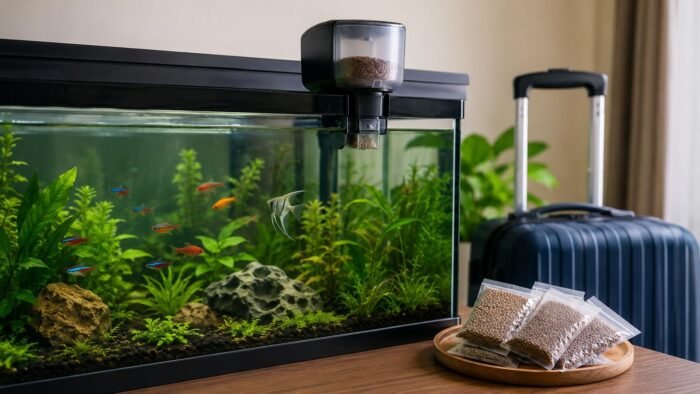
Many healthy adult fish can miss a short period of feeding, but tolerance varies with species, age, temperature, body condition, and health. Plan longer absences using the vacation-feeding guide.
Is it better to feed once or twice a day?
Either works for most adult fish, as long as portions stay small. Two tiny feedings can suit active species, while one is fine for many tanks.
How do I know if I am feeding too much?
If food reaches the bottom uneaten, the water clouds, or algae surges, you are overfeeding. Cut back to what the fish finish in about two minutes.
Feed enough for the fish to finish, not enough to leave waste
Feed small amounts once or twice a day, only what your fish finish in two minutes, and consider a weekly fasting day. Overfeeding causes more problems than almost anything else in the hobby. When in doubt, feed less. Your water stays cleaner and your fish stay healthier.