Most disease outbreaks in an established tank arrive with a new fish. A single unquarantined arrival can introduce ich, velvet, or a bacterial infection that spreads through an entire community within days. Quarantine is the simplest, cheapest insurance in the hobby, yet it is the step beginners skip most often. A modest quarantine setup and a few weeks of patience prevent the majority of the problems described in our disease guide.
Why quarantine works
New fish are stressed from shipping and handling, which suppresses their immune systems and makes latent infections flare. Quarantine separates that risk from your main tank, giving you a window to observe the fish, let it recover, and treat any problem in a small, controlled space before it ever reaches your established livestock. It also lets you medicate without exposing your display’s plants, invertebrates, or biological filter to harsh treatments.
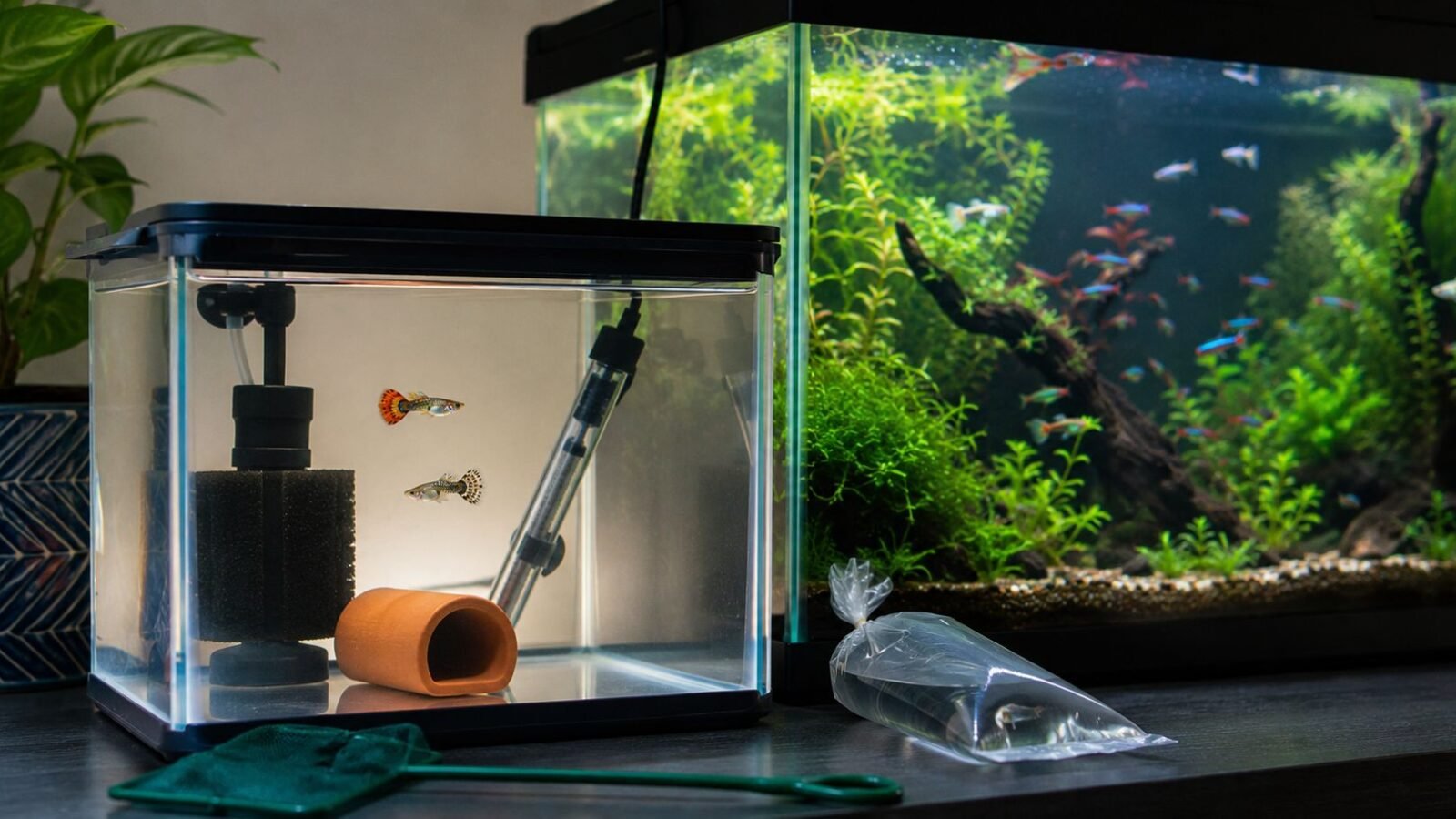
Setting up a quarantine tank
A quarantine tank is deliberately simple.
- A bare-bottom tank, often 10 to 20 gallons, with no substrate so it is easy to clean and observe.
- A sponge filter, ideally pre-seeded in your main filter so it carries beneficial bacteria from day one.
- A heater set to the species’ preferred temperature.
- A few simple hiding spots such as PVC pipe or silk plants to reduce stress.
- A lid, since stressed new fish are prone to jumping.
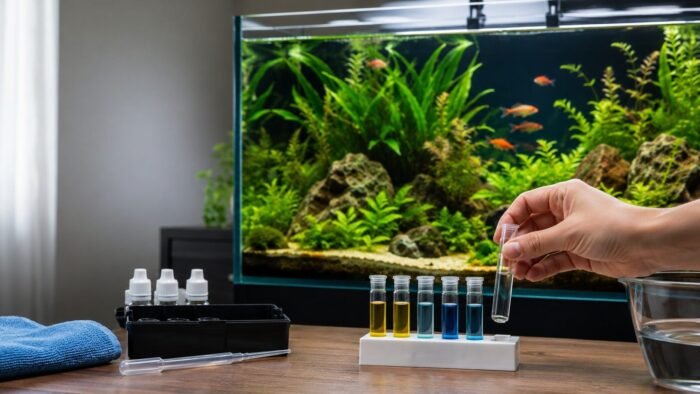
Because there is no substrate or established biofilm, you will need to monitor water closely and do frequent water changes to keep ammonia and nitrite in check, guided by the readings in our water parameters guide.
How long to quarantine
Two to four weeks is the standard period. Two weeks catches many obvious problems, while a full four weeks gives slower-developing infections time to appear. For marine fish or fish from a source you do not fully trust, lean toward the longer end. The goal is simple: the fish should be eating well, behaving normally, and free of visible symptoms before it joins your display.
What to watch for
- White spots, dusting, or other visible signs of parasites.
- Frayed fins, sores, or cottony growth.
- Loss of appetite, clamped fins, or lethargy.
- Rapid breathing or flashing against surfaces.
If symptoms appear, you can treat the fish in quarantine without risking your main tank. If the fish stays healthy and active throughout the period, it is ready to move.
To treat or to observe?
Observation is a sensible default for many new freshwater and marine arrivals. Monitor appetite, breathing, skin, fins, faeces, and behaviour while keeping ammonia and nitrite at zero.
Routine medication without symptoms can expose fish to side effects, complicate diagnosis, and affect the biological filter. Use a preventive treatment only when a qualified source recommends it for a known risk and the species, dose, and water chemistry have been checked.
Acclimating the fish afterward
When quarantine is complete, move the fish into the display the same careful way you brought it home: match temperature and chemistry, dim the lights, and avoid pouring quarantine water into the main tank. A calm transfer preserves the health you spent weeks protecting.
A simple week-by-week routine
A quarantine period does not need to be complicated. A straightforward routine keeps it manageable:
- Week 1: acclimate the new fish into the quarantine tank, offer food, and simply observe. Test water daily and do small water changes to control ammonia.
- Week 2: continue observing for any symptoms while the fish settles and eats normally.
- Weeks 3 to 4: if all remains well, the fish is nearly ready. If symptoms appeared, treat and extend the period until it recovers fully.
- End: only move a fish that is eating well, behaving normally, and free of visible signs of disease.
Keeping a small notebook or note on your phone of feeding and behavior makes it easy to spot subtle changes over the weeks.
Avoiding cross-contamination
Quarantine only works if you do not carry pathogens between tanks on your equipment. Use a dedicated net, siphon, and bucket for the quarantine tank, or disinfect shared tools thoroughly between uses and let them dry completely. Wash your hands and arms between tanks, and never pour quarantine water into your display. These small habits close the gap that otherwise undermines the whole point of quarantine.
Freshwater versus marine quarantine
The principle is the same in both systems: isolate, observe, maintain excellent water, and avoid sharing wet equipment. Marine displays make treatment more difficult because copper and several other medications are unsafe around corals and invertebrates, so a separate hospital tank is particularly valuable.
The intensity and length of quarantine should reflect the species, source, transport history, and disease risk rather than the purchase price of the fish.
Common mistakes
- Skipping quarantine entirely, the most common cause of avoidable outbreaks.
- Using an uncycled quarantine tank without monitoring water, so the fish suffers ammonia stress.
- Cutting quarantine short because the fish looks fine in the first few days.
- Reusing nets, siphons, or buckets between the quarantine and main tanks without cleaning them.
Quarantine protects the display tank
Quarantine feels like an inconvenience until the first time it saves your whole tank. Many experienced keepers treat it as strongly recommended precisely because they once lost a community to a single skipped step. A spare 10-gallon tank and a seeded sponge filter are a small price for that protection.
When treatment belongs in expert hands
Observation is the default for many new arrivals, but symptoms such as rapid breathing, persistent scratching, ulcers, white spots, or sudden losses need a specific response. Avoid combining medications or treating routinely without understanding species sensitivity, water chemistry, and local product rules.
Quarantine questions before buying new fish
Do I need to quarantine if I buy from a trusted store?
Yes. Even healthy-looking fish can carry latent parasites, and shipping stress can trigger them after purchase. Quarantine protects against the invisible risks.
Can I quarantine plants too?
Plants can carry pests and snails, so a separate plant quarantine or dip is worthwhile, though the process differs from quarantining fish.
What if I only have one tank?
A simple, inexpensive bare-bottom tank with a seeded sponge filter is enough. It does not need to be a permanent fixture; you can store it between uses.
Can I quarantine more than one new fish at a time?
Yes, as long as the new fish are compatible and the quarantine tank is not overcrowded. Quarantining a batch together is common, just watch that one sick fish does not stress the others, and be ready to separate any that show symptoms.
A separate quarantine tank protects every fish you own
Set up a simple bare-bottom quarantine tank with a seeded sponge filter and heater, hold every new fish for two to four weeks while monitoring its health, treat any problems there, and acclimate it carefully into your display. That single habit prevents most of the disease heartbreak beginners experience.