A filter is just a box that pushes water through media. The media is what actually cleans your tank, and understanding the three jobs it does turns filter maintenance from guesswork into routine. Get the media right and your filter quietly handles waste for years. Get it wrong, usually by replacing the wrong part, and you can crash the whole tank.
Filtration does three separate jobs, and most filters combine all three. Our filtration guide covers filter types, while this guide focuses on what goes inside them.
The three types of filtration
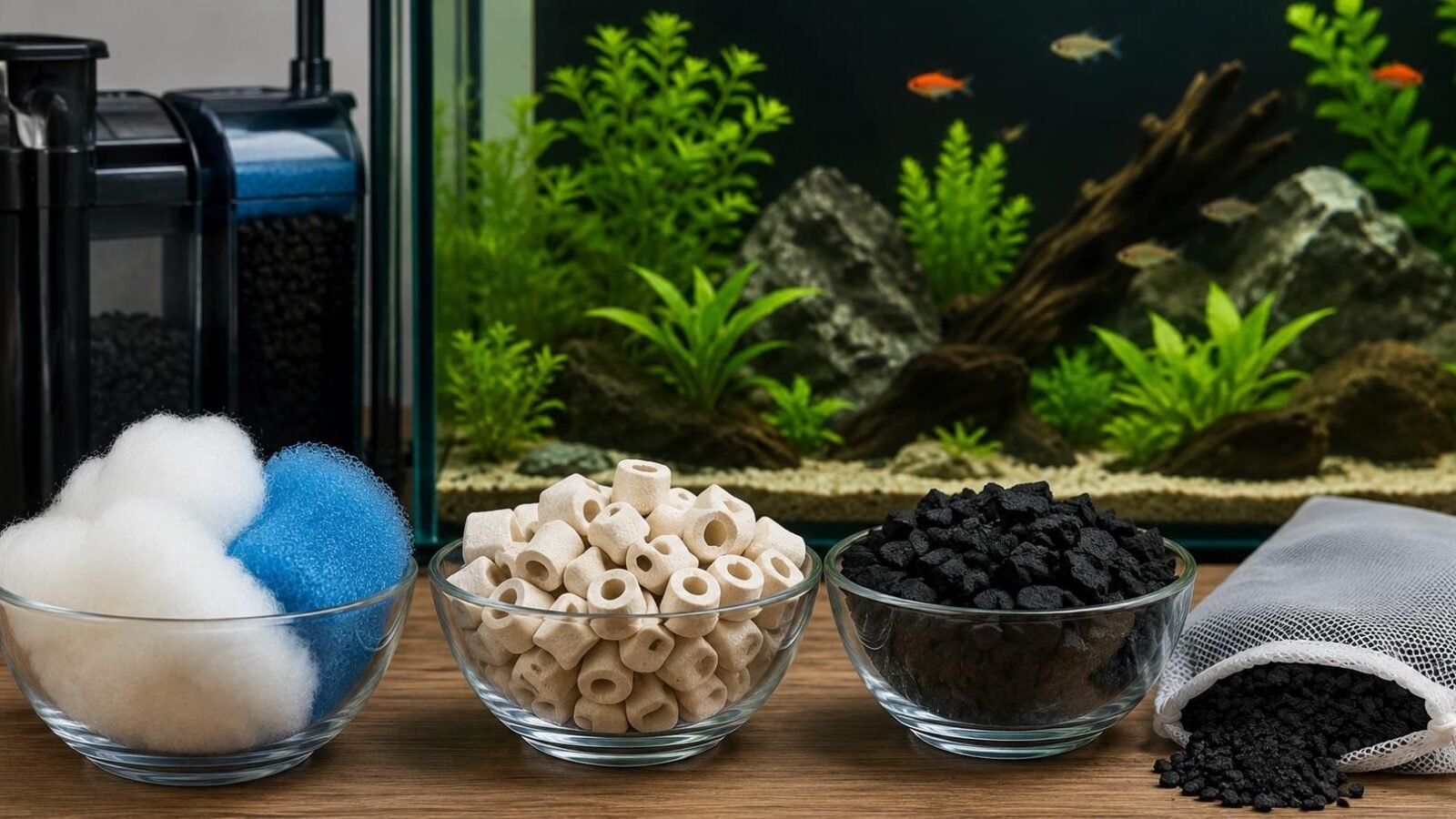
Every aquarium filter performs some mix of three roles. Mechanical filtration traps physical debris. Biological filtration hosts the bacteria that process toxic waste. Chemical filtration absorbs dissolved compounds. Each uses a different kind of media, and each has different maintenance needs.
Mechanical media
Mechanical media strains solid particles from the water, things like fish waste and uneaten food. Common forms include sponges and filter floss. This is the dirtiest media and the one you clean most often. Rinse it in old tank water when flow slows, and replace floss when it falls apart. Clear water is the visible payoff of good mechanical filtration.
Biological media
This is the most important media in the tank, and the one beginners damage most. Biological media gives beneficial bacteria a surface to colonize, and those bacteria convert deadly ammonia into nitrite and then into far safer nitrate. Forms include ceramic rings, porous blocks, and bio balls. The golden rule is simple: never replace all of it at once. Doing so removes your bacteria colony and forces the tank through a new cycle, with ammonia spiking. Rinse it gently in old tank water only when it clogs, and otherwise leave it alone.
Chemical media
Chemical media absorbs dissolved substances from the water. Activated carbon is the most common type, useful for removing tannins, odors, and medications after treatment. It is optional for most tanks. Carbon also exhausts over a few weeks and then does nothing, so replace it on schedule if you use it. Many healthy planted and community tanks run without any chemical media at all.
The order of flow matters
Inside the filter, water should pass through the media in the right sequence. Mechanical first, so debris is trapped before it reaches the deeper media. Biological next, where the bacteria do their work on cleaner water. Chemical usually last, if used at all. This order keeps the biological media from clogging with solids, which protects your most valuable bacteria. Most canister and box filters are designed to stack media this way.
Maintenance without crashing the tank
The safe approach follows a few rules. Rinse mechanical media often in old tank water. Disturb biological media as little as possible, and never in tap water. If you must renew biological media, swap only part of it and leave the rest for a few weeks so bacteria can colonize the new material. Replace chemical media on its own timeline. Keeping nitrate down also depends on this system working, as covered in the guide on lowering ammonia, nitrite, and nitrate.
Common mistakes
Most filter disasters come from a handful of errors: replacing all media at once, rinsing biological media in chlorinated tap water, throwing out ceramic media because it looks dirty, and forgetting that disposable cartridges often combine all three media types, so tossing one removes your bacteria too. Gentle, partial maintenance, as described in the guide on how to clean your aquarium, avoids all of these.
Protect the bacteria that make filtration work
Disposable cartridges can contain much of a small filter’s biological colony. Replacing the entire cartridge at once may remove that colony and allow ammonia or nitrite to rise. Preserve mature biological media, renew mechanical material in stages, and monitor the water after any major filter change.
Filter-media questions
Can I rinse filter media in tap water?
No. Chlorine in tap water kills beneficial bacteria. Always rinse media in a bucket of old tank water removed during a water change.
How often should I replace filter media?
Replace mechanical media when it wears out and chemical media on schedule. Preserve biological media as long as possible, renewing only part of it at a time.
Do I need activated carbon in my filter?
Not usually. Carbon is optional and most useful for removing medications or tannins. Many tanks run perfectly well without it.
Keep biological media stable and maintain the rest in stages
Know what each media does. Mechanical traps debris and gets cleaned often. Biological hosts your bacteria and must be protected. Chemical is optional. Rinse in old tank water, never replace everything at once, and keep your biological media safe. Treat the media right and the filter takes care of the rest.