Cleaning a tank the wrong way does more harm than not cleaning it at all. Scrub everything, replace all the water, and rinse your filter under the tap, and you wipe out the very bacteria that keep your fish alive. The goal of aquarium maintenance is not a sterile tank. It is a stable one, where you remove waste without destroying the living system inside it.
A healthy aquarium is a balanced ecosystem. Good cleaning supports that balance instead of resetting it every week.
The mistake that crashes tanks
The most damaging habit is treating the aquarium like a fish bowl that needs a full scrub down. New keepers strip the tank, replace every drop of water, and wash the filter sponge under a running tap. Each of those steps kills beneficial bacteria, and the result is a tank that crashes back into a mini cycle, with ammonia spiking and fish suffering. Maintenance should be gentle and partial, never total.

A simple weekly routine
Most tanks stay healthy on a short, regular routine rather than occasional deep cleans.
- Change 20 to 25 percent of the water using the method in our water change guide.
- Wipe the inside glass to clear algae film before it builds up.
- Vacuum part of the substrate to lift settled waste while you drain.
- Check equipment, confirming the heater and filter are running as they should.
Cleaning the glass
Use an algae scraper or magnet cleaner to clear the inside front glass. For stubborn spots, a razor scraper works on glass tanks, though acrylic scratches easily, so use a plastic blade there. Clean the outside with plain water or a cleaner made for aquariums, never household sprays, whose fumes and residues can poison the water.
Vacuuming the substrate
A gravel vacuum pulls trapped waste from the substrate while you siphon out water for your change, so the two jobs happen at once. In a gravel tank, push the vacuum into the bed to lift debris. Over a planted or sand tank, hover just above the surface instead, so you collect waste without uprooting plants or sucking up sand. Clean a different section each week rather than the whole bed at once.
Cleaning the filter the right way
Your filter holds the largest bacteria colony in the tank, so treat it with care. When flow slows, rinse the media in a bucket of old tank water you just removed, never under the tap. Chlorine in tap water kills the bacteria on contact. Squeeze sponges gently in that bucket and put them back. Replace only worn out mechanical media, and never swap all of it at once. the guide to aquarium filter media explains which parts you preserve and which you renew, building on our filtration overview.
Decorations and plants
Ornaments rarely need cleaning, but if algae or buildup bothers you, scrub them in plain water or old tank water. Skip soap entirely. Live plants need only light trimming of dead leaves. If you must remove an item to clean it, do it quickly and return it, since decorations and surfaces also host helpful bacteria.
Cleaning is one part of a wider routine, and the full breakdown of equipment care and maintenance intervals covers the quarterly and annual tasks that are easy to forget entirely.
What to never do
A few actions cause more harm than good. Do not remove your fish for routine cleaning, which stresses them needlessly. Do not replace all the water at once. Do not wash filter media in tap water. Do not use soap or household cleaners anywhere near the tank. And do not deep clean everything on the same day, which strips too much bacteria at once. Persistent algae despite good cleaning points to a different cause, covered in the guide on why your aquarium has algae.
Clean selectively rather than sterilising the tank
Aquariums are maintained, not sterilised. Small water changes, selective substrate vacuuming, glass cleaning, and gentle filter maintenance preserve biological stability. Deep-cleaning every surface at once removes useful bacteria and creates more disruption than most healthy tanks need.
A maintenance rhythm that prevents deep cleans
The tanks that need dramatic clean-ups are the ones that were left alone too long. Spreading small tasks across a schedule keeps every job short and means the biological filter is never disturbed on more than one front at a time.
| Frequency | Task | Roughly how long | Why the interval matters |
|---|---|---|---|
| Daily | Check fish behaviour, count heads, confirm heater and filter running | 1 minute | Catches equipment failure and illness within hours |
| Weekly | 25 percent water change, vacuum one third of substrate, clean front glass | 20 to 30 minutes | Exports nitrate before it accumulates; keeps detritus low |
| Weekly | Wipe the outside glass and lid, check for salt creep or hard-water film | 5 minutes | Light reaching the tank stays consistent |
| Fortnightly | Rinse the mechanical media, the sponge or floss, in removed tank water | 5 minutes | Restores flow without touching biological media |
| Monthly | Trim plants, check flow rate, inspect cords and drip loops | 15 minutes | Catches declining pump output before it becomes failure |
| Quarterly | Replace worn mechanical media, clean impeller and intake tube | 20 minutes | Restores full flow; impeller build-up is the usual cause of weak filters |
| Twice yearly | Replace airline, check heater accuracy against a separate thermometer | 15 minutes | Heaters drift before they fail outright |
The critical rule underneath this schedule is separation. Never do a large water change and a filter clean on the same day, and never replace media in the same week you rearrange the substrate. Each of these disturbs part of the bacterial population, and the tank absorbs any one of them comfortably but not all at once.
Cleaning problems that are not dirt
Several common complaints get treated as cleaning failures when they are actually chemistry or biology, and scrubbing makes them worse.
A white, crusty line above the waterline on the glass is mineral deposit from evaporation, not algae. It will not scrape off easily with an algae pad. Wipe it with a cloth dampened in white vinegar, on the outside surfaces or above the water line only, then rinse thoroughly before it can drip in.
A greasy, still film on the water surface is a biofilm of proteins and oils, common in tanks with little surface agitation. Scrubbing does nothing. Increase surface movement by aiming the filter outflow slightly upward, or lay a sheet of kitchen paper flat on the surface and lift it to remove the film in one pass.
Cloudy water in a new tank is a bacterial bloom, and cleaning is precisely the wrong response. It clears on its own within days as the population stabilises. Water changes and filter cleaning during a bloom prolong it.
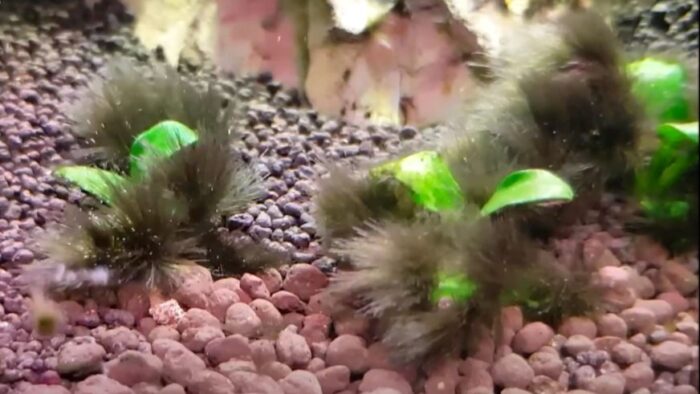
Brown dust coating everything in a young tank is diatoms, feeding on silicates that leach from new substrate and source water. It runs its course over a few weeks and then disappears permanently. Wiping the glass is fine, but stripping the tank is unnecessary and delays the natural resolution.
Green water that returns days after every change is suspended algae responding to light and nutrients, not dirt. Blackout, UV or reduced photoperiod resolve it; more cleaning does not.
Cleaning questions that prevent overmaintenance
How often should I clean my aquarium?
A small weekly routine of a partial water change, glass wipe, and light substrate vacuum suits most tanks. Deep cleaning is rarely needed and often harmful.
Can I clean my filter and change water on the same day?
It is better to space them out. Both disturb bacteria, so doing them on separate days reduces the shock to your tank.
Why does my tank get cloudy after cleaning?
Usually because too much was cleaned at once, triggering a small bacterial bloom or mini cycle. Gentler, partial maintenance prevents it.
Should I ever take all the water out and start again?
Almost never. A full teardown destroys the biological filter and forces the tank to cycle from scratch with fish present. The only genuine cases are a serious contamination event, such as a household chemical entering the tank, or a structural repair. Even then, save as much mature filter media in tank water as possible.
How do I clean algae off live plants without damaging them?
Gently wipe sturdy leaves like anubias and sword between finger and thumb during a water change. For delicate species, trim the worst affected leaves instead. Then address the cause, which is nearly always excess light or nutrient imbalance rather than insufficient cleaning.
Regular light maintenance beats occasional deep cleaning
Clean to maintain, not to sterilize. Change part of the water weekly, wipe the glass, vacuum a section of substrate, and rinse filter media only in old tank water. Avoid soap, full water changes, and total scrub downs. Do less, do it regularly, and your tank stays clear and stable.
Featured image: Cody Meshes Cleaning Tank () — Photo: U.S. Fish and Wildlife Service Southeast Region (Public domain), via Wikimedia Commons.