A test kit is a diagnostic tool, and most aquarium problems are solved the moment you stop guessing and measure. Cloudy water, dying fish, stubborn algae: each one has a number behind it. The question is not whether to test, but what to test, how often, and with what. Liquid kits answer those questions more honestly than the strips most beginners start with.
Testing turns vague worry into a clear next step. Once you can see your readings, the right action is usually obvious.
Why testing matters
You cannot see ammonia, nitrite, or nitrate, yet they decide whether your fish thrive or suffer. Water can look crystal clear while carrying enough ammonia to burn gills. Regular testing catches these invisible threats early, while the fix is still a simple water change rather than an emergency. It also tells you when a tank has finished its cycle and is safe to stock.
Liquid, strip, or digital
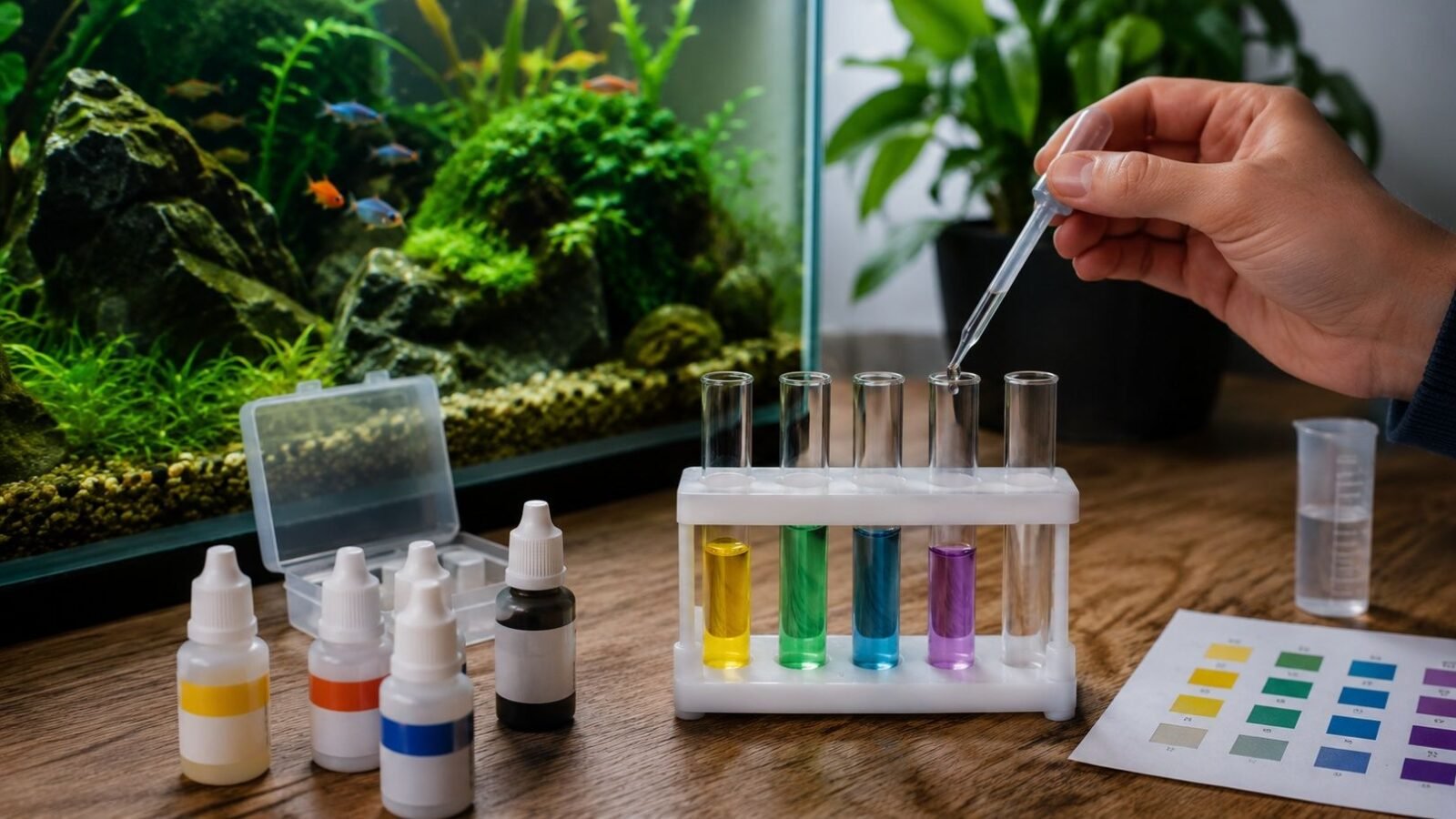
- Liquid test kits. The standard for accuracy and value. You add drops to a water sample and compare the color to a chart. Slightly fussier, far more reliable.
- Test strips. Quick and convenient, but often imprecise and prone to error from humidity or technique. Useful for a fast screen, not for diagnosing a problem.
- Digital meters. Handy for pH, temperature, and salinity, but they need calibration and upkeep. Worth it for specific parameters rather than everything.
For most aquarists, a quality liquid master kit is the best first purchase.
What a freshwater tank should test
Five readings cover the essentials.
- Ammonia and nitrite, which should always read zero in an established tank.
- Nitrate, kept low through water changes.
- pH, to confirm it is stable and suits your fish.
- General and carbonate hardness, which affect pH stability and matter for certain species and plants.
the guide to aquarium water parameters explains what each value means, and the guide on lowering ammonia, nitrite, and nitrate covers how to act on a bad reading.
What saltwater adds
Marine and reef tanks test everything above plus salinity, and reef tanks add alkalinity, calcium, and magnesium, the parameters corals depend on. the guide to reef tank water parameters details those ranges and how often to check them.
How often to test
Match frequency to the situation. Test daily during a cycle or any crisis, weekly for an established tank as routine maintenance, and before and after big changes such as adding fish or adjusting equipment. New tanks and heavily stocked tanks need more frequent checks than mature, lightly stocked ones.
Read and log your results
A single reading is a snapshot. A log is a story. Write down your numbers with the date each time you test, and patterns appear that a one off reading hides, like nitrate creeping up week by week before it ever stresses a fish. That trend is your cue to act, and it often explains issues like those in the guide on why your aquarium has algae.
Keep your kit honest
Reagents and strips expire, and an expired kit gives false comfort. Check the dates, store kits cool and dark, and replace them when they age out. Calibrate digital meters on the schedule the maker recommends. A test you cannot trust is worse than no test, because it makes you confident about the wrong thing.
Record results so changes have context
Written results give each test context. Note the date, time, recent feeding, water changes, dosing, and livestock additions alongside the number. That record makes it easier to distinguish a real trend from a single testing error or a normal daily fluctuation.
Water-testing questions
Are liquid test kits better than strips?
Generally yes. Liquid kits are more accurate and cost less per test over time. Strips are fine for a quick screen but not for diagnosing a real problem.
How often should I test an established tank?
Weekly is a good baseline, with extra tests during cycling, after adding livestock, or whenever something looks wrong.
Do test kits expire?
Yes. Reagents and strips lose accuracy over time. Check expiry dates, store kits properly, and replace them when they age out.
Testing is useful only when results guide action
Stop guessing and start measuring. A liquid master kit covering ammonia, nitrite, nitrate, pH, and hardness answers most freshwater questions, while reef tanks add salinity, alkalinity, calcium, and magnesium. Test on a schedule, log the numbers, and keep your reagents fresh. Your test kit is the cheapest problem solver you own.