The clownfish is the fish that launches most saltwater hobbies, and for good reason. It is hardy, widely captive-bred, reef-safe, and bursting with character, from its waddling swim to its fierce defense of a chosen patch of the tank. Behind the cartoon fame, though, is a real marine fish with real needs. This guide covers how to keep clownfish well, how to encourage a bonded pair, and the myths, especially about anemones, that trip up beginners.
Much of what people think they know about clownfish comes from films and aquarium folklore rather than husbandry. Sorting the accurate from the mythical, particularly around tanks, pairs, and anemones, makes clownfish keeping far simpler than its reputation suggests and sets you up for years of reliable enjoyment.
Choosing your clownfish
The ocellaris and percula clownfish are the two beginner staples, both hardy and reef-safe. Always choose captive-bred specimens. They adapt far better to aquarium life, carry fewer parasites, and are more peaceful than wild-caught fish. Avoid the larger, more aggressive species such as maroon clownfish for a first tank. For where clownfish fit among other beginner species, see the guide to the best saltwater fish for beginners.
Tank and water requirements
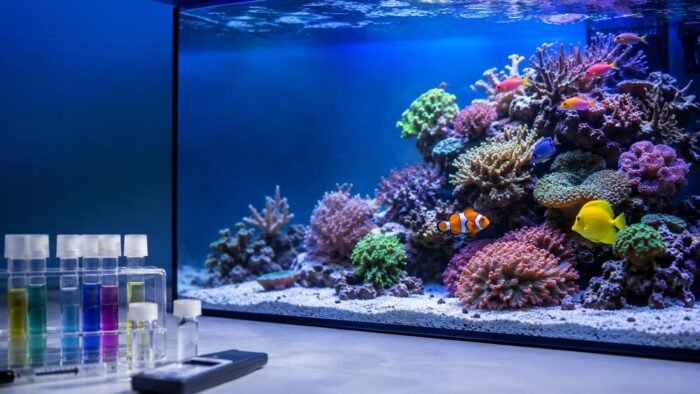
A pair of ocellaris clownfish can live comfortably in a 20-gallon tank, though larger is always more stable.
- Temperature: 76 to 80°F, held steady.
- Salinity: specific gravity 1.024 to 1.026, measured with a refractometer.
- Ammonia and nitrite: zero, in a fully cycled marine tank.
- A secure lid, since clownfish can jump, especially when establishing territory.
As with any marine tank, stability is everything. The setup, cycling, and salinity basics are covered in the guide to setting up your first reef tank.
Do clownfish need an anemone?
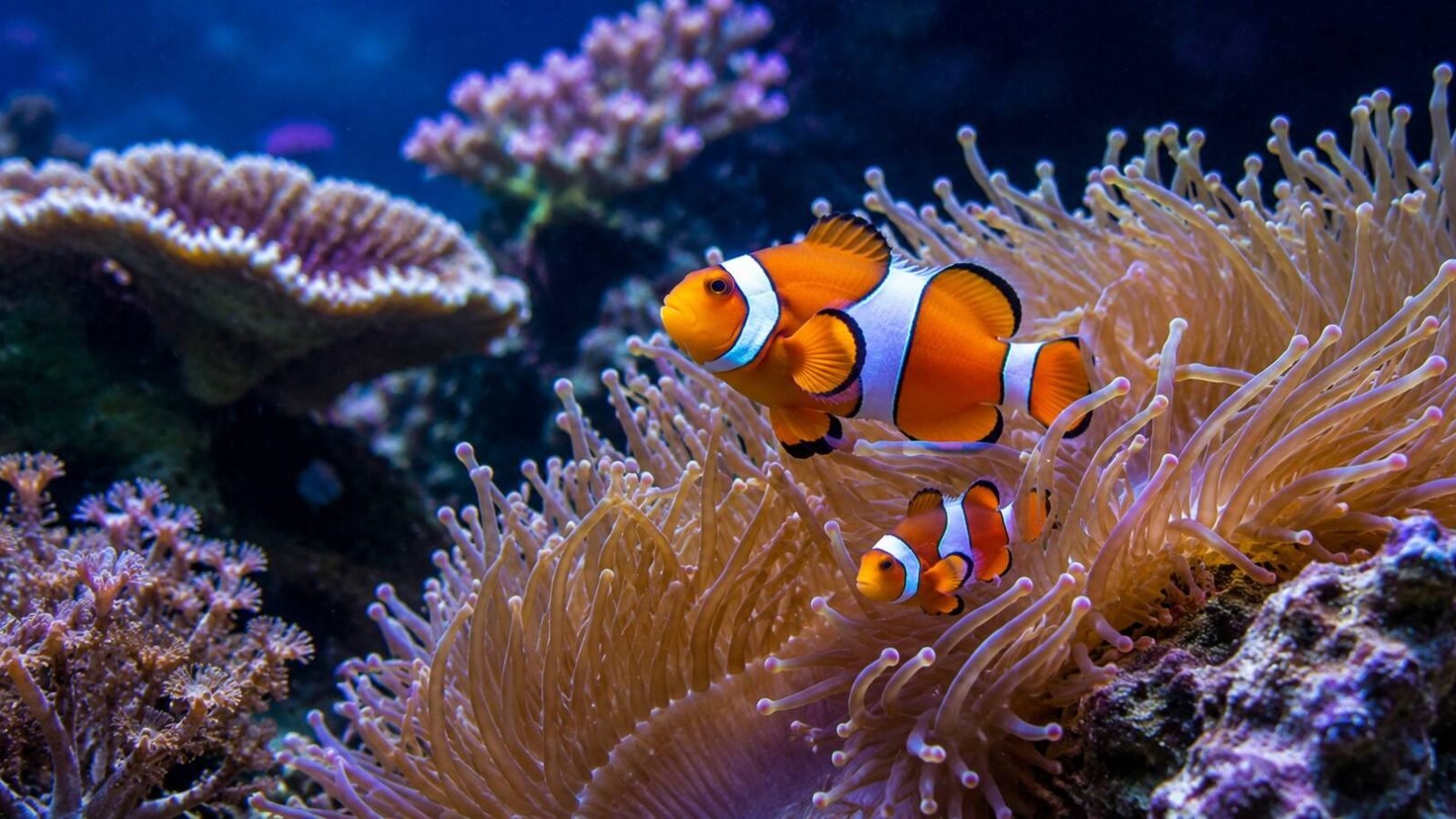
This is the most common clownfish myth. In the wild, clownfish shelter among anemones, but in the aquarium they do not need one to be healthy or happy. Anemones are demanding, often wild-caught, and frequently die in beginner tanks, so they are best avoided early on. Tank-bred clownfish frequently never recognize an anemone at all, and many happily host a coral, a powerhead, or even a corner of the glass instead. Keep clownfish for years without an anemone and they will thrive.
Forming a bonded pair
Clownfish are all born male and can change to female, with the largest, most dominant fish becoming the female of a pair. To form a pair, buy two small juveniles together, or one larger and one smaller fish, and let them sort out the hierarchy. Once paired, they bond for life and rarely tolerate a third clownfish, so resist adding more.
Diet
Clownfish are omnivores and easy to feed. A quality marine pellet or flake as the staple, supplemented with frozen mysis and brine shrimp a few times a week, keeps them healthy and colorful. Feed small amounts once or twice a day, following the same portion discipline outlined in our broader feeding guide, since overfeeding fouls a small marine tank quickly.
Behavior and tankmates
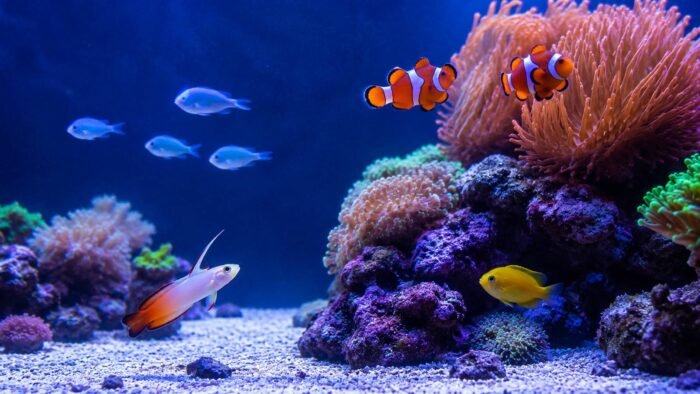
Clownfish are territorial around their chosen spot but otherwise peaceful, and they coexist with most reef-safe community fish such as gobies, royal grammas, and cardinalfish. A bonded pair will host and defend a small area, which is normal and entertaining rather than a problem. Avoid keeping them with large aggressive fish that might bully them.
Understanding hosting behavior
In the wild, clownfish form a partnership with anemones, gaining protection in exchange for cleaning and defending their host. In aquariums, that instinct often shows up in surprising ways. A clownfish may adopt a coral, a powerhead, a filter intake, or even the tank’s thermometer as a substitute host, wriggling and nestling against it. This behavior is harmless and fascinating to watch, and it is far easier to provide than a live anemone. Many tank-bred clownfish never host anything at all and remain perfectly healthy.
Designer and standard varieties
Decades of captive breeding have produced many clownfish color and pattern variations, from standard orange ocellaris to snowflake, black-and-white, and other designer patterns. These are cosmetic differences within the same hardy species, so care is identical regardless of pattern. For a first tank, a standard captive-bred ocellaris offers the best combination of hardiness and value.
A note on breeding
Clownfish are among the more approachable marine fish to breed, which is part of why so many are captive-bred. A bonded pair in a stable tank may lay eggs on a flat surface near their host, with the male tending them. Raising the fry is challenging and requires live foods and a separate rearing setup, so it is an advanced project, but seeing a pair spawn is a rewarding milestone for many keepers.
Common health issues
Marine ich and velvet are the main concerns, usually introduced by new, unquarantined fish. Clownfish are also prone to brooklynella, sometimes called clownfish disease, particularly in stressed wild-caught specimens, which is one more reason to choose captive-bred fish and quarantine new arrivals using our quarantine guide. Stable water and low stress prevent most problems.
Common mistakes
- Buying an anemone for the clownfish before the tank is mature enough to support it.
- Adding a third clownfish to an established pair.
- Choosing wild-caught or aggressive species for a first tank.
- Skipping quarantine and importing parasites.
Keep the first clownfish setup simple
Clownfish earn their beginner reputation honestly, but treat them as a genuine marine commitment rather than a novelty. A captive-bred pair in a stable, cycled 20-gallon tank, fed sensibly and left without a finicky anemone, is one of the most reliable and rewarding ways to enter saltwater keeping.
When illness persists in clownfish
Rapid breathing, heavy mucus, flashing, loss of appetite, or a fast-moving outbreak can indicate several marine diseases. Move affected fish to an appropriate hospital system and obtain a reliable diagnosis before choosing treatment. Many effective fish medications cannot be used safely in a reef display.
Clownfish questions for new marine keepers
Can I keep a single clownfish?
Yes. A single clownfish does perfectly well. A bonded pair simply adds interesting behavior.
Will my clownfish host a coral or powerhead?
Often, yes. Tank-bred clownfish frequently adopt a coral, a powerhead, or a tank corner as a substitute host, which is harmless.
How long do clownfish live?
In a well-maintained tank, clownfish commonly live 6 to 10 years or more, making them a genuine long-term pet.
Why is my clownfish swimming oddly near the surface or a powerhead?
Clownfish often wriggle and nestle against an object they have adopted as a host, including a powerhead or the water surface. This hosting behavior is normal. Only worry if it is paired with rapid breathing, loss of color, or refusal to eat.
Stable water and compatible tankmates suit clownfish best
Choose a captive-bred ocellaris or percula clownfish, set up a stable, cycled marine tank of at least 20 gallons, skip the anemone, feed modestly, and quarantine new fish. Do that and you get one of the hardiest, most charming residents in the saltwater hobby.