Reef chemistry punishes neglect in a way freshwater rarely does. A coral cannot swim away from bad water, and the parameters that keep corals alive sit in narrower ranges than anything a freshwater keeper worries about. The good news is that stability matters more than perfection. A steady tank at slightly imperfect numbers beats one that swings wildly around ideal ones.
If you are still planning your system, start with the guide on setting up your first reef tank. This guide focuses on the water itself: what to measure, where to keep it, and why steadiness wins.
Why reef parameters are stricter
Corals build skeletons from minerals in the water and host sensitive symbiotic algae. Both processes depend on stable chemistry. Fish only saltwater tanks are forgiving, much like freshwater. The moment you add corals, alkalinity, calcium, and magnesium start to matter, and rapid changes in any of them stress or kill coral tissue.
The core parameters
Typical mixed-reef targets are useful starting points, not universal prescriptions. Match them to the coral species, salt mix, testing method, and dosing system.
- Salinity: commonly around 35 ppt, measured with a calibrated refractometer or reliable digital meter.
- Temperature: stable within the range suited to the livestock, with daily swings kept small.
- pH: interpret it with alkalinity, gas exchange, and the normal day-night cycle rather than chasing one reading.
- Alkalinity, calcium, and magnesium: keep them balanced and stable for calcifying corals; consumption determines the testing and dosing schedule.
- Nitrate and phosphate: avoid both uncontrolled accumulation and unnecessary attempts to force them to absolute zero.
How often to test
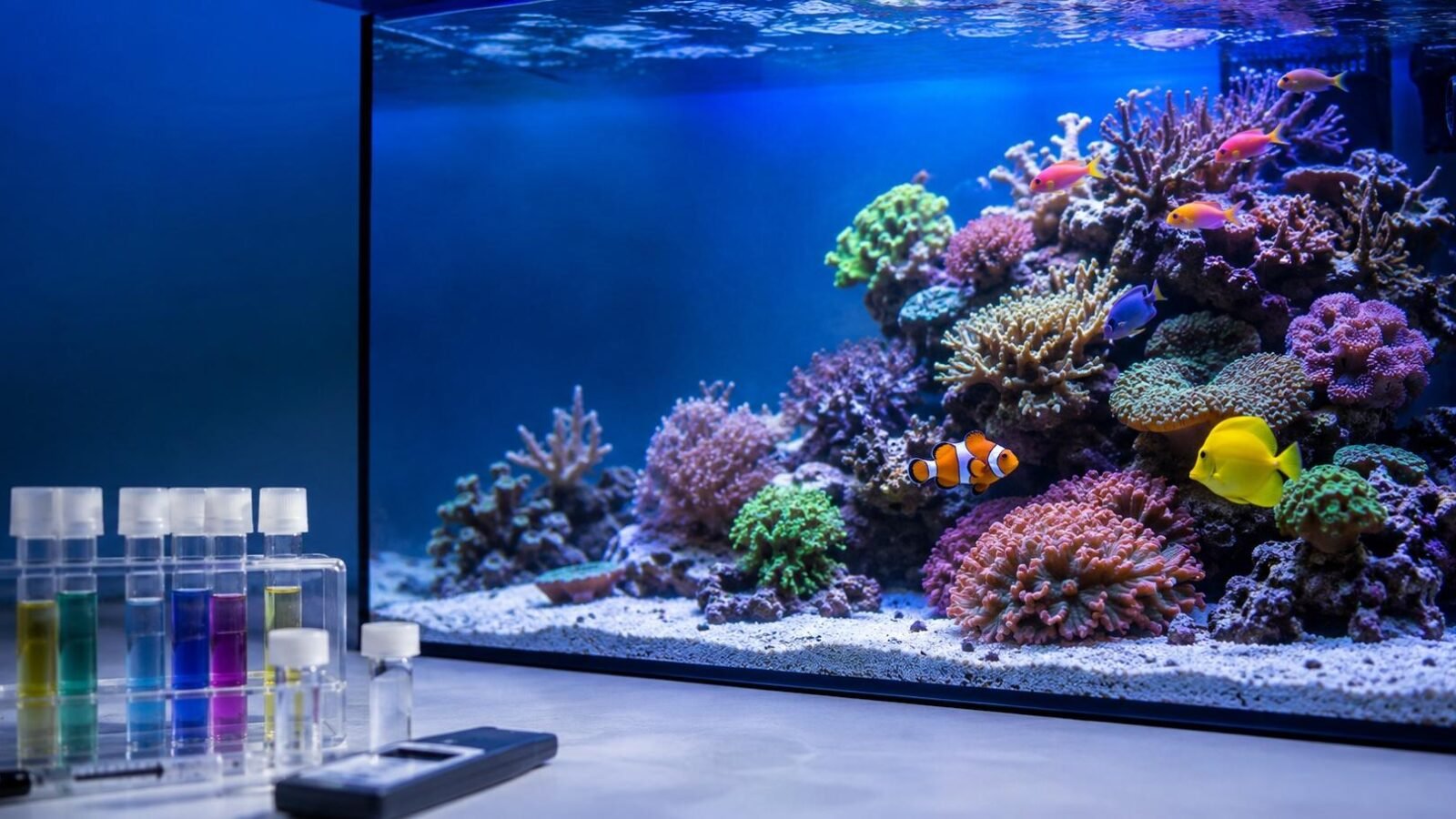
Test more often after setup changes, new dosing, rapid coral growth, or an unexplained change in appearance. Alkalinity may need checking several times a week in a stocked reef, while calcium and magnesium usually move more slowly. Confirm salinity after mixing water, correcting top-off problems, or making a large water change.
The water-testing guide explains how to compare kits and log results.
Stability beats chasing numbers
New reefers often swing their parameters trying to hit textbook values, and the corals suffer from the very changes meant to help them. Pick a target inside each range, then hold it. If your alkalinity sits comfortably at 9 dKH, leave it there rather than pushing for 11. Make adjustments slowly, in small steps, and never correct several parameters at once.
What corals actually need
Different corals have different demands, which guides what you can keep. Soft corals tolerate a wider range and suit new tanks. Stony corals draw heavily on calcium and alkalinity and reward stable, mature systems. the guide to best beginner corals matches species to a tank’s maturity, and the right gear, covered in our saltwater equipment guide, makes holding these parameters far easier.
Common problems
Most reef trouble starts with one of a few issues: salinity drift from topping off with the wrong water, alkalinity crashing because it was not tested often enough, or nutrients climbing from overfeeding and overstocking. Mixing saltwater correctly and keeping fish numbers sensible, as in the guide on best saltwater fish for beginners, prevents most of it.
Track trends instead of chasing a single number
A reef log turns isolated test results into a pattern. Alkalinity often changes faster than calcium or magnesium in a stocked reef, but the useful testing schedule depends on coral demand and dosing. Track the parameters that move in the individual system, then adjust only when a clear trend appears.
Make parameter changes slowly
Corals respond poorly to rapid changes even when the new number falls inside a recommended range. Confirm the test result, calculate adjustments carefully, and change salinity, alkalinity, calcium, magnesium, or nutrients in small steps while observing the system.
Reef chemistry questions
What is the most important reef parameter to watch?
Alkalinity, because it changes fastest as corals consume it. Frequent alkalinity testing catches most problems before they become visible.
Do I need a refractometer, or is a hydrometer enough?
Use a calibrated refractometer or a reliable digital salinity meter. Any instrument can drift, so check it with an appropriate calibration solution rather than assuming the reading is correct.
Should nitrate and phosphate be zero in a reef?
No. Corals need a small amount of nutrients for color and growth. The aim is low and stable, not zero.
A reef benefits from stable parameters, not constant correction
Reef parameters are tighter than freshwater, but consistency carries you. Hold salinity, temperature, alkalinity, calcium, and magnesium steady inside their ranges, keep nutrients low but present, and test the fast movers often. Choose stability over perfect numbers and your corals reward you with slow, steady growth.