Hardscape is the skeleton of any aquascape, and getting it wrong costs you weeks. Untreated rock can quietly raise your water hardness, fresh wood floats for a month, and tannins can stain the water like weak tea. Choose and prepare your rocks and wood properly and they become a stable, handsome foundation that the plants and fish build on.
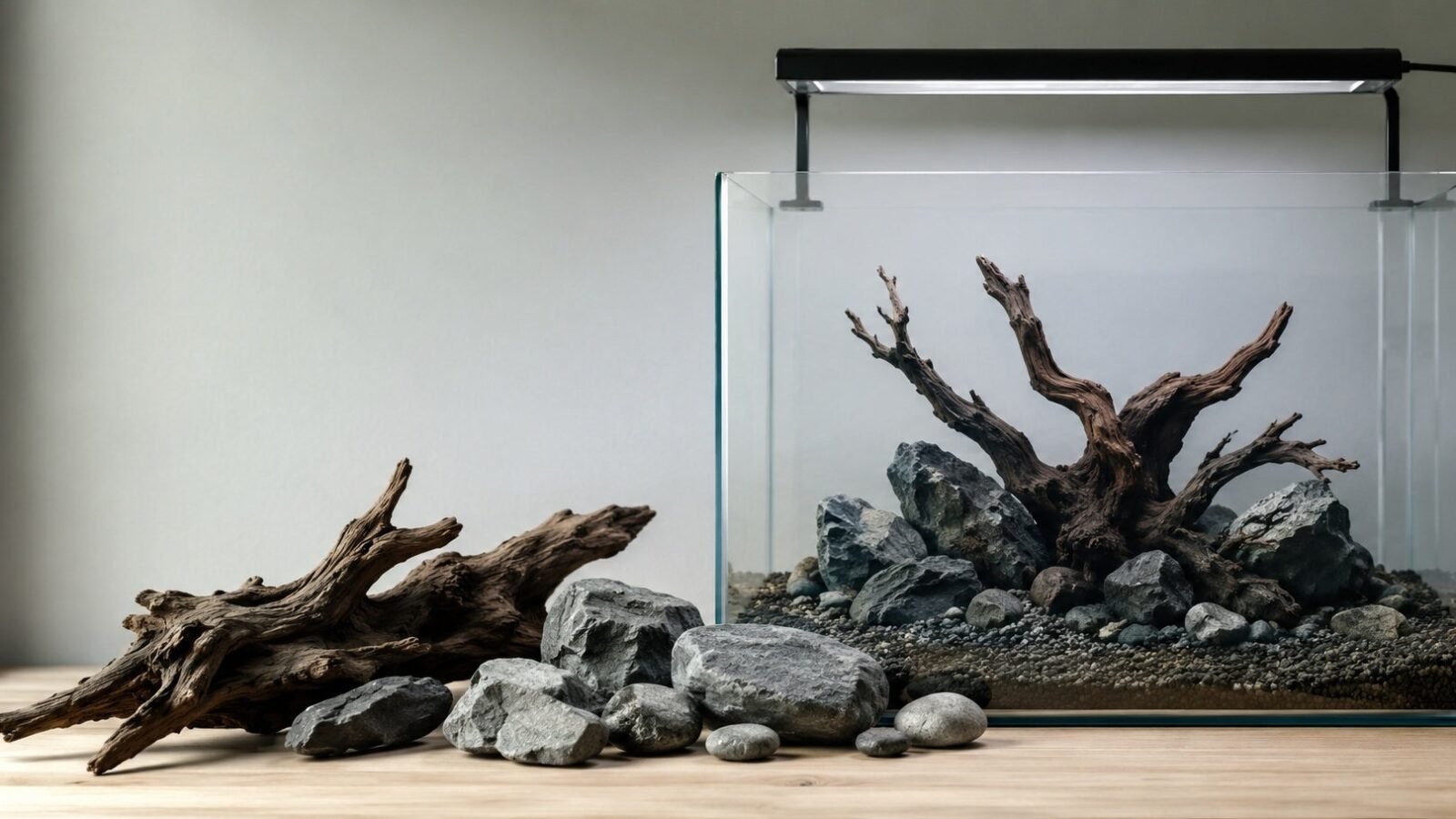
Hardscape means the hard, nonliving structure in your tank: stone and driftwood. It sets the shape of the layout before a single plant goes in, which is why aquascapers obsess over it.
What hardscape does
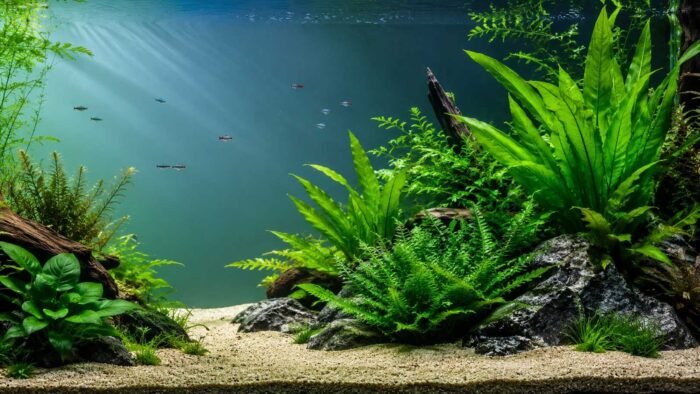
Beyond looks, hardscape gives fish territory and cover, anchors plants like Java fern and Anubias, and creates the depth and focal points that make a tank feel like a scene rather than a box. It also interacts with your water, which is the part beginners overlook.
Choosing aquarium safe rock
The main risk with stone is that some types dissolve slowly and raise hardness and pH. That is fine for a hard water tank but wrong for soft water species and many plants. Test any questionable rock with a simple check: place a few drops of vinegar on it. If it fizzes, it contains carbonate and will raise your hardness, so use it only where that suits your fish.
Popular options include dragon stone, lava rock, and many slates, while seiryu style stone does raise hardness slightly. Avoid rocks of unknown origin from outdoors unless you can confirm they are safe and free of metal veins.
Choosing driftwood
Use wood sold for aquariums, such as spider wood, Malaysian driftwood, mopani, or manzanita. Avoid random wood from outside, which may carry sap, rot, or pests. Each type has a look: spider wood is twiggy and branching, mopani is dense and darkly toned, manzanita is fine and elegant.
Preparing wood
Fresh wood needs work before it behaves. Two issues come up.
- Floating. Dry wood is buoyant. Soak it submerged for one to several weeks until it waterlogs and sinks, or anchor it to a rock or the glass until it stays down on its own.
- Tannins. Wood leaches tannins that tint the water brown. This is harmless and even beneficial for some fish, but if you dislike it, presoak the wood in a bucket with several water changes and run activated carbon in your filter.
Boiling smaller pieces speeds both sinking and tannin release, and it helps sterilize the surface.
Preparing rock
Scrub stone under running water with a clean brush to remove dust and debris. Never use soap. For rock collected outdoors, a longer cleaning and a careful safety test matter more, since you cannot be sure what is on or in it.
Arranging your hardscape
A few simple ideas lift a layout. Work toward a single main focal point rather than a symmetrical wall. Use odd numbers of stones, since they look more natural than even ones. Create a sense of depth by placing larger pieces toward the front and smaller ones behind. the guide to aquascaping layout principles goes deeper on composition, and the plants in our beginner plant guide attach neatly to a finished hardscape.
How hardscape affects water chemistry
This is the quiet variable. Carbonate rich rock and some substrates push pH and hardness up, while driftwood gently lowers pH and adds tannins. Match these effects to your fish. If you keep soft water species, lean on inert rock and wood. Test before and after adding hardscape using our parameters guide, and check our substrate guide for how the base layer fits in.
Composition matters more than expensive materials
Hardscape looks more natural when the main stones or wood pieces vary in size and sit away from the exact centre. A simple arrangement of three related pieces often creates more depth than one expensive centrepiece. Composition and safe preparation matter more than brand or price.
Questions about rocks, wood, and water chemistry
How do I make driftwood sink?
Soak it submerged until it waterlogs, which can take days to weeks, or anchor it to rock or the glass until it stays down by itself.
Is brown water from driftwood harmful?
No. Tannins are harmless and even suit some fish. If you dislike the tint, presoak the wood and run activated carbon in the filter.
How do I know if a rock is aquarium safe?
Drip vinegar on it. Fizzing means it contains carbonate and will raise hardness, which is fine for hard water tanks but not for soft water species.
Safe materials and thoughtful placement build better hardscape
Treat hardscape as both structure and chemistry. Pick stone and wood that suit your water, soak wood until it sinks, manage tannins if they bother you, and arrange pieces around one focal point with odd numbers and real depth. Get the skeleton right and everything you add afterward looks intentional.