Beginner success with live plants comes down to one decision: which plants you choose. Pick a handful of forgiving species and you can grow a green tank with a basic light and no special equipment. Pick demanding plants and even an expensive setup frustrates you. The plants below tolerate low light, skip the need for injected carbon dioxide, and recover from beginner mistakes.
Before you shop, know that thriving plants do more than look good. They use nitrate as fertilizer, compete with algae for nutrients, and give fish cover. A planted tank is often a more stable tank.
What makes a plant beginner friendly
The easiest plants share a few traits. They grow in low to moderate light, draw nutrients from the water column rather than demanding rich substrate, and shrug off swings in conditions that would kill fussier species. Many also attach to wood and rock instead of needing to be planted, which makes them simple to position. If a plant needs intense light and injected carbon to stay healthy, it is not a starter plant.
The best easy plants
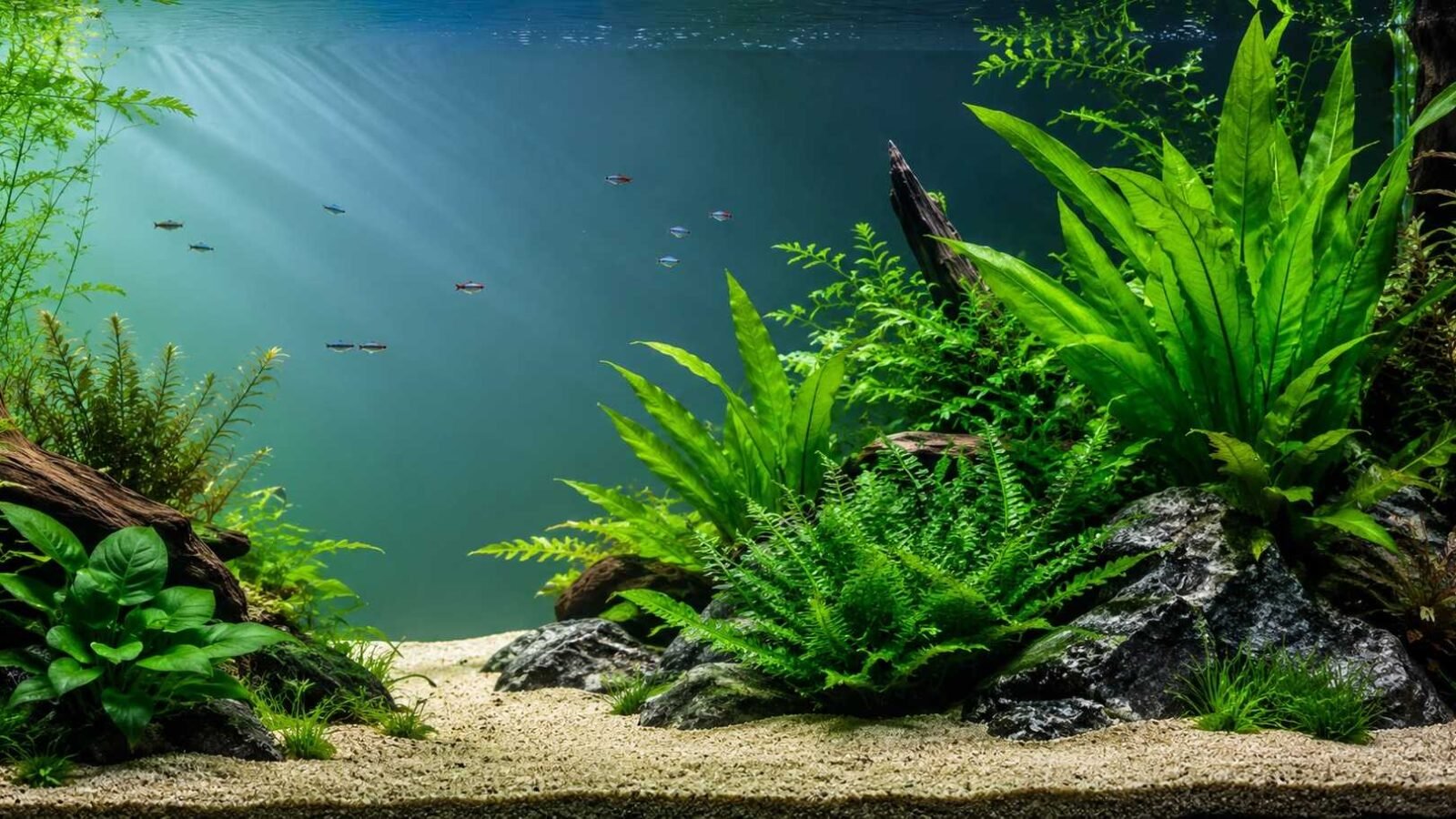
- Java fern. notably tolerant of beginner mistakes. Attach it to wood or rock and leave it alone. Never bury its rhizome in substrate, or it rots.
- Anubias. Slow but tough, with thick dark leaves. Like Java fern, tie it to hardscape rather than planting the rhizome.
- Java moss. A versatile plant that grows on almost any surface and shelters shrimp and fry.
- Cryptocoryne. A rooted plant that adds color low in the tank. It may melt back after planting, then regrows from the roots, so do not panic.
- Vallisneria. Long, grassy leaves that form a green background and spread on their own.
- Amazon sword. A large centerpiece plant for bigger tanks. It appreciates root tabs but tolerates modest light.
- Hornwort. A floating or loosely planted stem plant that grows quickly and soaks up excess nutrients, which helps starve algae.
Match plants to your light
All of the plants above grow under low to moderate light, which is exactly what a basic aquarium LED provides. You do not need a high output fixture to start. If you later want carpeting plants or red species, you move into stronger light and the carbon question, which the guide on CO2 in planted aquariums covers. Our lighting guide explains how to read fixture specs.
Attaching versus planting
Plants fall into two camps. Rhizome plants like Java fern and Anubias attach to surfaces, so you tie or glue them to wood and stone and never bury the rhizome. Rooted plants like swords and crypts go into the substrate, where the right base helps them anchor and feed. the guide on choosing aquarium substrate explains which option suits rooted plants, and our hardscape guide covers the wood and rock you attach the rest to.
Basic care
Easy plants need very little. Give them light for around six to eight hours a day on a timer, add a simple liquid fertilizer if leaves yellow, and trim dead growth so it does not rot. Resist the urge to leave the light on all day, since long hours feed algae more than plants. For placement and balance, the overview of aquascaping layout principles shows how to arrange plants by height.
Common beginner mistakes
Most plant failures trace to a few errors: burying the rhizome of Java fern or Anubias, running the light far too long, expecting fast growth from slow plants, and starting with demanding species. Avoid those and your first planted tank fills in steadily. The hardy plants in the guide to aquatic plants for low light tanks are all reliable choices.
Choose plants that fit the equipment already in place
Java fern, Anubias, and other forgiving plants are useful because they tolerate ordinary aquarium lights and modest fertilising. Starting with plants suited to the existing equipment is more reliable than buying demanding species and trying to solve every problem with stronger light or more additives.
Care note
Live plants share the tank with animals, so introduce them thoughtfully. Quarantine or rinse new plants to avoid importing pests and unwanted snails, and remove any rapidly rotting leaves promptly, since decaying plant matter raises waste and can stress fish.
Beginner plant questions
Do I need special lighting for these plants?
No. A standard aquarium LED running six to eight hours a day grows every plant on this list. Intense lighting is only needed for demanding species.
Do beginner plants need CO2?
No. All of these grow without injected carbon. CO2 speeds growth and enables harder plants, but it is optional for an easy planted tank.
Why are my new plants melting?
Some plants, especially crypts, shed leaves after a move while they adapt, then regrow from the roots. Leave them be and trim only fully dead growth.
Easy plants succeed when light and planting method match
Choose forgiving plants and the rest of planted keeping gets easy. Java fern, Anubias, crypts, vallisneria, and a floating stem plant will green up a basic tank with no carbon and a simple light. Match the plant to your conditions, attach rhizomes instead of burying them, and let slow growers take their time.