Saltwater fishkeeping has a reputation for being unforgiving, and much of that comes from beginners choosing the wrong fish. Many popular marine species are wild-caught, delicate, or grow far too large for a first tank. The good news is that a solid handful of hardy, captive-bred saltwater fish adapt well to a young system and forgive the small mistakes every new marine keeper makes. Choosing from that list is one of the most important decisions in starting a saltwater tank.
The marine hobby rewards patience and punishes impulse buys harder than freshwater does, simply because the fish and the setup cost more and recover from mistakes more slowly. Spending your first stocking choices on proven, hardy species buys you the room to learn marine husbandry without expensive losses along the way.
What makes a saltwater fish beginner-friendly
- Captive-bred or aquacultured, so it arrives healthier and adapts to aquarium life.
- Hardy and tolerant of minor swings in water quality.
- Reasonably small at adult size, fitting a 20 to 40 gallon tank.
- Peaceful enough for a mixed community and, ideally, reef-safe.
These mirror the freshwater criteria in our beginner freshwater fish guide, with the added emphasis on captive-bred stock that marine fish require.
The best beginner saltwater fish
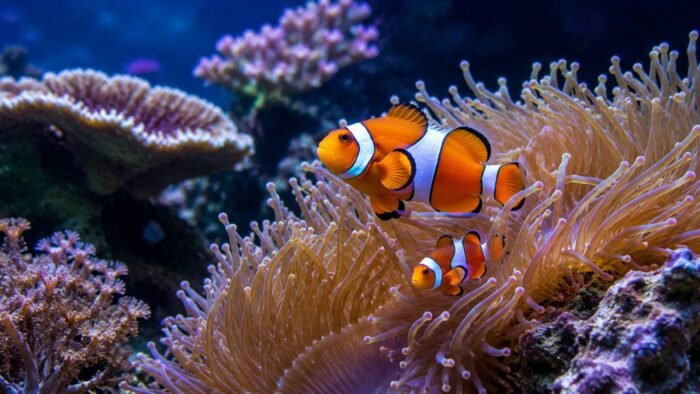
Ocellaris clownfish
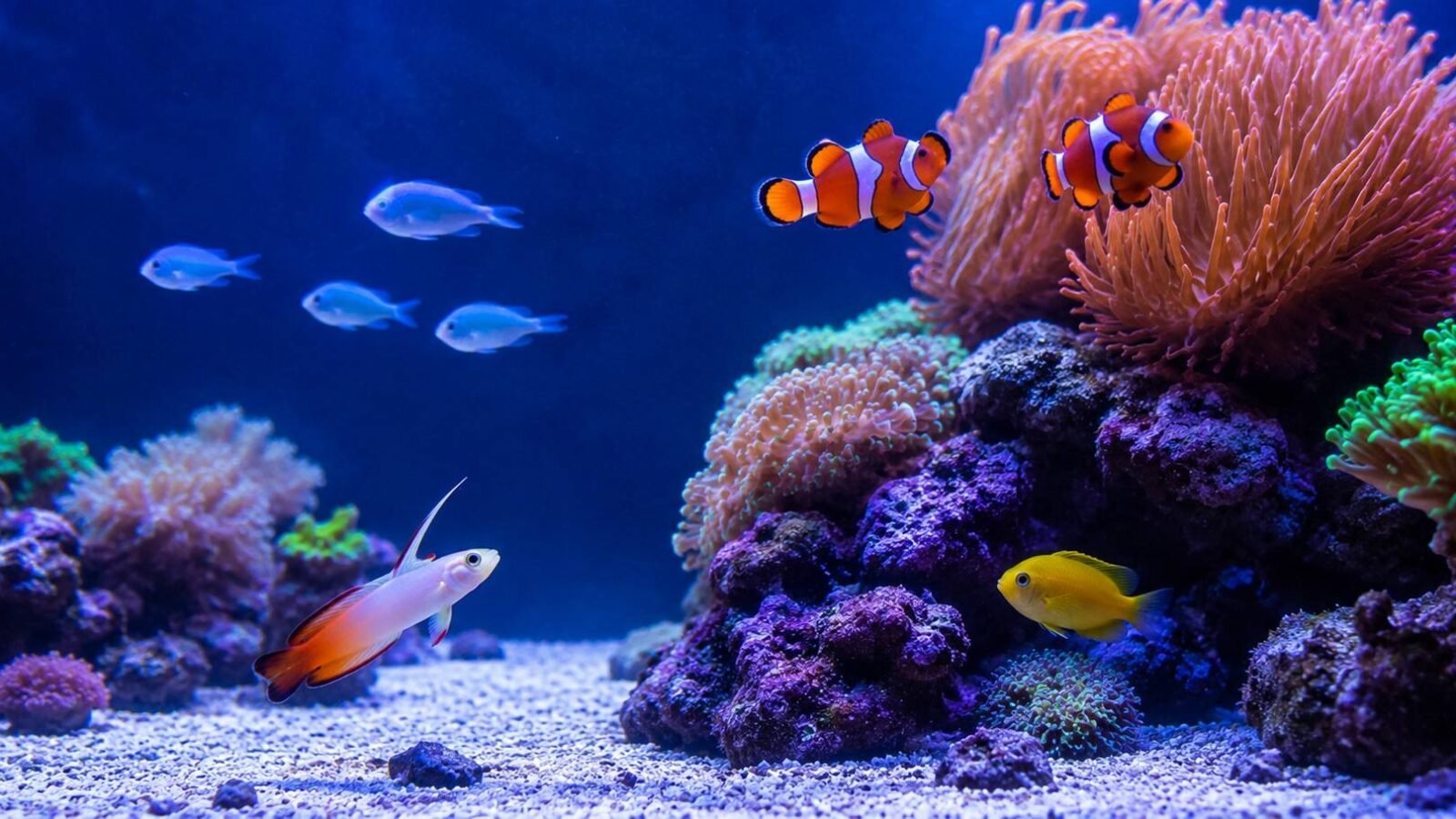
The classic first marine fish: hardy, widely captive-bred, full of personality, and reef-safe. A bonded pair is endlessly watchable. They are forgiving enough for a young tank and have their own dedicated clownfish care guide for the details.
Royal gramma
A small, vivid purple-and-yellow fish that is hardy, reef-safe, and stays under three inches. It appreciates rockwork to claim as territory and is generally peaceful.
Firefish goby
Elegant and peaceful, with a flicking dorsal fin. Hardy once settled, though it is a jumper, so a lid is essential. Best kept singly or as a bonded pair.
Yellow watchman goby
A characterful bottom-dweller that often pairs with a pistol shrimp in a fascinating partnership. Hardy, reef-safe, and stays small.
Banggai cardinalfish
A striking black-and-white striped fish that is captive-bred, peaceful, and slow-moving. It does well in small groups and tolerates a beginner tank well.
Chromis
A hardy, inexpensive schooling fish that adds movement. They can squabble as they mature, so a small odd-numbered group in adequate space works best.
Species to avoid as a beginner
- Tangs, which need large tanks, often 75 gallons or more, and are prone to disease.
- Mandarin dragonets, beautiful but reliant on live copepods that a young tank cannot supply.
- Anemones, frequently wild-caught and difficult to keep alive.
- Most angelfish and butterflyfish, which are delicate or nip corals.
- Wild-caught damsels, which are hardy but often too aggressive for a small community.
Setting your tank up for success
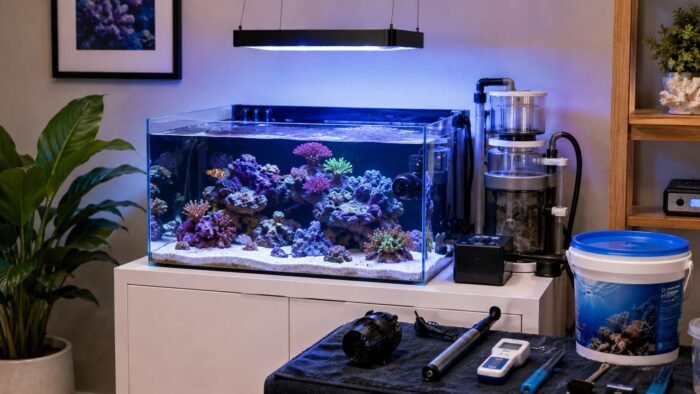
Even the hardiest beginner fish needs a properly prepared tank. That means a fully cycled system, stable salinity, and a sensible stocking order, all covered in the guide to setting up your first reef tank. Add fish slowly, a few weeks apart, and start with the most peaceful species so later additions do not face an entrenched bully.
Why quarantine matters in saltwater
Marine parasites can spread quickly, and many reef displays cannot be medicated without harming corals, shrimp, snails, or porous rock. A separate quarantine system gives new fish time to settle, feed, and show symptoms before they reach the display.
Quarantine is strongly recommended, but medication should still be selected from symptoms, diagnosis, species sensitivity, and the product label rather than given automatically.
Fish-only or reef?
You do not need a full coral reef to keep beginner saltwater fish. A fish-only-with-live-rock setup, often called FOWLR, keeps marine fish with rock for biological filtration and shelter, without the lighting, flow, and chemistry demands of corals. It is cheaper and simpler, and it lets you learn marine basics before committing to coral. Every species above does well in a FOWLR tank, and you can always upgrade toward a reef later as your confidence grows.
Adding fish in the right order
In a marine community, the order you add fish matters as much as which fish you choose. Established residents claim territory, so adding a peaceful fish after an assertive one often leads to bullying.
- Add the most peaceful, least territorial fish first.
- Save more assertive species, like chromis groups, for later.
- Rearranging rockwork before adding a new fish can disrupt existing territories and ease introductions.
- Always acclimate marine fish slowly, ideally by drip acclimation, since they are sensitive to sudden changes in salinity and temperature.
Patience is the theme of marine stocking: a few fish added weeks apart into stable water often beats a rush to fill the tank.
Common mistakes
- Buying wild-caught fish when a captive-bred version exists.
- Adding an aggressive or large species early, then struggling to add anything peaceful later.
- Skipping quarantine and introducing a parasite to the display.
- Choosing fish by color alone without checking adult size and temperament.
Benefits and limitations of a beginner marine tank
The payoff of starting with hardy species is real: vivid color, fascinating behavior, and a manageable learning curve that keeps the hobby enjoyable rather than discouraging. The limitations are worth respecting too. Even beginner marine fish need stable salinity, RO or RODI water, and more careful acclimation than freshwater fish, and they are stocked more sparingly, so a marine tank holds fewer fish than a freshwater tank of the same size. Going in with those expectations prevents the disappointment that comes from treating a saltwater tank like a freshwater one.
Start with a small, compatible marine community
A first saltwater tank built around a clownfish pair and a goby or two, added slowly into stable water, is far more rewarding than an ambitious mix that crashes in the first months. Start small, prioritize captive-bred fish, and let the tank mature before reaching for the harder species.
Medication and reef-safety considerations
Marine treatments can be unsafe for corals, shrimp, snails, and biological filtration. Diagnose and treat fish in a separate system when possible, confirm the product is appropriate for the species, and follow the label carefully. A reef display is rarely the right place for copper-based medication.
Questions about a first saltwater stocking list
What is the easiest saltwater fish to start with?
A captive-bred ocellaris clownfish is the usual recommendation: hardy, reef-safe, inexpensive, and full of personality.
How many fish can I keep in a 30-gallon saltwater tank?
Marine tanks are stocked more lightly than freshwater. A 30-gallon tank might hold a clownfish pair plus one or two small gobies, added gradually.
Do beginner saltwater fish need a reef tank?
No. Many do well in a fish-only setup with live rock, which is simpler and cheaper than a full reef.
How long should I wait between adding new saltwater fish?
Two to three weeks is a sensible gap. It lets the biological filter adjust to the added waste and gives you time to confirm each new fish is healthy and settled before introducing the next.
A simple marine stocking plan is the safest start
Stick to hardy, captive-bred species such as clownfish, royal gramma, firefish, and gobies, prepare a fully cycled and stable tank, quarantine every new arrival, and add fish slowly. That approach turns a supposedly unforgiving hobby into a manageable and beautiful one.