The strongest predictor of beginner success is not tank size or budget. It is fish choice. A modest 10-gallon tank stocked with the right species can run for years with almost no drama, while the same tank filled with the wrong fish becomes a slow chain of preventable deaths. The species below earn their reputation by tolerating the inevitable rookie mistakes of a first year: small water-quality swings, the occasional missed water change, and brief temperature dips.
Before you buy anything, the tank should already be fully cycled. Even the hardiest fish suffers in an uncycled tank.
What makes a fish beginner-friendly
Four traits matter, and most pet-store “good for beginners” labels fail at least two of them.
- Hardiness. The fish tolerates a pH range of roughly 6.5 to 8.0 and is not fussy about exact water chemistry.
- Small adult size. Under about three inches. A common pleco grows to 18 inches and is not beginner-friendly, despite being sold everywhere.
- Peaceful temperament. It does not nip fins, eat tankmates, or pick territorial fights.
- Forgiving nature. It survives a skipped maintenance day or a short temperature swing without crashing.
The ten species
1. Neon tetras
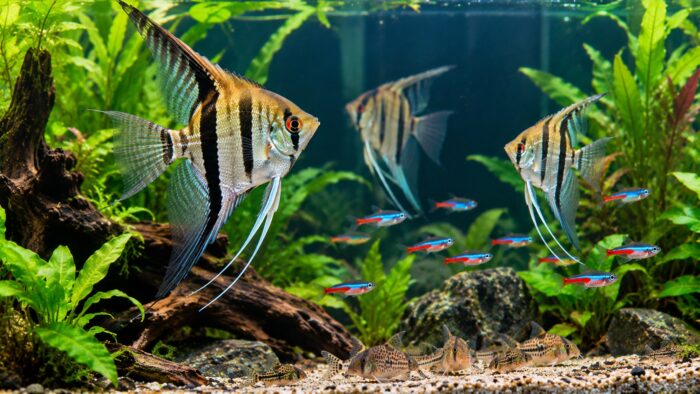
Small at about 1.5 inches, peaceful, and famous for good reason, with that electric blue and red stripe. They only school properly in groups of six or more, so plan for at least eight. Minimum tank: 10 gallons.
2. Guppies
Almost indestructible and endlessly colorful, especially the males. They are livebearers and breed prolifically, so plan for population control or keep males only. Minimum tank: 10 gallons.
3. Platies
Even hardier than guppies, with similar easygoing livebearer behavior and solid red, orange, and blue color forms. Among the most peaceful community fish available. Minimum tank: 15 gallons.
4. Corydoras catfish
Charming bottom-dwelling schoolers that tidy up uneaten food, though they should never be a substitute for not overfeeding. Pandas, bronze, sterbai, and julii are common. Keep at least six. Minimum tank: 20 gallons.
5. Cherry barbs
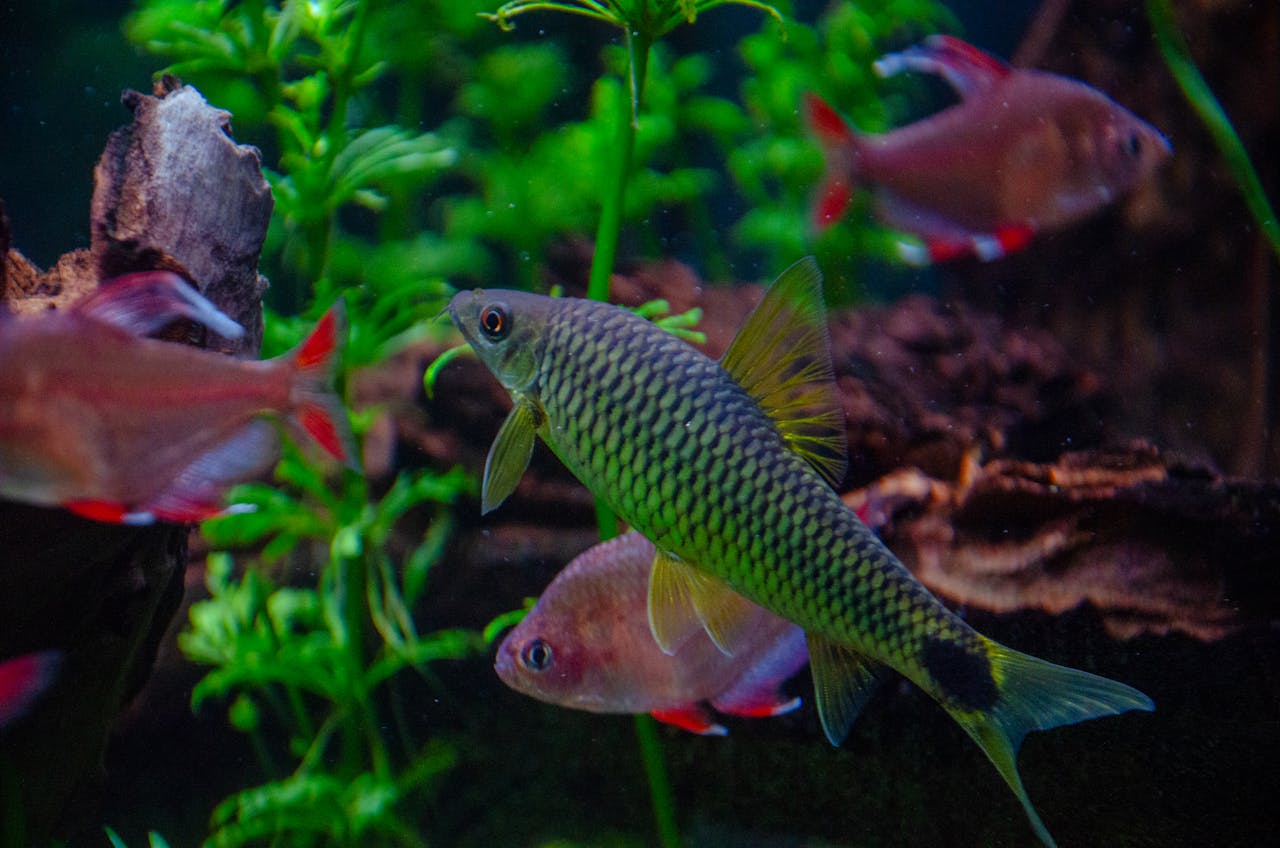
Often confused with the aggressive tiger barb, cherry barbs are peaceful and vivid red in males. They school and stay small. Minimum tank: 20 gallons.
6. Harlequin rasboras
Easy to spot thanks to the black triangle on a copper body. Active, peaceful, and one of the best schooling choices for tanks under 30 gallons.
7. Mollies
A larger livebearer, up to four inches in some varieties, with a mild salt tolerance that makes them useful in certain setups. Black and dalmatian forms are common. Minimum tank: 20 gallons.
8. White Cloud Mountain minnows
A cool-water fish happy at 64 to 72°F, making it one of the few species that thrives in an unheated room in a temperate climate. Hardy and constantly active. Minimum tank: 10 gallons.
9. Endler’s livebearers
Tiny, electric-colored relatives of guppies, with male patterns that are essentially unique to each fish. Excellent for nano tanks. Minimum tank: 5 gallons.
10. Honey gourami
A small, gentle cousin of the larger gouramis, with bright honey-orange males. One of the few labyrinth fish suited to beginners, since bettas have specific solo-care needs and dwarf gouramis are prone to disease.
| Species | Adult size | Minimum group | Minimum tank | Temperament |
|---|---|---|---|---|
| Zebra danio | 2 inches | 6 | 20 gallon long | Very active, boisterous |
| Harlequin rasbora | 1.75 inches | 8 | 20 gallon | Peaceful, tight shoal |
| Neon tetra | 1.5 inches | 8 | 15 gallon | Peaceful, needs mature tank |
| Cherry barb | 2 inches | 6 | 20 gallon | Peaceful for a barb |
| Platy | 2.5 inches | 3 plus | 15 gallon | Peaceful, breeds readily |
| Corydoras | 2 to 3 inches | 6 | 20 gallon long | Peaceful bottom shoal |
| Honey gourami | 2 inches | 1 to 2 | 15 gallon | Shy, peaceful centrepiece |
| White cloud minnow | 1.5 inches | 6 | 15 gallon | Peaceful, tolerates cool water |
| Bristlenose pleco | 4 to 5 inches | 1 | 25 gallon | Peaceful, needs driftwood |
| Kuhli loach | 3.5 inches | 5 | 20 gallon long | Shy, nocturnal, needs sand |
Once these ten feel familiar, the wider freshwater aquarium fish guide covers the species groups worth graduating to and the care requirements each one brings.
What to skip in your first year
- Common pleco, which reaches 18 inches and produces enormous waste.
- Goldfish in small tanks, since fancy varieties need 30 or more gallons each.
- Bala sharks and iridescent sharks, both of which grow past a foot.
- Tiger barbs and serpae tetras, notorious fin nippers.
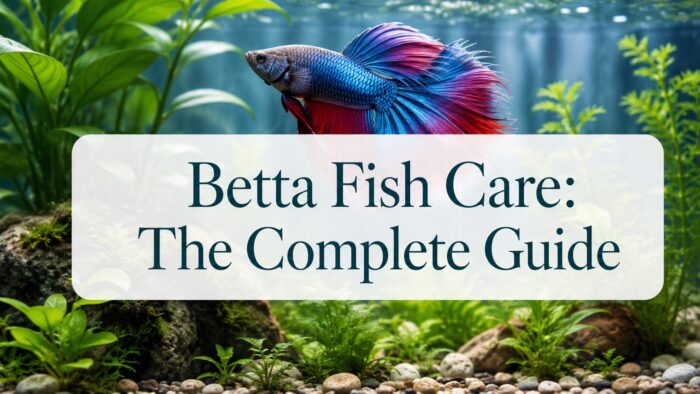
- Bettas with other fish, since males attack many tankmates and do best alone.
- Most cichlids, which tend to be territorial and need careful research first.
- African dwarf frogs, which are easy to underfeed and can drown without surface access.
Bringing new fish home safely
Even a hardy beginner fish can be lost to a careless first hour. The water in the store bag differs from your tank in temperature, pH, and hardness, and dumping a fish straight in forces it to absorb that shock all at once. A calm acclimation routine prevents most early losses.
- Float the sealed bag in your tank for 15 to 20 minutes to equalize temperature.
- Open the bag and add a small amount of tank water every few minutes over the next 20 to 30 minutes so the fish adjusts to your chemistry gradually.
- Net the fish into the tank rather than pouring in store water, which can carry disease or medication.
- Dim the lights for the first few hours to reduce stress while the fish settles in.
New arrivals ideally spend their first weeks in a separate tank rather than going straight into your community, a habit explained in our quarantine guide.
How to calculate stocking
The old “one inch per gallon” rule breaks down for anything over three inches and ignores body mass and waste output. A more reliable approach:
- Small schooling fish under two inches: roughly one fish per gallon, in schools of six or more.
- Medium community fish, two to four inches: one fish per two to three gallons.
- Heavily planted tanks tolerate more fish than bare tanks because plants absorb nitrogen.
- Add slowly. No more than a quarter of your planned stocking in the first two weeks after cycling.
Benefits and limitations of a community tank
A peaceful community of the species above gives you constant movement, varied behavior across the water column, and a forgiving margin for error. The limitation is that mixing species means compromise: you cannot keep cool-water White Clouds with warm-water honey gouramis, and you cannot mix fin-nippers with long-finned fish. Choose a temperature band and a temperament first, then pick species that fit it.
First-year stocking regrets
- Buying fish the same day as the tank, before it is cycled.
- Keeping schooling fish in pairs, which leaves them stressed and washed out.
- Choosing fish for color at the store without checking adult size.
- Overstocking early because the tank “looks empty.”
Build the stocking list before shopping
Store displays make impulse purchases tempting, but appearance is a poor stocking plan. Check adult size, group requirements, temperament, and water needs before visiting the shop. A written shortlist prevents a small, peaceful community from becoming overcrowded or incompatible.
Questions before choosing beginner fish
Can I mix any of these species together?
Most of the warm-water community species here mix well, with the exception of the cool-water White Cloud Mountain minnow. Match temperature needs first.
How many fish can a 10-gallon tank really hold?
A sensible 10-gallon plan is one small school of six to eight nano fish, such as neons or Endler’s, not a mix of several species.
Do beginner fish still get sick?
Yes, usually from poor water quality rather than fragile genetics. Stable parameters and quarantine prevent most issues, as covered in our disease guide.
Choose species for the tank you can maintain
For a first 20-gallon tank, a combination of eight neon tetras, six corydoras, and six cherry barbs gives you a peaceful, active community with behavior across every level of the tank. Start with a plan like that, stock it gradually into cycled water, and you avoid the great majority of beginner heartbreak.