Corydoras catfish get sold as tank cleaners, and that label sets people up to fail them. They are social, busy little fish that need company, soft ground to forage on, and a diet of their own. Treat them as living animals rather than a maintenance tool and they become one of the most entertaining fish in a community tank.
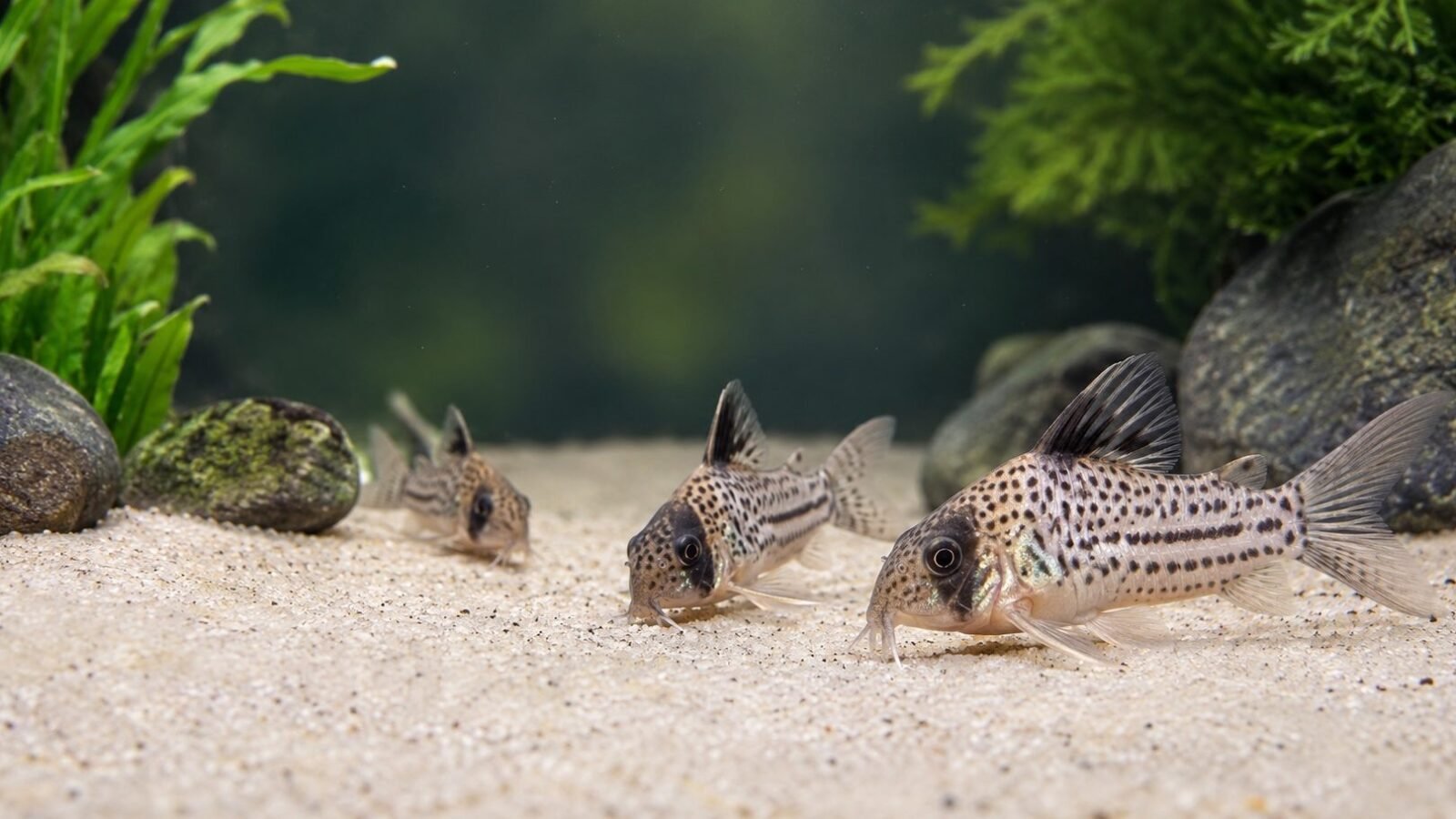
Often shortened to cories, these South American catfish work the bottom of the tank in groups, sifting the substrate with their sensitive barbels. Watching a shoal of them dash to the surface for a gulp of air is one of the small joys of the hobby.
Tank size and substrate
A group of smaller cory species fits comfortably in a 20 gallon tank. Substrate is the make or break detail. Sharp gravel wears down and can infect their delicate barbels, which they use to find food. Use smooth sand or rounded fine gravel instead. the guide on choosing aquarium substrate covers the best options for bottom dwellers.
Keep them in proper groups
Cories are shoaling fish and suffer when kept alone or in pairs. Six is a sensible minimum, and they grow bolder and more active as the group gets larger. A lone cory hides and loses condition. A group of eight forages confidently in the open, which is exactly the behavior most keepers want to see.
Water and temperature
Most common cories like stable, moderately soft water. Target these conditions:
- Temperature: 72 to 78°F (22 to 26°C) for most species, though some prefer cooler water.
- pH: 6.5 to 7.5.
- Ammonia and nitrite: zero, with low nitrate maintained by regular water changes.
Cories are sensitive to poor water, so test regularly using our parameters guide as a reference.
Diet: they are not vacuum cleaners
This is the most damaging myth. Cories will not survive on the scraps other fish miss. They need their own food that actually reaches the bottom. Offer sinking pellets, wafers, and frozen treats like bloodworms and daphnia. In a busy community tank, feed after lights out or in a quiet corner so the cories get their share before faster fish clean it up. the guide to feeding bottom dwellers explains how to target food to the floor of the tank.
Tankmates and temperament
Cories are peaceful and ignore other fish almost entirely, which makes them excellent community members. Pair them with calm, similarly sized species from the upper and middle levels of the tank. the list of beginner freshwater fish includes plenty of suitable companions. Avoid aggressive or much larger fish that might harass them.
Popular species for beginners
Several cory species are widely available and hardy.
- Bronze and albino cory: the classic starter cories, tough and adaptable.
- Peppered cory: patterned and tolerant of cooler water.
- Panda cory: small and strikingly marked, a community favorite.
Common health issues
Barbel erosion from sharp or dirty substrate is the most frequent cory specific problem, and it is entirely preventable with smooth, clean ground. Otherwise they face the usual community tank ailments. Spot trouble early with the guide to common aquarium diseases, and remember that many cories are sensitive to medications, so dose carefully.
Social behaviour is a care requirement
A lone Corydoras often hides because the fish is built to forage in a group. Increasing the group with the same or a compatible species, when tank size allows, usually produces more confident and natural behaviour. Social needs should be planned alongside water, substrate, and diet.
Group size and substrate are part of welfare
Corydoras need compatible groups, smooth substrate, oxygenated water, and food that reaches the bottom. A fish that survives alone or on sharp gravel is not necessarily thriving. Observe barbels, body condition, and group behaviour as part of routine care.
Questions about Corydoras groups and care
Do corydoras clean the tank?
No. They forage for food on the bottom but do not eat fish waste or algae in any meaningful way. You still need a filter and water changes.
How many corydoras should I keep?
Six is the practical minimum. They are far more active and confident in larger groups of the same species.
Why do my cories dash to the surface?
Cories can gulp air at the surface using their gut, which is normal occasional behavior. Constant trips up, however, can signal poor water quality, so test if it becomes frequent.
Corydoras need groups, soft substrate, and targeted food
Corydoras thrive when you treat them as the social foragers they are. Give them a group of at least six, smooth substrate, clean water, and food that sinks to the bottom. Drop the cleanup crew myth, meet their real needs, and a shoal of cories becomes the busiest, most charming layer of your aquarium.