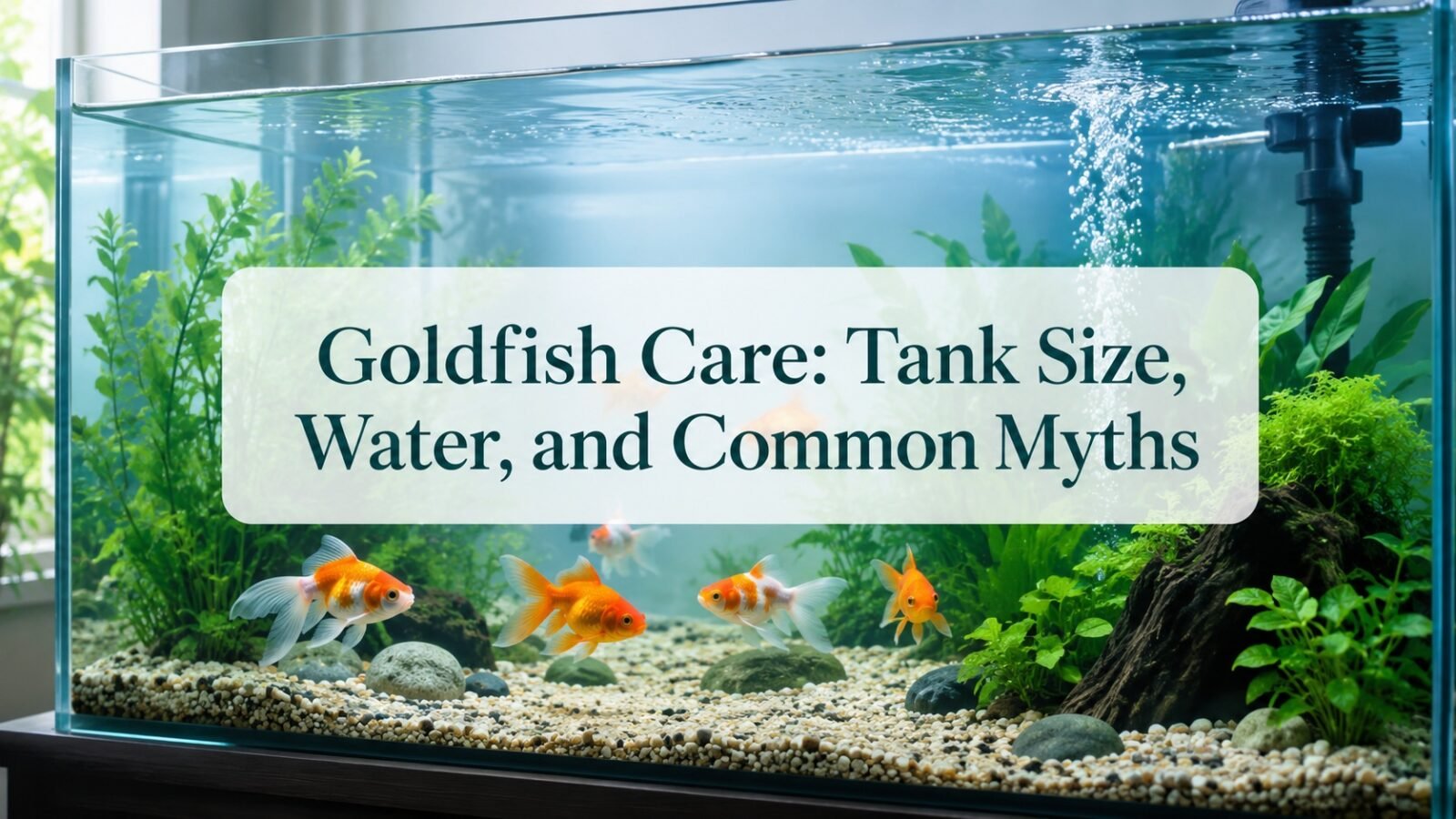
Few fish are as misunderstood as the goldfish. Won at fairs, kept in bowls, and assumed to be disposable, goldfish are actually large, long-lived, intelligent fish that can reach 25 years and over a foot long in the right conditions. Almost everything the average person believes about goldfish care is wrong. This guide separates the myths from the reality and lays out what goldfish genuinely need to thrive.
Part of the confusion is history. Goldfish have been kept for centuries, long before anyone understood the nitrogen cycle or filtration, so the bowl image is baked into popular culture. Modern fishkeeping knowledge tells a very different story, and applying it transforms goldfish from short-lived fairground prizes into striking, decade-long companions.
The bowl myth, and why size matters
Goldfish are heavy waste producers and grow far larger than most people expect. A bowl cannot provide the volume, filtration, or oxygen they need, and keeping a goldfish in one leads to stunting, disease, and an early death. As a starting point, a single fancy goldfish needs around 20 gallons, with roughly 10 more gallons per additional fish, while slim-bodied common and comet goldfish ultimately need pond-sized space. Understanding why volume buys stability, as explained in the guide to choosing the right aquarium size, applies doubly to goldfish.
Fancy versus single-tail goldfish
The two broad groups have very different needs.
- Fancy goldfish, such as orandas, ryukins, and fantails, have rounded bodies and twin tails. They stay smaller, swim slowly, and suit large aquariums.
- Single-tail goldfish, including commons, comets, and shubunkins, are streamlined, fast, and reach a foot or more. They are really pond fish and outgrow most home tanks.
Mixing the two is not ideal, since fast single-tails outcompete slow fancies for food.
Water and temperature
Goldfish are cold-water fish and generally do not need a heater, preferring temperatures around 65 to 72°F. They do, however, need pristine water and strong filtration to cope with their heavy waste output.
- Ammonia and nitrite: zero, in a fully cycled tank.
- Nitrate: kept low through frequent water changes.
- Strong, well-maintained filtration sized above the tank, as discussed in our filtration guide.
- Larger or more frequent water changes than a comparable tropical tank, because of the bioload.
Diet
Goldfish are omnivores prone to digestive problems, especially the round-bodied fancies. Feed a quality goldfish-specific food that is lower in protein and higher in fiber than tropical flakes, supplement with blanched vegetables and the occasional deshelled pea, and avoid overfeeding, which causes the swim-bladder and constipation issues goldfish are famous for. The portion discipline in our feeding guide is especially important here. Soaking floating pellets before feeding helps fancy goldfish that gulp air at the surface.
Common goldfish myths
- Myth: goldfish only grow to the size of their tank. Reality: cramped tanks stunt them and damage their organs; they do not stay small healthily.
- Myth: goldfish have a three-second memory. Reality: they learn routines, recognize feeders, and can be trained.
- Myth: goldfish are easy starter fish for a tiny tank. Reality: their size and waste make them demanding, large-tank fish.
- Myth: a bowl is fine if you change the water often. Reality: bowls lack the volume and filtration goldfish require.
Tankmates for goldfish
Goldfish do best with other goldfish of a similar type, but a few companions can work in a large enough tank.
- Other goldfish of the same group: fancies with fancies, single-tails with single-tails.
- White Cloud Mountain minnows, which share the cool-water preference, in a spacious tank.
- Certain coldwater-tolerant snails that help with leftover food.
Avoid tropical community fish, which need warmer water, and avoid small fish that a large goldfish might eventually eat. Fin-nippers are also a poor match for slow, flowing-finned fancies.
How big do they really get, and how long do they live?
This is the detail that surprises most new owners. Fancy goldfish commonly reach 6 to 8 inches, while single-tail commons and comets can exceed 12 inches and are genuinely pond-sized fish. With proper care, goldfish routinely live 10 to 15 years, and well-kept specimens have reached 20 years or more. Planning for their adult size and lifespan from the beginning is the difference between a thriving fish and a stunted, short-lived one.
The pond option
For single-tail goldfish especially, an outdoor pond is often the ideal home. A pond provides the volume, surface area, and swimming room these active fish need, and goldfish are hardy enough to overwinter in many climates when the pond is deep enough not to freeze solid. If you fall in love with comets or commons, a pond is worth considering rather than an ever-larger indoor tank.
Common health issues
Swim-bladder problems, where a fancy goldfish floats or sinks, are usually tied to diet and overfeeding. Fin rot and other infections typically follow poor water quality. Because goldfish are so often kept in undersized, under-filtered tanks, most of their health problems are environmental and preventable. Our disease guide covers identification and treatment.
Common mistakes
- Keeping goldfish in a bowl or tiny tank.
- Adding a heater unnecessarily and keeping them too warm.
- Underestimating their waste output and undersizing the filter.
- Feeding floating flakes that fancies gulp air with, worsening buoyancy problems.
Treat goldfish as long-term, high-waste fish
If you take away one thing, let it be that goldfish are not starter bowl fish. They are a long-term commitment that can outlive a family pet dog. Set them up in a large, well-filtered, unheated tank from the start and you avoid almost every classic goldfish problem.
Persistent buoyancy or infection problems
Buoyancy problems can be related to diet, body shape, infection, injury, or water quality. Persistent floating, sinking, swelling, ulceration, or loss of appetite should not be treated as simple constipation without assessment. Improve the environment and seek specialist advice when signs continue.
Goldfish-care questions worth settling early
Do goldfish need a heater?
Usually not. They are cold-water fish comfortable at typical room temperatures and even cooler. A heater is only needed to prevent extremes in a very cold room.
Can goldfish live with tropical fish?
Generally no. Their temperature preferences and heavy waste output make them poor tankmates for most tropical community fish.
How long do goldfish live?
With proper care, 10 to 15 years is common and 20-plus is possible. Poor conditions cut this to a year or two.
Why is my goldfish turning a different color?
Color changes are normal as goldfish mature, and lighting and diet can affect intensity. Sudden changes alongside other symptoms, such as listlessness or clamped fins, are worth investigating as a possible water-quality issue rather than natural change.
Goldfish need space, filtration, and long-term planning
Give goldfish a large, strongly filtered, unheated tank, feed a fiber-rich goldfish diet in controlled amounts, and keep the water clean with frequent changes. Treat them as the big, long-lived fish they are, and the bowl-fish reputation disappears entirely.