Overfeeding harms more aquarium fish than any disease in the hobby. The mechanism is simple and avoidable: excess food rots in the substrate, ammonia spikes, water quality collapses, the fish become stressed, and illness follows. The fix is not eyeball-portion guesswork but a basic understanding of what each kind of fish actually needs. Below are the food types worth using, the species differences that matter, and the feeding habits that quietly cause the most trouble.
The food categories
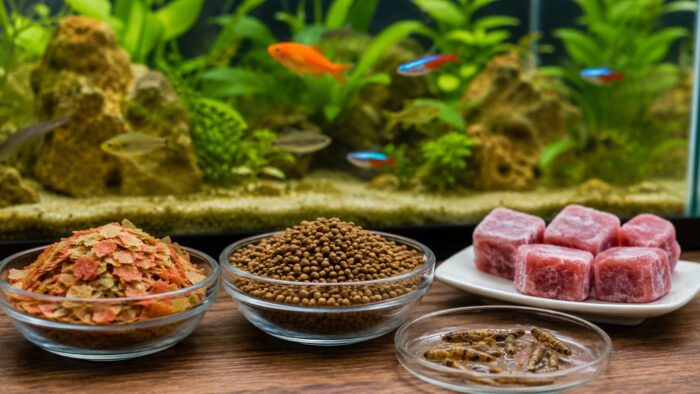
Flake food
The default for community tanks. Decent flakes meet the protein and vitamin needs of most fish, but quality varies enormously. Read the ingredient list: the first ingredient should be a named fish protein such as whole fish, fish meal, or shrimp meal, not vague “fish derivatives” or “cereals.” Hikari, Omega One, New Life Spectrum, Tetra, and Fluval Bug Bites are consistently reliable.
Pellets
Often more nutrient-dense than flakes with less waste. They come floating, slow-sinking, and sinking. Sinking pellets are essential for bottom feeders such as corydoras, plecos, and loaches that will not fight for food at the surface.
Freeze-dried food
Bloodworms, brine shrimp, tubifex, and krill in shelf-stable form. Treat these as a supplement a few times a week, not a daily staple, and soak them first to prevent gut bloat.
Frozen food
Closer to fresh nutrition than freeze-dried, including bloodworms, brine shrimp, mysis, and daphnia. This is the nearest most fish will get to a wild diet, and it is excellent for color, conditioning, and tempting picky eaters. Thaw and rinse before feeding.
Live food
The most natural and most demanding option, including blackworms, daphnia, and brine shrimp. Wild-collected live food carries disease risk, so buy cultured sources or culture your own. It is often essential for conditioning fish to breed.
Vegetables
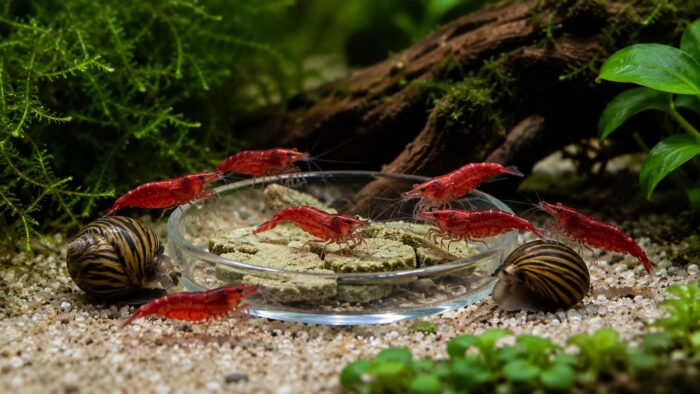
Many fish labeled herbivores need plant matter that flakes lack. Blanched zucchini, cucumber, spinach, and deshelled peas are ideal for plecos, otocinclus, some cichlids, mollies, and snails.
Diet varies by group as much as tank size does, and the freshwater fish species guide lists what each of the common families actually eats in the wild.
Feeding by species type
Carnivores
Bettas, oscars, arowanas, and most marine fish need protein-rich foods such as quality pellets, frozen bloodworms, and mysis shrimp. Many carnivores struggle to digest plant matter, so do not force “variety” with foods they cannot use.
Omnivores
Most community fish, including tetras, barbs, rasboras, mollies, and platies, do well on a high-quality flake or pellet base supplemented with frozen food and the occasional vegetable. This is the most flexible category and includes most of the species in the list of best beginner freshwater fish.
Herbivores
Many plecos, otocinclus, silver dollars, and mbuna cichlids need a primarily vegetable diet of algae wafers, blanched vegetables, and spirulina-based pellets. Too much animal protein causes long-term liver problems in true herbivores.
Specialty diets
- Discus need high protein, several small meals a day, and often beef-heart mixes, as covered in our discus care guide.
- Goldfish do best on lower-protein, higher-fiber food formulated for them rather than tropical flakes.
- African cichlids often need more vegetable content than community flakes provide.
- Reef fish do well on frozen marine blends, with tangs benefiting from dried nori.
Making sure everyone eats
In a mixed community, fast surface feeders can leave shy or bottom-dwelling fish hungry. A few habits even things out: feed floating food at one end and drop sinking pellets at the other at the same time, use a feeding ring to keep flakes from scattering into the filter, and feed bottom feeders after lights-out when the faster fish have calmed down. If one species is consistently thin while others thrive, the problem is usually feeding strategy rather than the food itself.
How often to feed
After stocking, this is the most consequential decision you make.
- Adult community fish: once or twice a day, only what they finish in 60 to 90 seconds.
- Growing fish and fry: three to four small feedings a day, since they use food faster.
- Predatory fish: less often. Many adult predators thrive on one meal every two to three days.
- Bottom feeders: a sinking pellet or wafer in the evening, when surface feeders have settled.
The two-minute rule
If food sits on the substrate uneaten after two minutes, you fed too much. Excess food rots within a day or two and produces ammonia, and a single heavy feeding can tip a small tank from stable to dangerous. The practical method is to feed a small pinch, watch, and add a second smaller pinch only if the fish finish quickly and clearly want more. Anything left after two minutes means cut back next time. This single habit prevents many of the problems described in the guide to aquarium algae.
For conditioning fish before breeding, or for tempting a wild-caught fish that refuses prepared food, home-cultured live food is more effective than anything from a tub.
Fasting and vacations
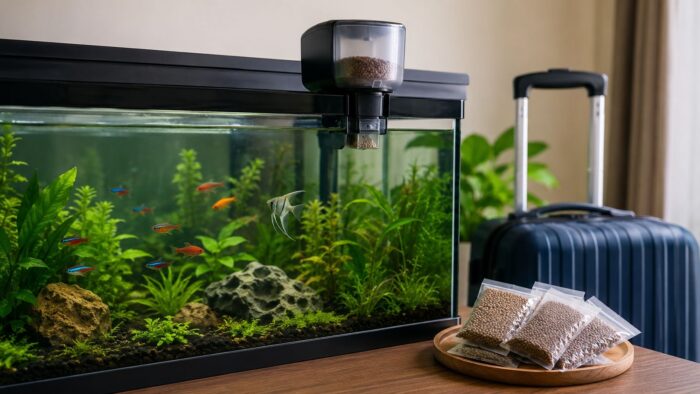
Most experienced keepers skip one feeding day per week. Wild fish rarely eat daily, and a fasting day aids digestion, prevents bloat, and gives the biological filter a break. For travel, a one-to-two-day absence needs no feeding at all, three to seven days is well covered by a reliable automatic feeder, and longer trips are best handled by a fish-sitter who can also do a water change. Avoid “vacation feeder blocks,” which dissolve too fast, cloud the water, and create more problems than they solve.
The wider hub guide to aquarium fish feeding and nutrition brings frequency, food format and portion control together in one place.
Reading the ingredient list
Good food lists protein first and fillers last. “Whole fish meal, krill meal, shrimp meal, spirulina, wheat flour” is a strong list, while “cereals, fish derivatives, vegetable protein concentrate” is a weak one. Aim for roughly 35 to 45 percent protein for community fish, 45 to 55 percent for carnivores, and around 30 to 35 percent with added spirulina for herbivores.
Feeding habits worth breaking
- Feeding to the fish’s apparent hunger rather than its actual needs; most fish beg constantly.
- Relying on bottom feeders to clean up overfeeding instead of feeding less.
- Using a single flake for every species in the tank.
- Dumping in a large portion before a trip “to be safe.”
Portion control protects the whole system
When a beginner asks why their water keeps testing poorly despite a good filter, the answer is often the feeding routine. Underfeeding a healthy adult fish for a few days does no harm. Overfeeding can crash a tank in 48 hours. When in doubt, feed less.
Everyday fish-feeding questions
Can fish be overfed even if they eat it all?
Yes. Fish will often eat well past what is healthy, leading to bloating, fatty liver, and a heavier waste load. Portion control matters even when nothing is left over.
Is variety necessary, or is one good food enough?
A single high-quality staple covers the basics, but rotating in frozen or vegetable foods improves color, conditioning, and digestion for most species.
How long can fish go without food?
Healthy adult fish tolerate several days without feeding comfortably, which is why short trips need no special arrangements.
Feed for the fish, not for the clock
Use a quality pellet or flake as the daily base, add frozen food two or three times a week, provide vegetables for herbivores, follow the two-minute rule, and keep one fasting day a week. Get feeding right and you prevent the large majority of water-quality problems that beginners accidentally create.