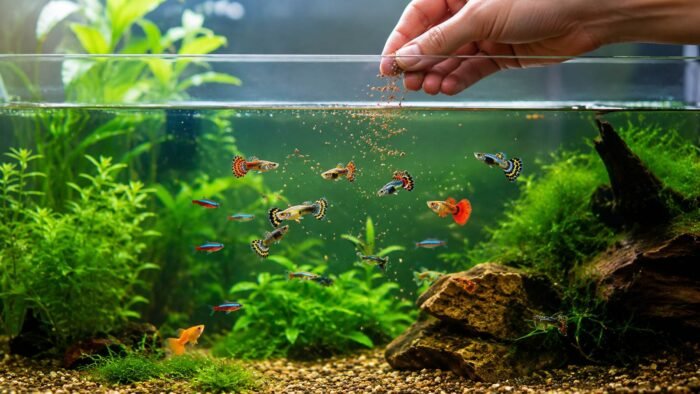
No single food suits every fish. A surface feeding hatchetfish, a bottom grubbing catfish, and a grazing pleco have different mouths, different diets, and different needs. Matching the food to the fish is what keeps color bright and health strong. Variety is the other half of the equation, since even the best single food leaves gaps.
Think of fish food in categories, then build a rotation that covers your tank’s range of eaters. Our complete feeding guide covers the principles, while this guide compares the actual food types.
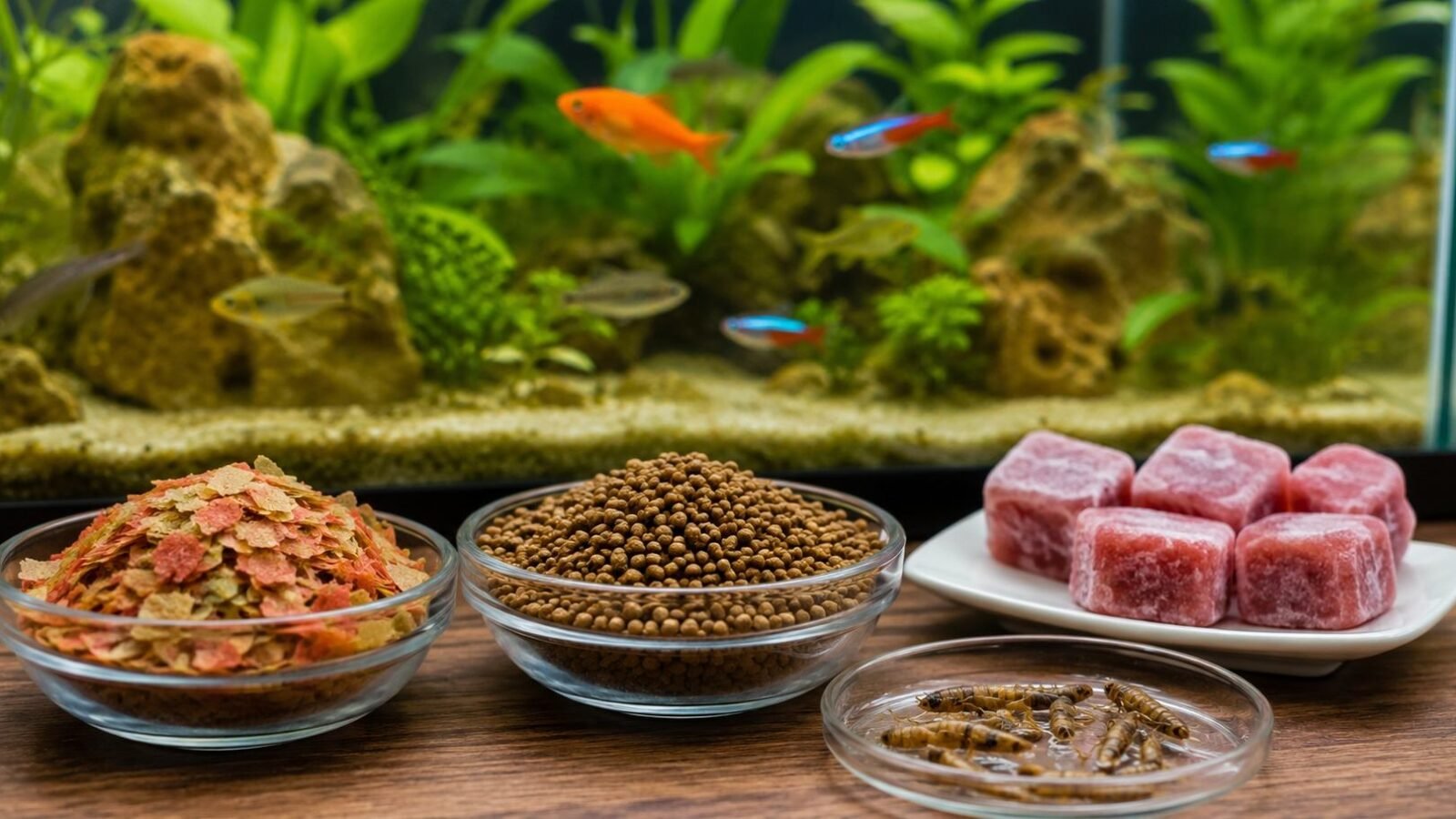
Dry foods
Dry foods are the convenient staple of the hobby, and a quality version forms a fine everyday base.
- Flakes. Float then slowly sink, suiting surface and mid water fish. Good all rounders for community tanks.
- Pellets. Come in floating and sinking forms and various sizes, so you can match them to the fish’s mouth and feeding level.
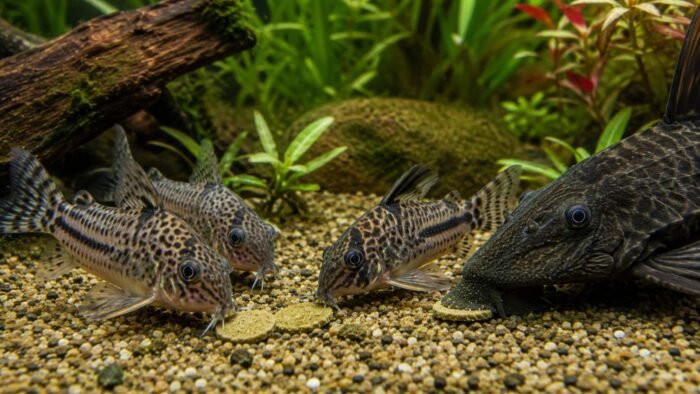
- Wafers. Dense and sinking, made for bottom feeders and algae grazers that need food to reach the floor.
Frozen foods
Frozen foods bring variety and protein that dry food cannot fully match. Frozen bloodworms, brine shrimp, daphnia, and mysis are widely available, and most fish relish them. They make an excellent regular supplement that boosts color and condition. Thaw a portion in tank water and feed only what the fish finish quickly.
Live foods
Live foods are the closest thing to a natural diet and trigger strong feeding behavior. Brine shrimp, daphnia, and blackworms are common options, prized for conditioning fish and encouraging breeding. The trade off is the risk of introducing parasites or disease, so source live food carefully. For most keepers, live food is an occasional treat rather than a daily staple.
Freeze dried foods
Freeze dried foods offer much of the appeal of live and frozen options with the shelf life of dry food. Freeze dried bloodworms and brine shrimp store easily and make a handy supplement. Some are best soaked in tank water before feeding, since dry pieces can swell once eaten.
Match the food to the fish
Two questions guide every choice. Where does the fish feed, and what does it eat?
- Feeding level: floating food for surface feeders, slow sinking food for mid water fish, and sinking wafers or pellets for the bottom dwellers covered in our bottom feeder guide.
- Diet type: herbivores need vegetable based foods, carnivores need protein rich meaty foods, and omnivores like the beginner freshwater fish guide in our care guide do well on a mixed diet.
Bottom dwellers such as the corydoras in our guide need their own sinking food, not the scraps from above.
Quality and storage
Read the label. The best foods list whole proteins and real ingredients near the top, not vague fillers. Buy a size you will use within a few months, since dry food loses nutrients as it ages. Store it sealed, cool, and dry, away from the humidity that degrades it and breeds mold.
Building a rotation
The healthiest approach is variety. Use a quality dry food as the daily base, then rotate in frozen or freeze dried treats a few times a week, plus vegetables for grazers and sinking food for bottom dwellers. A varied diet covers nutritional gaps and keeps fish interested at feeding time. Whatever you feed, keep portions small, as the guide on how often to feed explains.
Variety works better than relying on one food
A rotation of suitable dry, frozen, fresh, or live foods can cover more nutritional needs than one product alone. Variety should still be species-appropriate and safely stored. New foods are best introduced gradually so appetite, digestion, and water quality can be observed.
Questions about choosing fish food
Can I feed my fish only flakes?
They will survive, but they do better with variety. Rotating in frozen or freeze dried foods and vegetables for grazers improves color and health.
Are live foods safe?
They are nutritious but can carry parasites or disease if poorly sourced. Buy from reputable suppliers and treat live food as an occasional treat.
How do I feed bottom dwellers in a busy tank?
Use sinking wafers or pellets and feed after lights out so faster fish above do not take it first. Our bottom feeder guide covers the details.
A varied, well-stored diet covers more needs
Match food to where a fish feeds and what it eats, then build variety into the diet. Use quality dry food as the base, add frozen and freeze dried treats, and provide vegetables and sinking food where needed. Store food fresh and keep portions small. Variety, not a single perfect product, is what keeps fish healthy.