Saltwater needs more gear than freshwater, and the industry is happy to sell you far more than you need. Strip away the upsells and the real essential list is shorter than most beginners fear. Buy the core items well and add the optional gear later, once you know your tank and your goals.
This list assumes a beginner reef or saltwater tank. For the full build sequence, pair it with the guide on setting up your first reef tank.
The genuine essentials
- Tank and stand. Bigger is more stable, just as in freshwater. A larger volume holds parameters steadier.
- Quality salt mix. A reef grade marine salt, mixed to the right salinity before it goes in the tank.
- Pure source water. Reverse osmosis water, or another low impurity source, prevents many algae and parameter problems. Tap water often causes them.
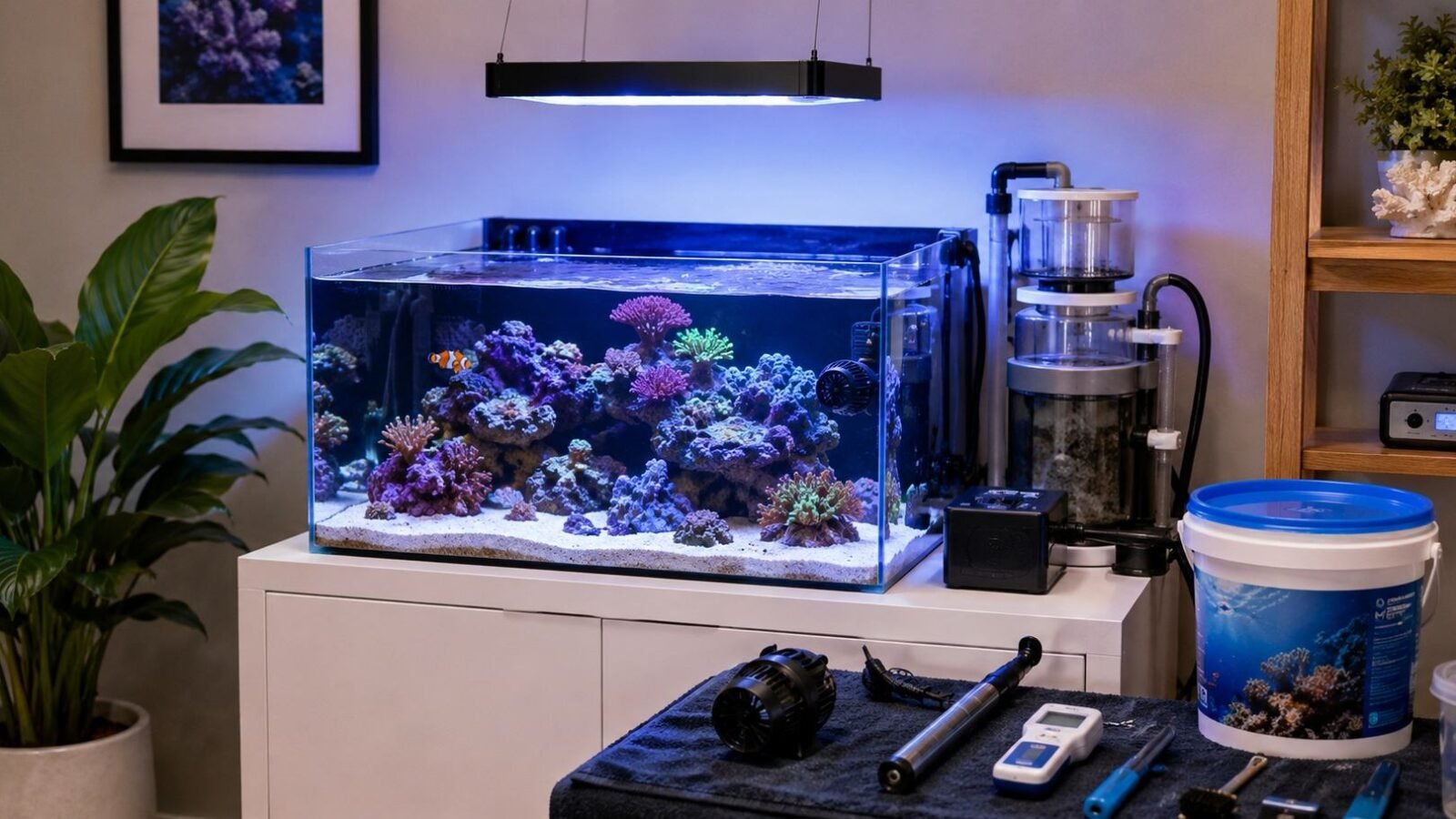
- Heater. Sized to the tank and stable, since corals and marine fish dislike temperature swings.
- Powerhead for flow. Saltwater tanks need stronger, more varied water movement than freshwater. A circulation pump provides it.
- Live rock. The biological heart of the tank, providing surface area for bacteria and shelter for fish.
- Light. A basic marine light for fish only, or a reef capable light if you plan corals. See our lighting guide.
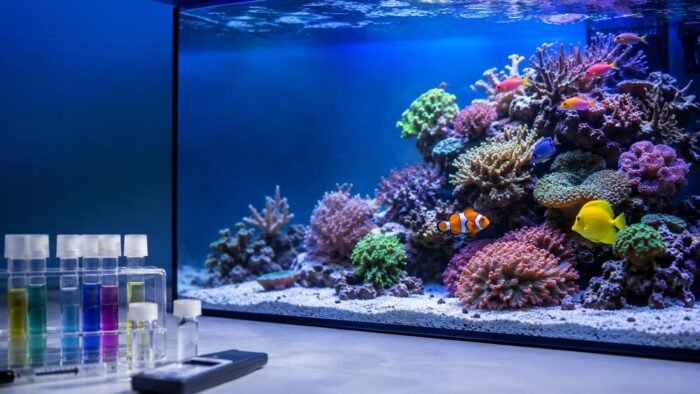
- A refractometer and a good test kit. You cannot run a marine tank blind. Our water testing guide covers what to buy.
Filtration: how saltwater differs
Marine tanks often rely on live rock plus water movement as the main biological filter, sometimes with a sump for extra volume and equipment space. A protein skimmer, which strips dissolved waste before it breaks down, is common on reef tanks, though many small or fish only setups run fine without one early on. If you understand the basics from our filtration guide, the saltwater approach makes more sense.
What you can skip at first
Plenty of marketed gear is optional for a beginner. Dosing pumps, reactors, advanced controllers, and automatic top off systems all have their place, but none is required to start. Add them when a specific need appears, such as a reef heavy with stony corals that consume alkalinity faster than weekly mixing can replace. Buying everything at once wastes money and adds points of failure you do not yet understand.
Budgeting sensibly
Spend on the items that protect stability and livestock: the tank, the salt, pure water, the heater, flow, and testing. Economize on cosmetic extras. A common beginner pattern is overspending on gadgets while skimping on water quality basics, which is exactly backward. Sensible stocking, covered in the guide to best saltwater fish for beginners, also keeps the demands on your equipment low.
Buy the essentials before convenience gear
A first saltwater system needs reliable circulation, temperature control, salinity measurement, filtration, and safe source water before it needs reactors or automated dosing. Optional equipment becomes useful later when it solves a measured problem rather than filling a shopping list.
Safety note
Saltwater and electricity share a cabinet, so wire carefully. Use a drip loop on every cord so water runs off rather than into the socket, plug equipment into outlets protected against ground faults, and keep connections above the waterline. Salt creep can corrode fittings over time, so inspect cords and connections regularly.
Saltwater equipment questions
Do I need a protein skimmer to start?
Not always. Many small or fish only tanks run well with live rock, flow, and water changes. A skimmer becomes more useful as the bioload grows.
Can I use tap water for a saltwater tank?
It is risky. Tap water often carries nutrients and impurities that drive algae and parameter swings. Reverse osmosis water avoids most of those issues.
Is a refractometer really necessary?
Yes. Accurate salinity is fundamental, and refractometers are far more reliable than cheap swing arm hydrometers.
Reliable basics matter more than optional gadgets
Buy the essentials well: tank, salt, pure water, heater, flow, live rock, light, and accurate testing gear. Treat skimmers and automation as upgrades for later needs, not starting requirements. Spend on stability and skip the gadgets, and your first saltwater tank stays both affordable and healthy.