Ammonia, nitrite, and nitrate are three different problems with three different solutions, and lumping them together is why so many aquarists stay stuck. A spike in ammonia is an emergency. High nitrate is a maintenance issue. Knowing which one you are facing tells you exactly what to do, and how urgently.
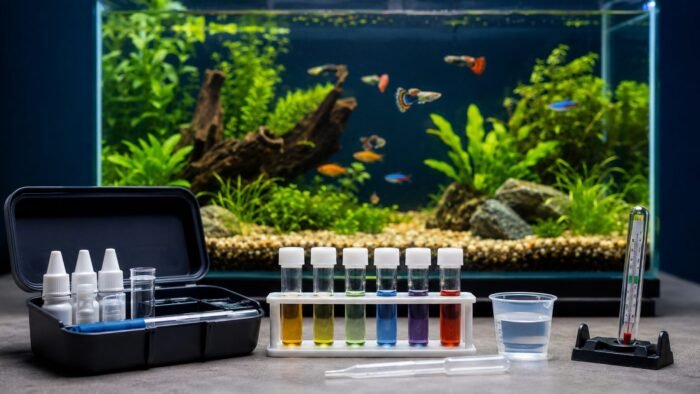
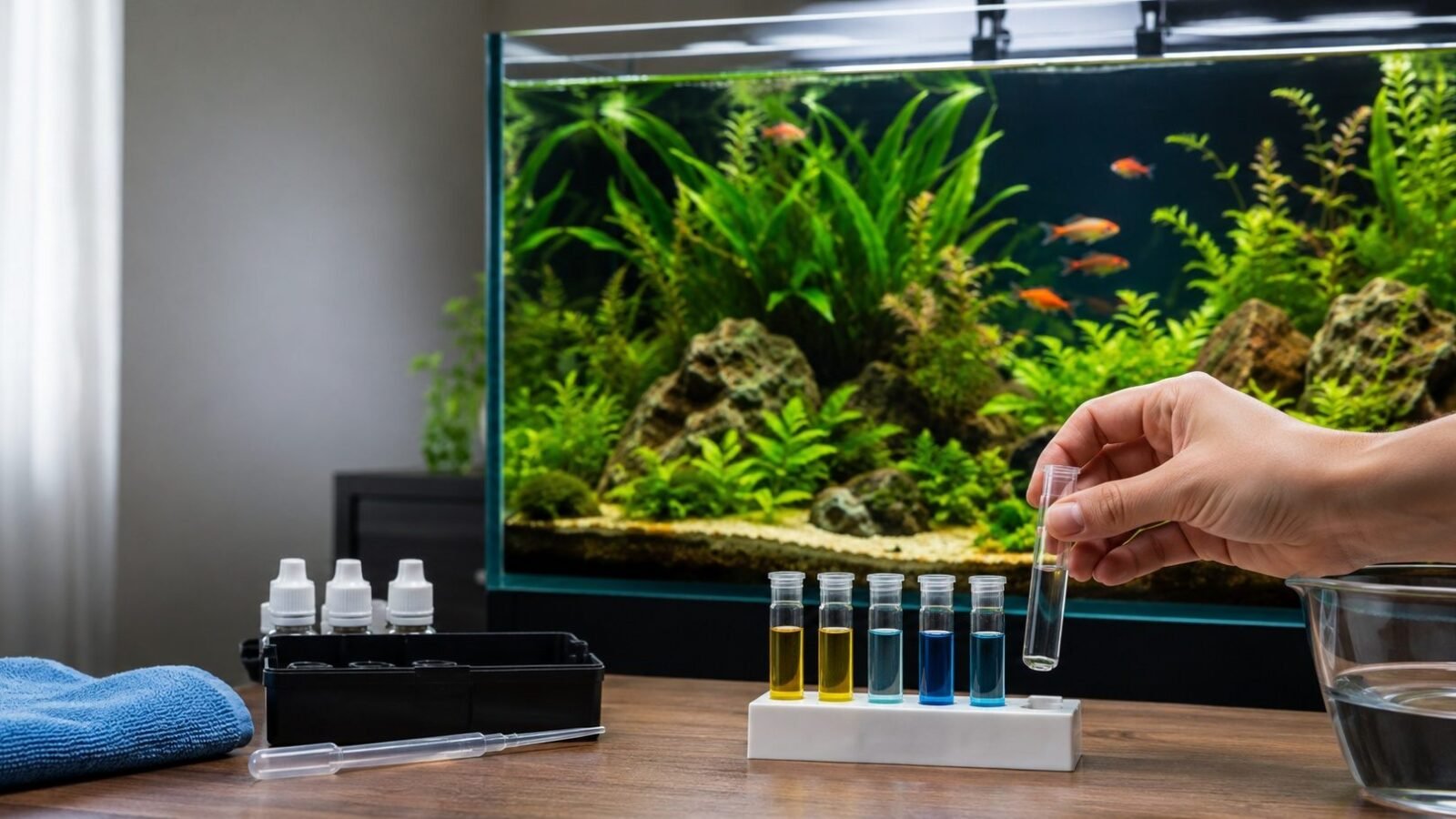
All three are stages of the same nitrogen cycle. Test for each one separately with a liquid kit, because the right response depends entirely on which number is high.
Quick triage
Read the result together with pH, temperature, fish behaviour, and the reliability of the test.
- Detectable ammonia: treat it as urgent in a stocked aquarium, especially when pH and temperature are high.
- Detectable nitrite: begin dilution and check biological filtration; fish may show rapid breathing or gather near flow.
- Rising nitrate: usually points to the need for better waste control, water changes, plant growth, or lower stocking.
How to lower ammonia
If ammonia is detectable, your fastest tool is a large water change, often 50 percent or more, with dechlorinated water matched to tank temperature. This dilutes the toxin immediately. A water conditioner that detoxifies ammonia buys extra time, but it does not remove the source.
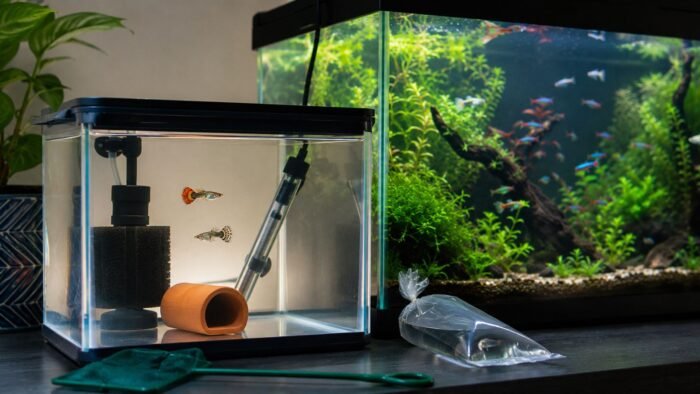
Then find the cause. Common culprits include a tank that never finished cycling, overfeeding, an overstocked tank, a dead fish hidden in the decor, or a filter that was cleaned too aggressively and lost its bacteria. Stop feeding for a day or two during a spike, since less food means less waste while the bacteria catch up.
How to lower nitrite
Use conditioned, temperature-matched water changes to dilute nitrite while protecting and restoring the biological filter. Keep feeding light, increase aeration, and test frequently until the reading remains at zero.
Chloride can reduce nitrite uptake in some freshwater situations, but salt is not a universal home remedy. Species, plants, existing salinity, and accurate dosing all matter, so use it only with reliable guidance.
How to lower nitrate
Nitrate is less immediately toxic than ammonia or nitrite, but suitable levels depend on species, age, reef sensitivity, source water, and exposure time. Watch the trend rather than relying on one universal ceiling.
- Water changes: the most direct way to dilute accumulated nitrate.
- Feeding: reduce uneaten food and oversized portions.
- Stocking: use the stocking guide to review adult biomass and maintenance capacity.
- Plants or refugium growth: useful nutrient export when the plants are healthy and regularly harvested.
- Source water: test it before assuming the nitrate was produced entirely inside the aquarium.
Check your source water
Sometimes the nitrate comes in with your tap water rather than building up in the tank. Test your source straight from the faucet. If it already contains significant nitrate, no amount of water changing with that same water will fix it, and you may need to consider treated or filtered water for changes.
Prevent it from coming back
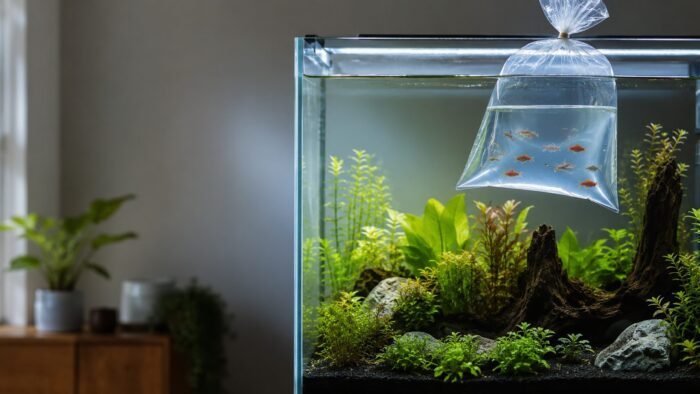
Stable readings come from steady habits, not heroic interventions. Cycle every tank fully before stocking, feed conservatively, stock within your filter’s capacity, and keep a regular water change schedule. Test weekly and log the numbers using our parameters guide. Persistent nitrate also feeds algae, so controlling it helps with the issues covered in the guide on why your aquarium has algae.
Measure first, then correct the cause
Exact test results are more useful than descriptions such as “the water looks fine.” Record ammonia, nitrite, nitrate, temperature, and recent changes before choosing a response. The readings help separate an unfinished cycle, excess waste, source-water nitrate, and a damaged biological filter.
Treat nitrogen spikes as an urgent water-quality problem
Detectable ammonia or nitrite can injure gills and interfere with oxygen transport. If fish are gasping, lethargic, or clustered near flow during a spike, begin careful dilution with conditioned, temperature-matched water and restore filtration while monitoring the readings frequently.
Questions about nitrogen spikes
Why is my ammonia high in an established tank?
Usually overfeeding, a hidden dead fish, sudden overstocking, or a filter that lost its bacteria after harsh cleaning. Large water changes plus finding the cause will resolve it.
Are nitrate removing products worth it?
They can help in specific cases, but regular water changes, sensible feeding, and live plants solve most nitrate problems more cheaply and reliably.
How often should I test my water?
Weekly for an established tank, and daily during a cycle or any spike. Frequent testing turns sudden crises into small, early corrections.
Water changes solve the emergency; husbandry prevents the repeat
Identify which number is high before you act. Ammonia and nitrite call for immediate water changes and a hunt for the cause. Nitrate calls for better routine: less food, fewer fish, more plants, and steady water changes. Test often, treat each value on its own terms, and your water stays safe.