The trip home is one of the most stressful events in a fish’s life. The water in the bag drifts in temperature and chemistry, and dropping a fish straight into different conditions can trigger shock that shows up days later as illness or death. Acclimation is simply the process of easing that transition. It costs nothing but a little patience.
Two methods cover almost every situation: a quick float for hardy fish, and a slower drip for sensitive ones. The principle behind both is the same, which is to let the fish adjust to your water gradually rather than all at once.
Why acclimation matters
Temperature, salinity, pH, hardness, and transport-water quality can differ from the receiving tank. Acclimation should reduce the largest difference without keeping the animal in deteriorating bag water longer than necessary.
Ask the seller how long the fish travelled and what water it was packed in. After a long shipment, opening the bag can change pH and make existing ammonia more harmful, so seller instructions may favour a shorter transfer rather than a prolonged drip.
Method 1: The float method
This suits many hardy fish after a short local journey when the seller’s water is reasonably close to the quarantine tank.
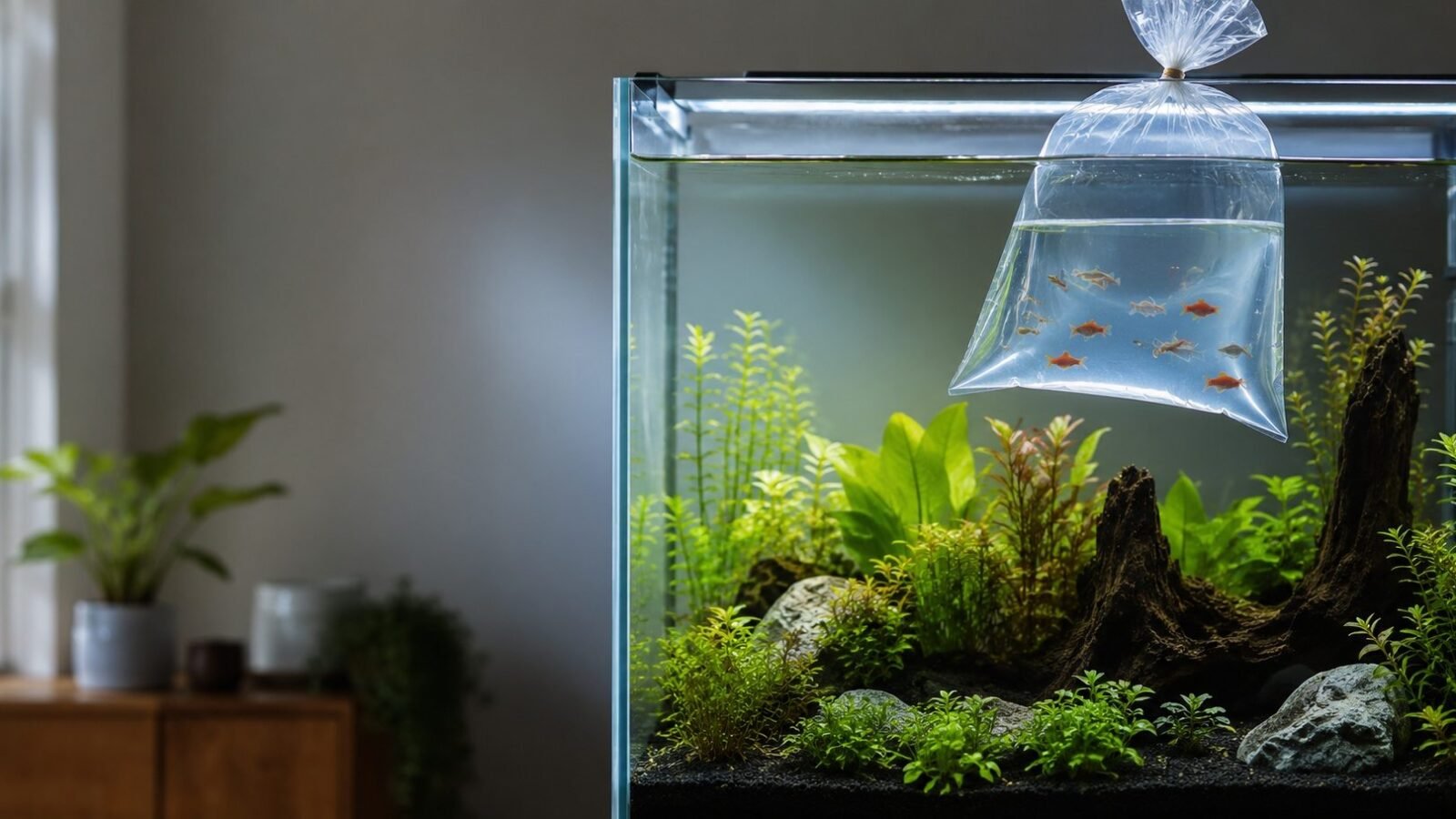
- Dim the lights and float the sealed bag for about 15 minutes to reduce the temperature difference.
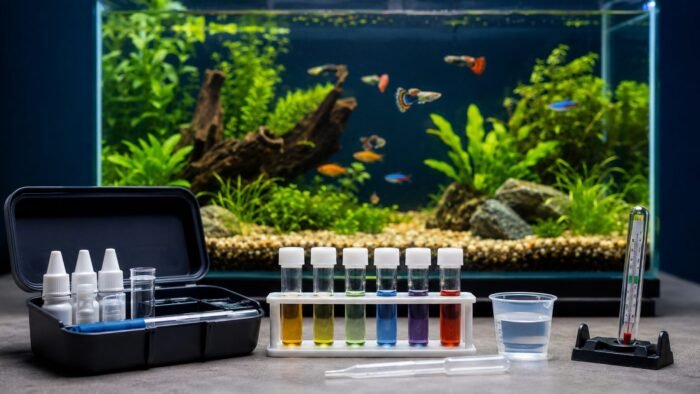
- Compare temperature and, for marine fish, salinity before opening.
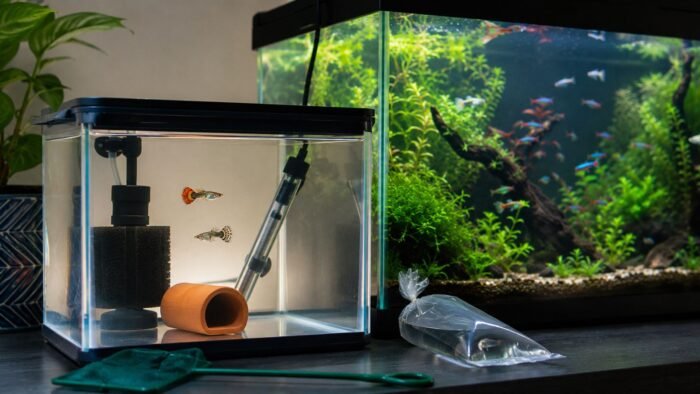
- Transfer the fish with a clean net or specimen container, keeping shop water out of the aquarium.
- Observe the fish in quarantine and keep oxygenation strong.
Method 2: The drip method
A controlled drip can help sensitive invertebrates and livestock moving between notably different salinity or hardness, provided the transport water is still suitable for a longer acclimation.
- Place the animal and transport water in a clean container below the tank.
- Start a slow siphon with airline tubing and monitor temperature throughout.
- Increase the volume gradually while watching the animal rather than following a fixed time for every species.
- Transfer the animal without adding transport water to the aquarium.
Stop and reassess if the animal becomes distressed, oxygen falls, or the transport water is foul.
Never pour bag water into your tank
This rule has no exceptions. Bag water can carry parasites, disease, and concentrated waste from the journey. Always net the fish out and leave the old water behind, then dispose of it down a drain. Adding store water to your tank is one of the easiest ways to import a problem.
Acclimation is not quarantine
Easing a fish into your water reduces shock, but it does nothing to stop disease entering your tank. The two steps solve different problems. For any new arrival, the safest path is to acclimate it into a separate quarantine tank, observe it for a couple of weeks, then move it to the display. the guide on how to quarantine new fish explains the full process, and the overview of common aquarium diseases covers what to watch for during that window.
Special cases
Shrimp and other invertebrates often need careful salinity or hardness matching, while long-shipped fish may need a shorter transfer out of ammonia-containing water. Marine fish arriving at a different salinity need accurate measurement rather than guesswork.
Use the water-parameters guide to compare the systems, and send every new arrival to quarantine rather than directly to the display.
Acclimate for the journey the fish actually had
The safest acclimation method depends on travel time, bag-water condition, and the difference between the seller’s water and the receiving tank. Temperature matching should not become an unnecessarily long process. When shipping water smells foul or testing suggests ammonia, follow the seller’s instructions and avoid prolonged exposure after the bag is opened.
Acclimation is part of responsible transport
Acclimation should reduce stress rather than extend exposure to poor transport water. Match temperature, compare salinity or hardness when relevant, and use a method suited to the journey and species. Quarantine remains separate from acclimation and is the safer destination for new fish.
Acclimation questions before opening the bag
How long should acclimation take?
Around 20 to 40 minutes for the float method and 30 to 60 minutes or more for the drip method. Sensitive species deserve the longer end.
Should I feed a fish right after adding it?
No. Give a new fish a day to settle before its first meal. Feeding into a stressed, newly moved fish often just fouls the water.
Do I need to acclimate fish in their own water from my own tank?
When moving a fish between your own tanks, match temperature and confirm the parameters are similar. If they differ much, drip acclimate as you would for a new arrival.
Match temperature and water chemistry gradually
Acclimation is a short, free step that prevents a slow, costly problem. Float hardy fish, drip sensitive ones, and never let bag water touch your tank. Pair acclimation with quarantine and a quiet first day, and your new fish settle in calmly instead of crashing later.