Walk into any fish store and you will find a shelf of bottles promising to push pH up or down. Walk into any experienced keeper’s fish room and you will find none of them. The gap between those two pictures is the most important thing a beginner can learn about pH: the number itself matters less than its stability, and the quick fixes are the most common way beginners crash a healthy tank.
First, Decide Whether You Should Change pH at All
Most farm-bred aquarium fish tolerate a pH anywhere from about 6.5 to 8.0 without complaint. A tank sitting steady at 7.8 with happy fish does not need intervention because a care sheet says the species prefers 7.0. Chasing a target number causes swings, and swings stress fish far more than a stable but slightly off value. Change pH only if it sits outside roughly 6.0 to 8.5, if it is visibly drifting week to week, or if you keep genuinely sensitive wild-caught or breeding stock.
Why Your pH Is What It Is
pH in an aquarium is mostly an output, not a setting. It is produced by the interaction of your source water, the carbonate buffer (KH), and the acids the tank generates from fish waste, respiration and decaying matter. High KH holds pH high and steady; low KH lets acids drag pH down. This is why bottled pH adjusters fail: they change the number for a day without touching the buffer that controls it, and the tank snaps back or, worse, seesaws. If you have not yet read our guide to GH and KH, start there, because pH control is really KH control.

How to Raise pH Safely
Low pH almost always means low KH, so the fix is to add buffering capacity slowly.
- Crushed coral or aragonite: a handful in a mesh bag in the filter dissolves gradually, raising KH and pH over one to two weeks. This is the gentlest and most popular method, and it is self-limiting because coral dissolves faster in acidic water and slows as pH rises.
- Baking soda (sodium bicarbonate): raises KH quickly and predictably. Dose no more than one teaspoon per 20 gallons per day, pre-dissolved in a cup of tank water, and test before each additional dose. Never dump in a large dose at once with fish present.
- Aeration: surface agitation drives off dissolved CO2, which can lift pH a few tenths with zero chemicals. An airstone is often all a mildly acidic tank needs.
- Water changes: if your tap water is harder than your tank water, regular changes alone will hold pH up. Old tank syndrome, where pH slides for months in a rarely maintained tank, is cured with a series of small, frequent water changes, never one massive one.
How to Lower pH Safely
Lowering pH is slower and less forgiving, because you are working against the buffer.
- Dilute with RO or distilled water: the only method that reliably works long term. Mixing reverse osmosis water with tap water lowers KH, and pH follows. Use the same mix ratio at every water change for consistency.
- Botanicals, driftwood and peat: catappa leaves, alder cones and peat release tannic and humic acids that nudge pH down, typically a few tenths in soft water. In hard, well-buffered water their effect is mostly cosmetic tinting.
- CO2 injection: planted-tank CO2 lowers pH while the gas is on, but it rebounds every night. That daily swing is tolerated well by fish because it is a CO2 effect rather than a mineral change, but do not count it as a pH fix.
- Avoid acid-based pH down products in a buffered tank. The acid eats some KH, pH dips, the remaining buffer pulls it back, and repeated dosing eventually exhausts KH entirely, at which point pH crashes without warning.
The Safe Rate of Change
Whatever direction you move, keep the change under about 0.3 pH per day. Remember that pH is logarithmic: a jump from 6.5 to 7.5 is a tenfold change in acidity. When buying new fish, the same rule applies in reverse, so acclimate slowly if the store’s water differs sharply from yours.
The KH Connection Most Guides Skip
pH problems are usually KH problems wearing a disguise. Carbonate hardness is the buffer that holds pH steady, and a tank with KH under 2 or 3 degrees will see its pH sag between water changes no matter what you add. Before buying any pH product, test KH and GH; our GH and KH guide explains the relationship in full. Raise KH slightly with crushed coral and pH stabilises on its own. Chasing pH while ignoring KH is how people end up on the pH-up, pH-down rollercoaster that kills more fish than the “wrong” pH ever would.
And remember the baseline rule: a steady 7.8 beats a bouncing 7.0 for almost every community fish. Before changing anything, confirm your real numbers with a proper kit, not strips alone; the method is in our water testing guide.
Do I need to match the shop’s pH?
No. Shops run neutral-ish water and their fish have moved tanks all their lives. Slow acclimation to your stable pH matters far more than matching a number; the technique is in our guide to acclimating new fish.
Why does pH drop in a mature tank?
Fish waste and decomposition produce acids continuously, and nitrification itself consumes KH. A tank that drifts acidic over weeks is usually overdue on water changes or running out of buffer. If your source water is the problem, see tap water vs RO water for the long-term fix.
The Bottom Line
Test KH before you touch pH. Raise pH with crushed coral or careful bicarbonate dosing, lower it with RO dilution and botanicals, and treat every bottled quick fix with suspicion. A tank that holds 7.6 all year is a better home than one coaxed to a textbook 7.0 that swings every week.
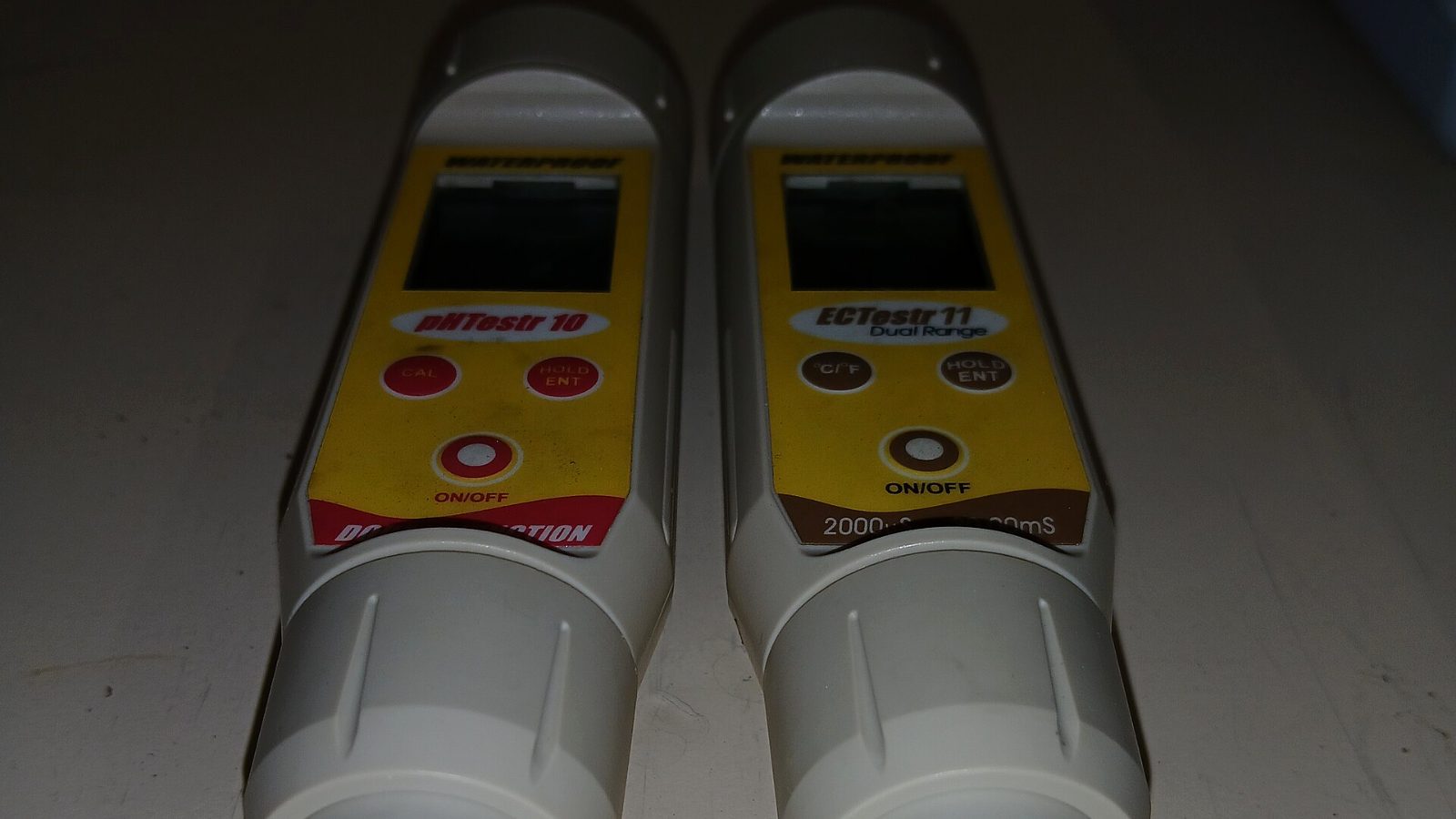
Featured image: PH- und Leitfähigkeitsmessgeräte. Photo: Rotkaeppchen68 (CC0), via Wikimedia Commons.