Fish crowding the surface and working their mouths at the waterline are not being cute and are not asking for food. Surface gasping means the richest oxygen in the tank is in the top centimetre and your fish have gone there to survive. It is one of the few aquarium signs that justifies dropping what you are doing.
First Five Minutes
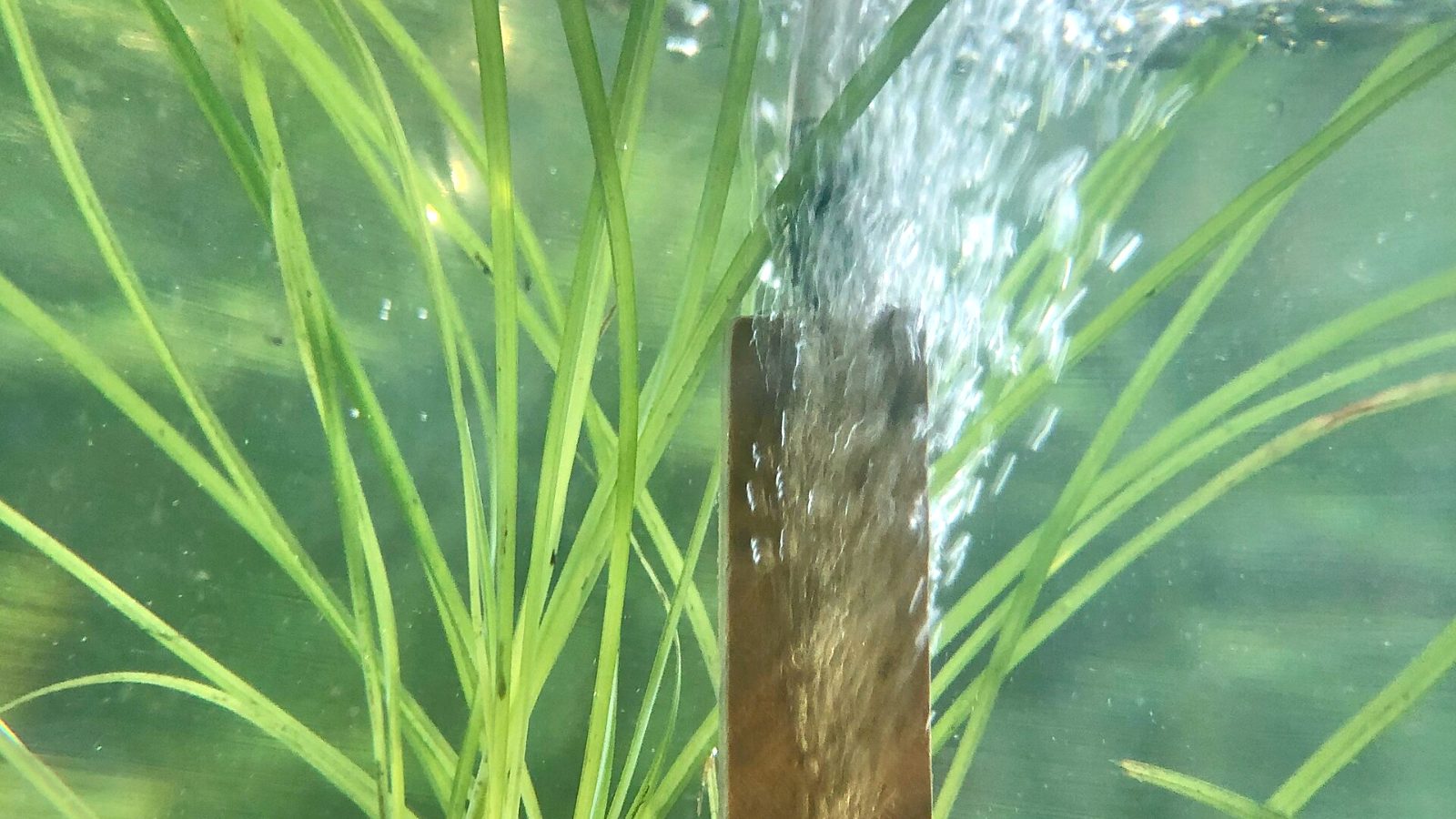
Act before you diagnose. Get oxygen in: drop the water level a couple of centimetres so the filter return splashes, aim a powerhead at the surface, or start an air pump if you have one. Then do a 30 percent water change with temperature-matched, conditioned water. These two moves buy time against almost every cause below.
Cause One: Not Enough Oxygen in the Water
Warm water holds less oxygen, which is why gasping so often appears during heat waves or after a heater sticks on. Still surfaces make it worse: oxygen enters at the air-water interface, and a glassy, unmoving surface exchanges very little. Overstocking finishes the job, with too many gills competing for too little dissolved gas; if that is a recurring theme, our guide on how many fish you can keep is the longer conversation.
At night the equation flips in planted tanks: plants and algae consume oxygen in the dark, so a heavily planted tank that gasps at dawn but looks fine by evening is telling you exactly when its oxygen bottoms out. Surface agitation overnight, or an air stone on a timer, solves the dawn gasp.
Cause Two: The Water Is Poisoning the Gills
Ammonia and nitrite both attack the gills’ ability to move oxygen, so poisoned fish gasp in water that technically holds plenty of oxygen. Nitrite is especially deceptive: it converts blood haemoglobin into a form that cannot carry oxygen, and affected fish may show brownish gills. Test immediately. Any reading above zero on either makes this the working diagnosis; follow the sequence in lowering ammonia, nitrite and nitrate. The chemistry of why warm, high-pH water makes ammonia so much more dangerous is laid out well in this primer on ammonia in aquatic systems.
Chlorine from an unconditioned water change produces the same picture with sudden onset: fine one hour, whole tank gasping the next. If gasping started right after tap water went in, recondition and change water again now.
Cause Three: Gill Disease and Parasites
When one fish gasps while the rest cruise normally, suspect the fish rather than the water. Gill flukes, velvet and bacterial gill disease all suffocate their host in healthy water. Look for rapid gill movement at rest, one-sided gill breathing, clamped fins, flashing against objects, or a gold dust sheen. Our disease and treatment guide walks through telling these apart.
Reading the Pattern
Whole tank, sudden: water problem. Test ammonia, nitrite, chlorine exposure, temperature. Whole tank, every morning: overnight oxygen sag in a planted or crowded tank. One fish, days of worsening: gills or disease. Labyrinth fish footnote: bettas and gouramis take occasional deliberate breaths at the surface by design; calm, spaced air sips are normal for them, constant stationed gasping is not.
Preventing the Next Episode
Keep the surface moving day and night, stock within the tank’s limits, test fortnightly so nitrite never surprises you, and never skip conditioner. Oxygen problems are among the cheapest aquarium emergencies to prevent and the fastest to kill when ignored.
After the Emergency: The 48-Hour Watch
Surviving the incident is half the job; the two days after decide whether it repeats. Keep the extra aeration running continuously, feed at half ration or not at all (digestion is oxygen-hungry and waste adds load), and re-test ammonia and nitrite every morning, because gill tissue irritated by the first event handles a second insult far worse. Fish that gasped hard may breathe fast for a day even in clean water; what you want to see is steady improvement, with fish spreading back through the water column and gill rates visibly slowing.
Use the window to fix the structural cause you identified: rehome the extra fish if stocking was the verdict, put the air pump on a timer if it was the overnight dip, or finish the filter repair. A gasping event with no cause ever found deserves one more suspect: check your tap supplier’s maintenance notices, because chloramine flushes through municipal lines have wiped out tanks whose owners did everything else right, and a double conditioner dose during mains work is cheap insurance; our conditioner guide covers dosing.
When is it safe to stop the extra aeration?
After 48 hours of normal behaviour and two clean test rounds. If gasping returns the moment the air stone goes quiet, the tank is telling you its baseline oxygen is marginal, and permanent surface agitation, fewer fish, or cooler water are the honest menu; the equipment side is covered in our air stone guide.
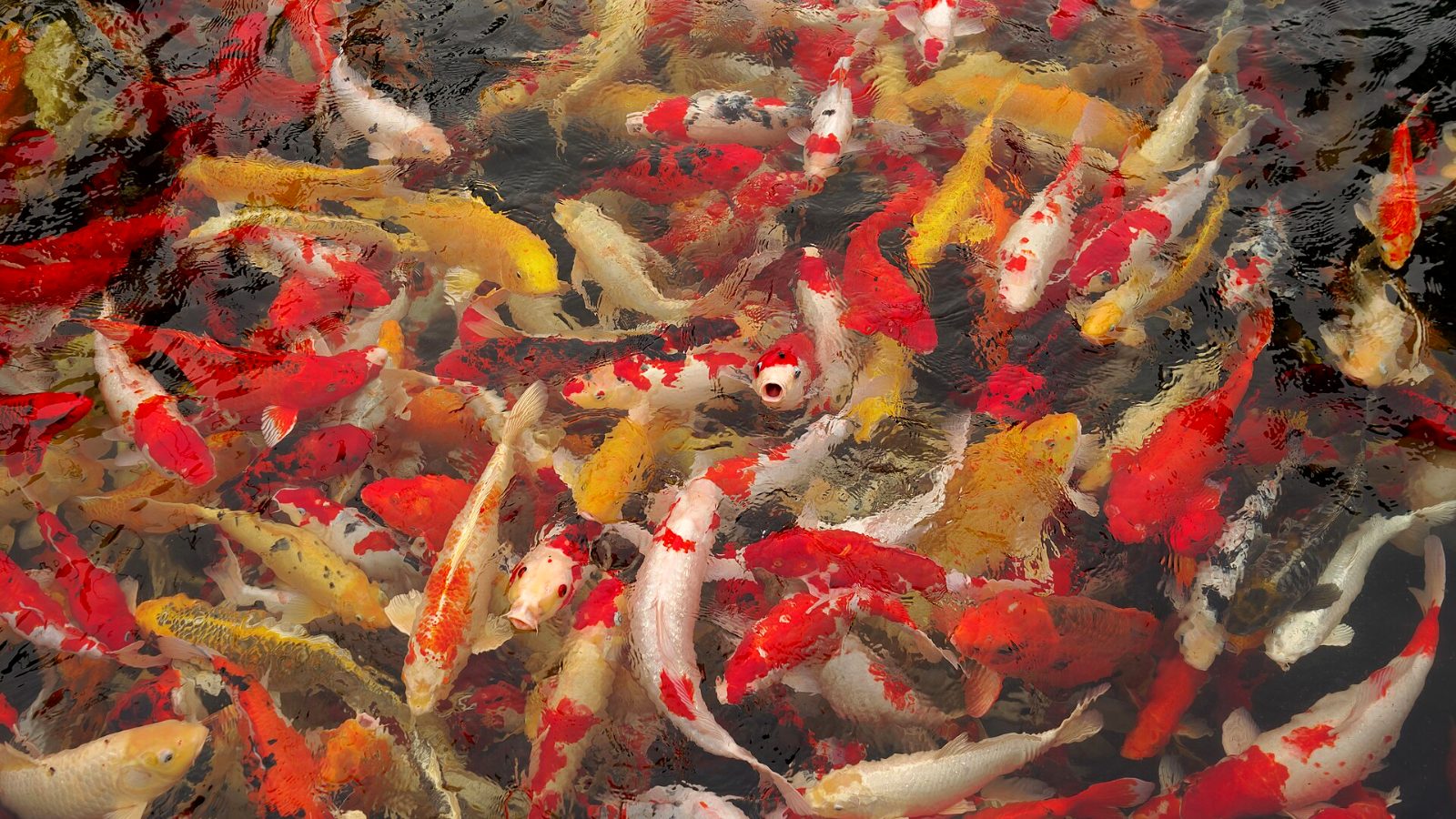
Featured image: Fish pond in Sun World Halong Park. Ha Long Town Vietnam. Photo: Jakub Hałun (CC BY 4.0), via Wikimedia Commons.