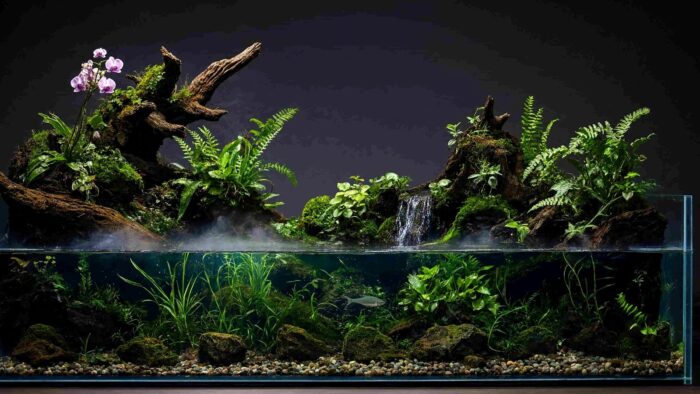
A planted tank without injected CO2 works when you choose slow-growing, undemanding plants and keep the light moderate. Too much light with no added CO2 is the main cause of algae in low-tech tanks. Use a nutrient-rich substrate or root tabs, run the light for six to eight hours a day, and add a comprehensive liquid fertiliser lightly once growth is under way. Growth is slow, which means less trimming and a stable tank once it settles after the first couple of months.
Reliable low-tech plants
| Plant | Placement | Light | Notes |
|---|---|---|---|
| Anubias | Attached to rock or wood | Low | Do not bury the rhizome |
| Java fern | Attached to rock or wood | Low | Same rule; very hardy |
| Cryptocoryne (wendtii and similar) | Midground, rooted | Low to medium | May melt after planting, then regrows |
| Java moss and other mosses | On hardscape | Low | Good cover for shrimp and fry |
| Vallisneria | Background | Low to medium | Spreads by runners |
| Amazon sword | Background, rooted | Medium | Heavy root feeder; use root tabs |
| Dwarf sagittaria | Foreground | Medium | A slow carpet without CO2 |
| Floating plants (salvinia, frogbit) | Surface | Any | Absorb excess nutrients; shade the tank |
| Setting | Low-tech target |
|---|---|
| Light | Moderate intensity, 6 to 8 hours on a timer |
| Substrate | Aqua soil, or inert sand or gravel with root tabs |
| Fertiliser | All-in-one liquid, weekly, at half dose to start |
| Water changes | 25 to 30% weekly |
| Stocking | Light to moderate; fish waste feeds the plants |
The planted-tank internet can make it feel like a lush aquascape requires a CO2 cylinder, a drop checker and a small engineering degree. It does not. Some of the most beautiful, stable tanks in the hobby are low-tech: no injected CO2, moderate light, easy plants and minimal fuss. The trade is simple: you give up speed and a handful of demanding species, and in exchange you get a tank that grows slower, needs less trimming, almost never sees algae outbreaks, and costs a fraction to run.
How Low-Tech Actually Works
Plants need carbon, and in a non-injected tank they get it from the CO2 that fish respiration, bacterial activity and surface exchange naturally provide, roughly 2 to 5 ppm versus 25 to 30 in an injected tank. The entire low-tech method is balancing light to that carbon supply. Light drives demand; CO2 is the supply. Keep light modest and demand never outruns supply, so plants grow steadily and algae find no leftovers. Crank the light without adding CO2 and you get the classic failure: stalled plants and a tank full of algae.
Choosing Plants That Thrive Without CO2
- Epiphytes: anubias (all types), java fern, bolbitis. Tie or glue to wood and rock; never bury the rhizome.
- Stem plants: hygrophila polysperma and siamensis, water wisteria, bacopa caroliniana, rotala rotundifolia, pearlweed.
- Rosettes: amazon swords, cryptocorynes (wendtii, parva, balansae). Both feed heavily from the substrate, so give them root tabs.
- Carpets, within reason: forget the demanding carpet species; use dwarf sagittaria, cryptocoryne parva or marsilea for a slow, honest carpet.
- Floaters: frogbit, red root floater, salvinia. They have unlimited CO2 access at the surface and act as the tank’s nutrient sponge.
- Mosses: java and christmas moss for texture and shrimp cover.
What to skip: anything described as needing high light, most red carpets, dwarf baby tears, and fine, fussy rotala varieties. They will not die gracefully; they will melt and feed algae.
Light: The Control Knob
Aim for low to medium intensity, six to eight hours a day on a timer, no exceptions. On adjustable LEDs, start around 30 to 40 percent intensity. If plants grow but algae creeps in, cut an hour or dim slightly; if stems stretch tall and pale, add a little. One adjustment at a time, two weeks between changes. The timer is the single most important piece of equipment in a low-tech tank.
Substrate and Ferts, Kept Lean
A nutrient soil capped with sand or fine gravel gives the strongest start, but plain gravel plus root tabs under the heavy feeders works nearly as well and never clouds the tank. Dose an all-in-one liquid fertiliser at half the bottle’s recommended rate once a week, and let fish food and waste supply the rest. If algae appear, halve dosing; if new leaves come in small or pale, step it up slightly.
Maintenance Rhythm
Low-tech tanks prefer gentle consistency: a 25 to 30 percent weekly water change, dead leaves removed, glass wiped, filter rinsed monthly in tank water. Growth is slow, so trimming is a monthly event rather than a weekly chore. Resist the urge to deep-clean or rescape often; crypts in particular sulk and melt when uprooted, then return better than before. Expect the tank to look sparse at month one, respectable at month three, and genuinely full around month six.
Stocking the Low-Tech Tank
Fish are part of the system here, supplying CO2 and fertiliser. Small schooling fish, livebearers, corydoras and especially shrimp suit the calm, stable conditions perfectly. Add an algae crew, amano shrimp, nerites or otos, once the tank matures past its first month.
A Realistic First-Year Timeline
Low-tech tanks reward patience on a schedule most guides never spell out. Months one and two are the awkward phase: plants are converting from emersed growth, some melt dramatically, and algae tests the empty niches. Resist the urge to intervene beyond removing dead leaves and keeping the photoperiod at six to seven hours. Months three to six, root systems establish and growth becomes visible week to week; this is when you start trimming stems and replanting tops to thicken the layout. From month six onward the tank hits the self-balancing state low-tech is famous for: algae becomes rare, water parameters flatten out, and maintenance drops to topping up and light trims.
Plant choice decides whether you reach that state. Stack the tank with proven easy species from our beginner plants list, lean on low-light species for the shaded zones, and feed the system sparingly per the fertiliser guide. If algae wins a round along the way, the triage steps in why your aquarium has algae apply unchanged to low-tech setups.
Can low-tech tanks carpet?
Dense carpets usually want CO2, but modest versions work: cryptocoryne parva, dwarf sagittaria and marsilea all creep slowly into a lawn-ish spread over six to twelve months in good substrate. Slow is the price of skipping the gas.
The Bottom Line
Modest light on a timer, easy plants in generous quantity, lean weekly dosing, floaters on the surface and patience in the keeper: that is the whole recipe. A low-tech tank will never win a speed contest against injected setups, but at the one-year mark it is often the healthier, prettier and far less exhausting aquarium.
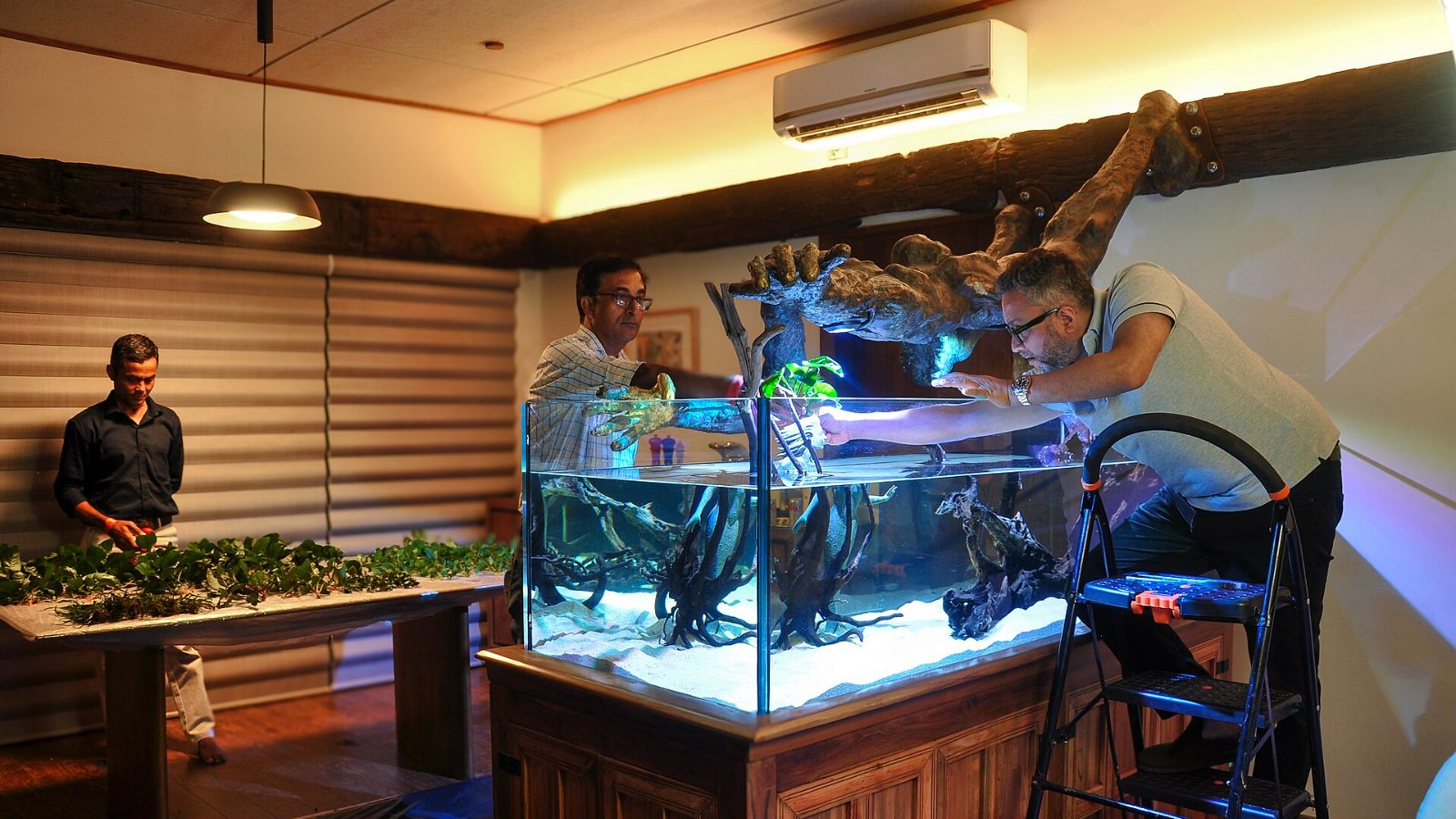
Featured image: Aquascaping Team Planting Aquarium Hardscape. Photo: Abhik.Mazumdar.73 (CC BY 4.0), via Wikimedia Commons.