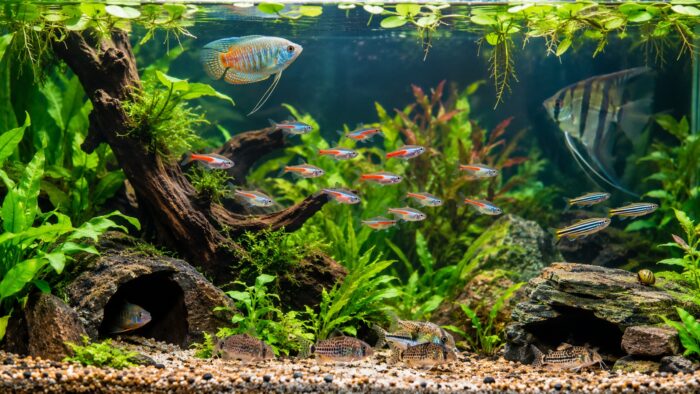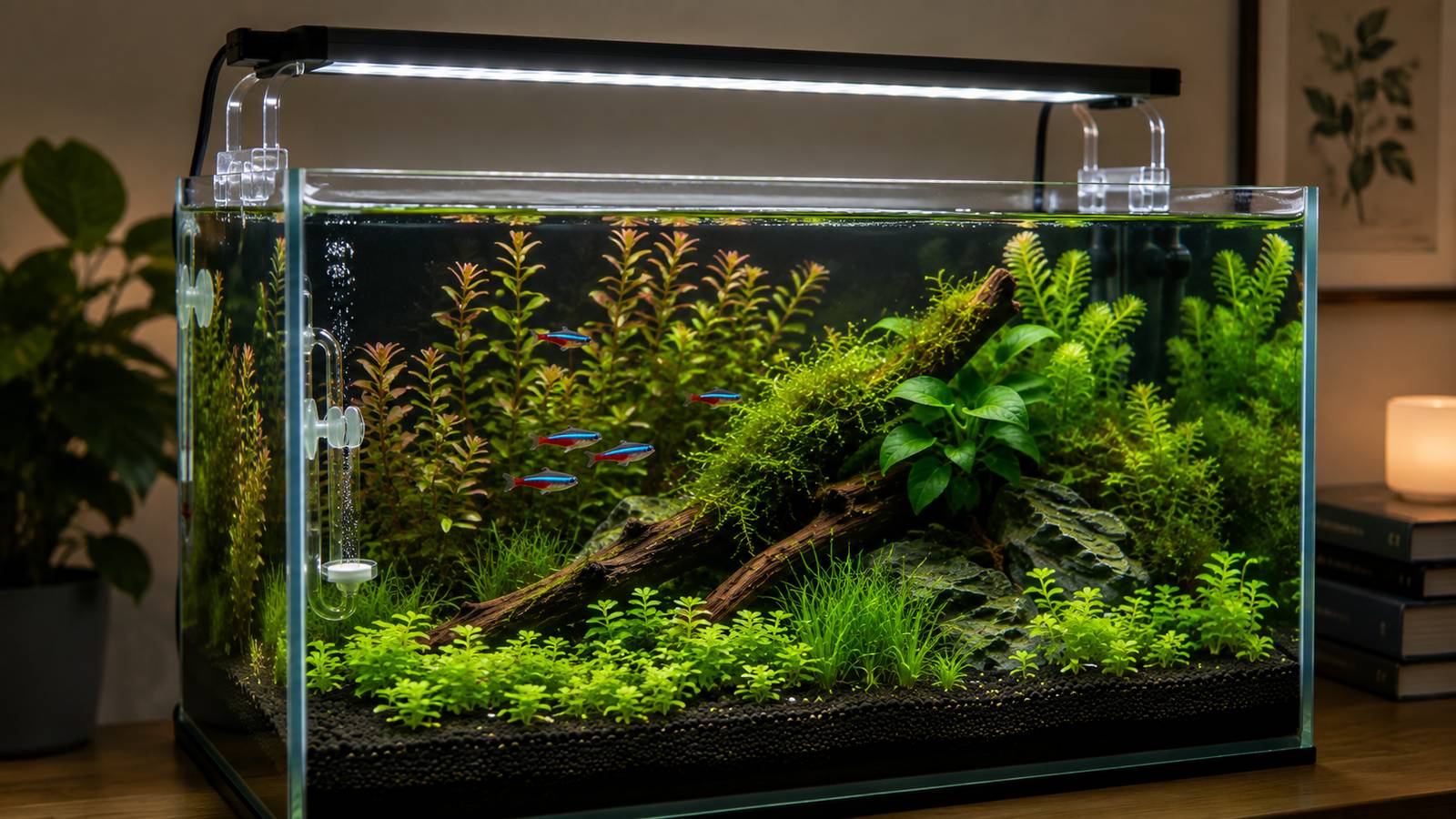
Freshwater fishkeeping covers an enormous range, from a single betta in a five-gallon tank to a breeding group of wild-caught cichlids in a heavily filtered three hundred litre system. What connects all of it is a small set of decisions made before any fish is bought: adult size, water requirements, social needs and temperament.
This guide is the hub for freshwater species on the site. It explains how the main groups differ, what each needs, and how to assemble a community that stays peaceful, then links to the detailed care guide for each species we cover.
The four questions that decide every stocking choice
Almost every freshwater compatibility problem traces back to one of four factors being ignored at purchase.
Adult size is first, because shops sell juveniles. A common pleco at three inches looks like a tidy cleanup fish and reaches eighteen inches. A bala shark sold at two inches reaches fourteen and needs a shoal. Always look up adult size before buying, and treat shop tank size as irrelevant.
Water parameters are second. Most commercially bred community fish tolerate a wide range, which is why they coexist so easily. A few do not: discus want warm, soft, acidic water; African rift lake cichlids want hard, alkaline water; goldfish want it cool. Mixing across those groups means one species is always compromised.
Social structure is third and the most frequently overlooked. Shoaling species are not merely happier in groups; they are behaviourally incomplete without them. A group of three tetras will hide, colour down and often turn on each other. The same species in a group of ten occupies open water and displays normally.
Temperament is fourth. Peaceful, semi-aggressive and aggressive are useful shorthand, but the more practical questions are whether a fish holds territory, whether it is a fin-nipper, and whether it will eventually be large enough to eat its tankmates. Details on how these interact are in the guide to aquarium fish compatibility.
The main freshwater groups
Thinking in groups rather than individual species makes stocking far easier, because members of a group tend to share requirements.
| Group | Examples | Typical needs | Suits beginners? |
|---|---|---|---|
| Small tetras and rasboras | Neon, cardinal, rummynose, harlequin | Groups of 8+, soft to neutral water, mature tank | Yes, once the tank is established |
| Livebearers | Guppy, platy, molly, swordtail | Harder water, groups with more females than males | Yes, very forgiving |
| Barbs and danios | Cherry barb, tiger barb, zebra danio | Active shoals of 6+, wide parameter tolerance | Yes, but tiger barbs nip |
| Corydoras and small catfish | Bronze, panda, sterbai corydoras | Groups of 6+, sand substrate, sinking food | Yes |
| Loaches | Kuhli, yoyo, clown loach | Groups, hiding places, sand; clown loaches get very large | Kuhli yes, clown loach no |
| Anabantoids | Betta, honey gourami, pearl gourami | Calm water, surface access, low flow | Yes |
| Dwarf cichlids | Ram, apistogramma, kribensis | Territory, stable water, careful tankmates | Intermediate |
| Large cichlids | Oscar, severum, angelfish | Large tanks, strong filtration, size-matched tankmates | Angelfish only, with care |
| Plecos and algae eaters | Bristlenose, otocinclus, common pleco | Driftwood, vegetables; check adult size carefully | Bristlenose yes, common pleco no |
| Coldwater | Goldfish, white cloud minnow | Cooler temperatures; goldfish need very large volumes | Minnows yes, goldfish need planning |
Two entries on that list account for a disproportionate share of beginner problems. Common plecos are sold everywhere and are unsuitable for almost every home aquarium at adult size. And goldfish, covered in detail in the guide to goldfish care, are large, long-lived, high-waste coldwater fish routinely sold as starter pets for bowls.
Species guides on this site
Each of the following covers one species or group in depth, including tank size, water requirements, diet, tankmates and the problems that come up most often.
- Betta fish care covers the most misunderstood fish in the hobby, including why the cup-and-bowl marketing is wrong.
- Goldfish care covers adult size, lifespan, coldwater requirements and the myths that shorten their lives.
- Neon tetra care covers why this popular species so often dies in new tanks.
- Guppy care and breeding covers the livebearer most likely to produce fry whether or not you intended it.
- Angelfish care covers a cichlid sold as a community fish that becomes territorial with maturity.
- Corydoras catfish care covers group size, substrate and why they are not tank cleaners.
- Discus care covers the demands of the hobby’s most parameter-sensitive popular fish.
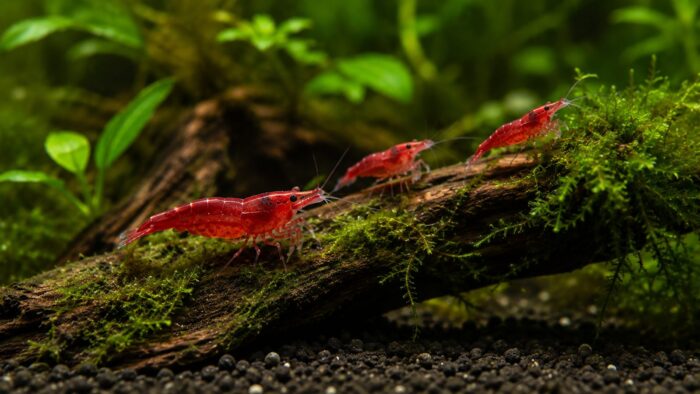
- Cherry shrimp covers the invertebrate most beginners succeed with.
- 10 best beginner freshwater fish is the shortlist to start from.
Building a community that works
A functional community tank is usually built around one centrepiece species and two or three supporting groups occupying different levels, rather than one of everything.
Start with the water you actually have. Test your tap water for pH, GH and KH as described in the guide to aquarium water parameters, then choose species that suit it. Adjusting water chemistry with buffers and chemicals is unstable, expensive and generally worse for fish than simply keeping species that match your supply.
Then pick the centrepiece: a betta, a honey gourami, a ram pair, a small group of angelfish. This choice constrains everything else, because it sets the temperament ceiling and often the temperature.
Add a midwater shoal that will not be eaten by, or nip at, the centrepiece. Add a bottom group, usually corydoras or kuhli loaches, with a substrate that suits them. Stop there. The most common flaw in beginner stocking plans is that they fill every niche with a different species and end up with several under-sized groups instead of two or three proper ones.
Check the total against the tank’s real capacity using the method in the guide to aquarium stocking, and leave deliberate headroom for growth and for the weeks when maintenance slips.
Keeping freshwater fish healthy
Once stocked, the health of a freshwater tank rests on three things, none of which involve medication.
Stable water quality is first. Ammonia and nitrite at zero, nitrate controlled by regular water changes, and temperature steady. The overwhelming majority of what looks like disease in freshwater tanks is a water quality problem presenting as symptoms, which is why the guide to common aquarium diseases begins with diagnosis rather than treatment.
Appropriate diet is second. Different groups have genuinely different nutritional needs, and feeding a single flake to a tank containing herbivores, carnivores and bottom-grazers underfeeds some and overfeeds others. The guide to what to feed your fish covers matching food to species.
Quarantine is third and the most neglected. Almost every disease outbreak in an established tank arrives with a new fish. Four weeks in a separate tank, as described in the guide to quarantining new fish, prevents more problems than any medication cures.
Freshwater fishkeeping questions
What is the easiest freshwater fish for a complete beginner?
Platies and zebra danios are the most forgiving of parameter swings and beginner mistakes. Harlequin rasboras and cherry barbs are close behind and calmer. Neon tetras are popular but genuinely less hardy than their reputation suggests and do poorly in new tanks.
Can I keep tropical and coldwater fish together?
Not well. Goldfish and white cloud minnows prefer 65 to 72 F while most tropicals want 76 to 80 F. Any shared temperature compromises one group, leaving them stressed and immunosuppressed even though they appear to survive.
How many species can I keep in one tank?
Fewer than most beginners want. Two or three properly sized groups plus a centrepiece looks better and behaves better than six token pairs. Group size matters more to fish welfare than species variety.
Should I adjust my pH to suit a particular fish?
Usually not. Commercially bred community fish adapt to a wide pH range, and stability matters far more than the number. Chemical pH adjusters produce swings that are more harmful than the original reading. If your water is genuinely extreme, choose species that suit it or use RO water blended to a target, rather than dosing the tank.
How long do freshwater aquarium fish live?
It varies enormously. Guppies typically live one to three years, tetras three to five, corydoras five or more, angelfish eight to ten, and goldfish fifteen to twenty or beyond. Short-lived species are not necessarily easier, and long-lived ones represent a genuine commitment.
Choose species that match the water and the tank you have
Successful freshwater stocking is mostly a matter of research done before purchase. Adult size, water requirements, group needs and temperament decide whether a combination works, and no amount of good maintenance afterwards fixes a fundamentally mismatched stocking list.
Start with the water coming out of your tap, choose species that suit it, keep shoaling fish in proper groups, and stop adding once the tank is comfortably rather than maximally stocked. The species guides linked above cover the details for each fish we recommend.